Dash Cam Laws in Texas: Mounting, Audio and Footage Rules
Published October 15, 2026
Quick answer
Dash cams are legal in Texas for private drivers recording from their own vehicle, and dash cam laws in Texas impose no camera-specific statute. The rules that actually affect you are the state's windshield obstruction standard, its one-party consent audio law, and any local ordinance or employer policy. Footage can support an insurance claim or civil case, but no camera guarantees that an insurer or court will accept it.
Table of contents13 sections · tap to expand
Key takeaways
- Texas has no law banning dash cams in private vehicles; the practical limits come from windshield obstruction rules and audio consent.
- Texas is a one-party consent state for audio, so a driver can generally record their own conversations, but recording a private passenger's conversation they are not part of can cross a line.
- Mount the camera high on the windshield or behind the mirror so it stays out of the driver's primary sight line.
- GPS speed and location stamps, event locking and unbroken loop recording are what make footage credible to an insurer or in a civil dispute.
- Supercapacitor power matters in Texas summers because it tolerates cabin heat better than a lithium battery.
As an Amazon Associate we earn from qualifying purchases. This never changes which products we recommend.
Recommended products
Products that fit this
| Product | Best for | Where to buy |
|---|---|---|
| COOAU D30S | Rideshare, taxi and delivery drivers who need a passenger-facing record alongside front and rear coverage. | Check price on Amazon |
| ZMOPO 4-Channel | City drivers who want side coverage as well as front and rear, and want a memory card in the box. | Check price on Amazon |
| PRUVEEO 4-Channel | Drivers who want four-angle coverage and built-in location data without buying an add-on GPS. | Check price on Amazon |
Are dash cams legal in Texas?
Yes. Texas does not prohibit private drivers from mounting and operating a dash cam in their own vehicle, and no Texas Transportation Code provision singles out dashboard cameras. The camera records the public roadway and your own vehicle, which is the ordinary use case the law leaves alone.
The limits that follow are indirect rather than camera-specific. Windshield obstruction rules govern where the device can sit, audio consent rules govern what it can capture, and local ordinances or an employer's fleet policy can restrict use even where state law permits it.
A dash cam is also not a substitute for a police report or an insurer's own investigation. It is a record you can offer, and how much weight it carries depends on the quality and continuity of the file.
Where can you legally mount a dash cam on a Texas windshield?
Mount the camera high on the windshield, near the top edge or behind the rearview mirror, so it does not obstruct the driver's view. Texas restricts windshield obstructions that block the driver's vision, and a camera hanging in the middle of the glass is the placement most likely to draw a citation.
The upper corners and the area behind the mirror are the conventional spots because they keep the lens close to the roofline and out of the swept wiper path. That position also improves footage: a camera mounted high sees over the hood rather than into it, and it is less likely to catch dashboard reflections.
Placement is a judgment call that varies by vehicle, camera size and the officer or inspector involved, so check your own sight lines after mounting and confirm the current rule with the Texas Department of Motor Vehicles or a local law enforcement office. A compact, screenless body is easier to tuck out of view than a large one with a display.
A CPL filter is worth considering for a Texas windshield because it cuts glare and dashboard reflections that otherwise wash out plates in bright sun.
Can a dash cam record audio in Texas?
Texas is a one-party consent state, which means a person who is part of a conversation can generally record it without telling the other party. A driver recording their own spoken words or a conversation they are participating in falls inside that rule.
The line is crossed when the camera captures a conversation the driver is not part of, such as a private exchange between two passengers. An interior-facing camera with a live microphone can pick that up, and the safest practice is to disable audio recording or tell passengers the camera is running.
For rideshare, taxi and delivery drivers, an interior camera is common and often permitted by the platform, but platform policy and state audio law are separate questions. Check the current policy of the service you drive for, and check local rules, before relying on cabin audio.
Video recording in public spaces is generally treated differently from audio, and expectations of privacy are lower on a public road than inside a private home. None of this is legal advice for a specific dispute; consult a Texas attorney if audio or video becomes part of a case.
Is dash cam footage usable in an insurance claim or court in Texas?
Footage is evidence like any other: its weight depends on whether it is clear, complete and verifiable.
What makes footage credible is a timestamp, a GPS speed and location stamp, and an unbroken file that shows the moments before and after an impact. A clip that starts mid-collision or has gaps is easy to challenge, which is why loop recording and automatic event locking matter.
A rear-end collision, a lane-change dispute or a parking-lot hit-and-run are the situations where a second or third camera channel changes the story. Front-only footage can miss the vehicle that struck you from behind or the side.
Insurers may use footage to assign fault, and some offer a discount for a professionally installed camera, but discount programs vary by carrier and are not guaranteed. Ask your insurer directly rather than assuming a rate change.
Do local ordinances or fleet rules change anything?
City ordinances and private-property rules can restrict camera use even where Texas state law allows it. A municipality may have its own obstruction or parking-enforcement rules, and a private lot or garage can set conditions on recording on its property.
Employer and fleet policies are the bigger constraint for commercial drivers. A company that owns the vehicle can require its own camera system, prohibit aftermarket devices, or set rules for interior recording, and violating that policy is an employment matter rather than a criminal one.
If you drive for a rideshare or delivery platform, treat the platform's camera policy as binding on your account. If you own the vehicle and drive it privately, local rules and your own insurer's terms are the ones to check.
Which dash cam features matter for legal and claim use?
A GPS speed and location stamp is the single most useful feature for a claim because it ties the video to a time, a place and a speed. That combination is what turns a clip into a record an adjuster can evaluate.
Event locking through the G-sensor protects the file at the moment of impact so loop recording cannot overwrite it. Loop recording itself keeps the card from filling, and a high-endurance microSD card is the right media for the constant write cycles a dash cam produces.
Buffered parking mode records the seconds before an impact while the car is parked, which is what captures a hit-and-run that happens while you are away. It requires a hardwire kit or OBD power cable with low-voltage cutoff so the car battery is not drained.
In Texas heat, a supercapacitor is the more durable power source because it tolerates high cabin temperatures better than a lithium battery. A camera rated for high operating temperatures and paired with a high-endurance card is the combination that survives a summer parked in the sun.
Which dash cams suit Texas drivers?
The right camera depends on how many angles you need and whether the car sits in the sun. All three options below use a supercapacitor rather than a battery, which is the practical choice for a Texas summer.
The COOAU D30S records front and interior at 2.5K plus a 1080p rear channel, with a Sony STARVIS 2 sensor and infrared LEDs for the cabin. That makes it a fit for rideshare and delivery drivers who need a passenger-facing record, and its parking modes cover hit-and-runs. The tradeoff is that GPS is sold separately and a hardwire kit is needed for parking mode.
The ZMOPO 4-channel camera covers front, rear, left and right at 1080p each and includes a 128 GB card, which suits a driver who wants side coverage in a busy city. Its GPS logger is optional and its parking mode needs a separate hardwire kit, so budget for both if you want location stamps and parked recording.
The PRUVEEO 4-channel camera also records four 1080p views and includes GPS and a 128 GB card, which makes it the simpler pick for a driver who wants location data without buying an add-on. It supports up to 256 GB of storage, and like the others it needs a hardwire kit for parking mode.
Helpful tool
COOAU D30S
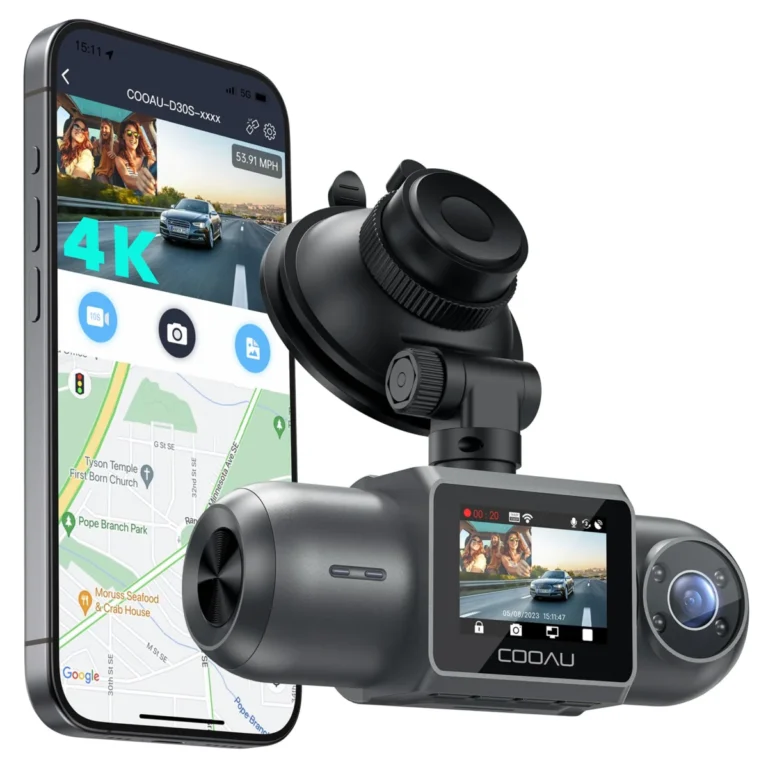
- Helps with: Rideshare, taxi and delivery drivers who need a passenger-facing record alongside front and rear coverage.
- Why it fits: It records front and interior at 2.5K plus a 1080p rear channel, uses a Sony STARVIS 2 sensor with infrared cabin LEDs, and runs on a supercapacitor suited to Texas heat.
- Keep in mind: GPS is sold separately and parking mode requires a hardwire kit.
How do you install a dash cam legally and cleanly?
Power choice comes first. A 12V socket cable is the simplest and needs no wiring, but it occupies the outlet and often leaves a cable crossing the dash. A hardwire kit hides the cable and enables parking mode, and an OBD power cable is a middle option that plugs into the diagnostic port and can include low-voltage cutoff.
Route the cable along the headliner and down the A-pillar, keeping it clear of airbags and the driver's sight line. Tuck it behind trim rather than across the windshield, and leave enough slack at the camera so the mount is not stressed.
Check the finished placement against local rules before you call it done, and confirm the camera is not blocking your view or a wiper path. If you drive a long SUV or truck, measure the rear camera cable run before buying, because a short cable will not reach the back glass.
Once installed, set the correct date and time, enable GPS if available, and confirm that event locking and loop recording are on. Test that the camera starts and stops with the ignition so you are not relying on a dead battery or a card that filled months ago.
- Decide on power: 12V socket for simplicity, hardwire kit for hidden cable and parking mode, or OBD cable for a plug-in option with low-voltage cutoff.
- Mount the camera high on the windshield or behind the mirror, then sit in the driver's seat and confirm it is outside your primary sight line.
- Route the cable along the headliner and A-pillar, avoiding airbags, and secure any slack.
- For a rear or interior camera, measure the cable run to the back glass before installing.
- Set the date, time and GPS, enable loop recording and event locking, and verify the camera powers on and off with the ignition.
Avoid these
Common mistakes to avoid
- Mounting the camera in the middle of the windshield where it blocks the driver's view. Place it high on the glass or behind the rearview mirror, then check your sight lines from the driver's seat.
- Leaving cabin audio on around passengers without telling them. Disable audio recording or inform passengers, since Texas one-party consent covers conversations you are part of, not private exchanges between others.
- Assuming a dash cam automatically lowers an insurance rate. Ask your carrier whether it offers a discount and what installation it requires, because programs vary.
- Buying a camera for parking mode without a hardwire kit. Add the hardwire kit or OBD cable with low-voltage cutoff, since parking mode will not run from the 12V socket alone.
Useful tools
Tools that help
As an Amazon Associate we earn from qualifying purchases. This never changes which products we recommend.
Helpful tool
ZMOPO 4-Channel
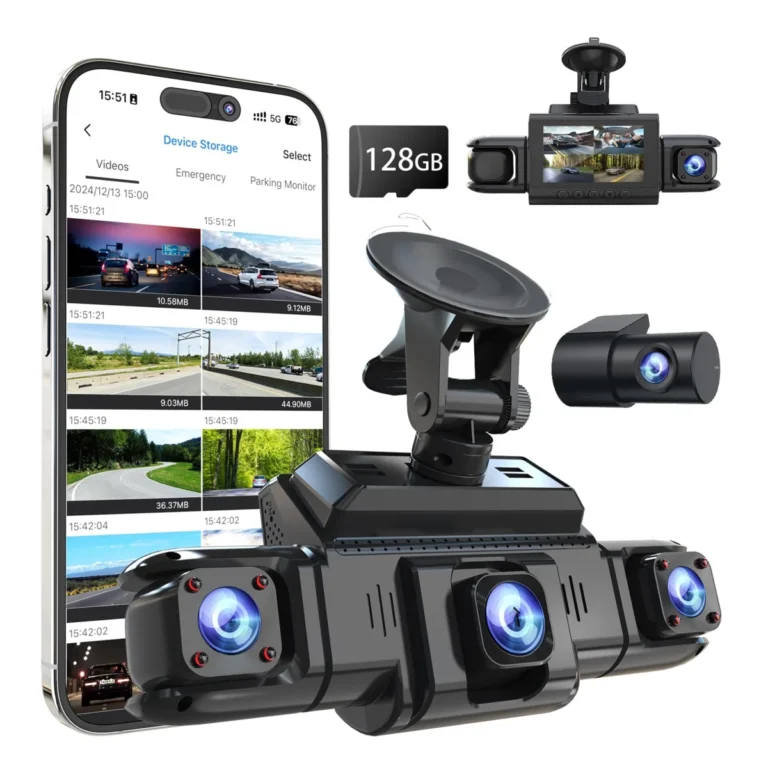
- Helps with: City drivers who want side coverage as well as front and rear, and want a memory card in the box.
- Why it fits: Four 1080p cameras cover front, rear, left and right, and a 128 GB card is included, with 5 GHz Wi-Fi for faster transfers.
- Keep in mind: The GPS logger and the hardwire kit for parking mode are both sold separately.
Helpful tool
PRUVEEO 4-Channel
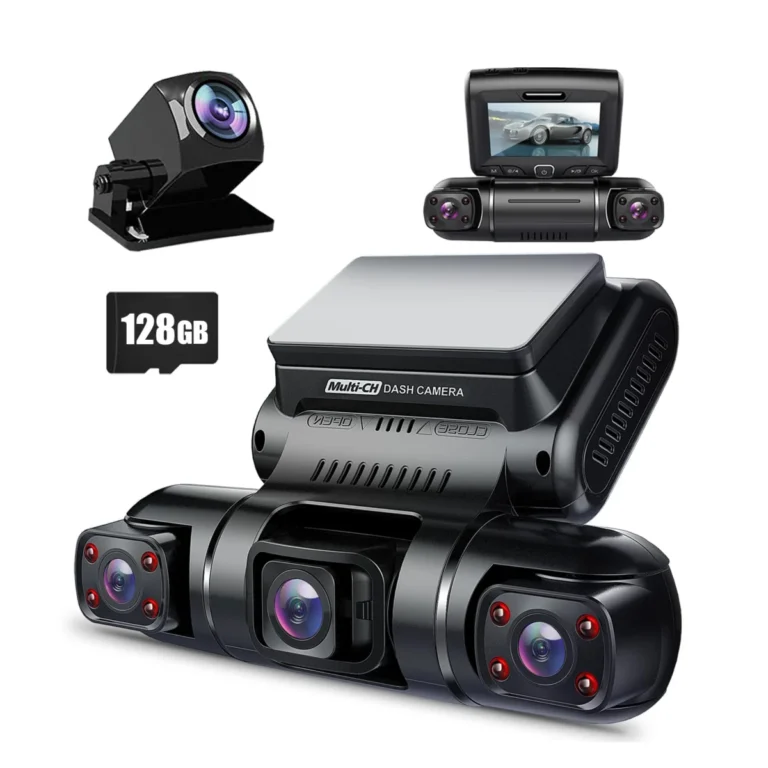
- Helps with: Drivers who want four-angle coverage and built-in location data without buying an add-on GPS.
- Why it fits: It records four 1080p views, includes GPS and a 128 GB card, supports up to 256 GB of storage, and uses a supercapacitor instead of a battery.
- Keep in mind: Parking mode still needs a separately sold ACC hardwire kit.
See also: 7 Dash Cams Ranked for Commuters, Rideshare Drivers and Street Parkers; Dash Cam Laws in Florida: Mounting, Audio Consent and Heat Rules; Dash Cam Laws in California: Where You Can Mount One and What You Can Record.
Common questions
Frequently asked questions
Are dash cameras legal in Texas?
Yes. Texas has no statute prohibiting private drivers from using a dash cam in their own vehicle. The practical limits come from windshield obstruction rules, audio consent law and any local ordinance or employer policy that applies to you.
Can I get a ticket for a dash cam on my windshield in Texas?
A camera that obstructs the driver's view can draw a citation under Texas windshield obstruction rules. Mounting it high on the glass or behind the mirror keeps it out of the primary sight line and reduces that risk, though enforcement varies by officer and vehicle.
Can a dash cam record audio without consent in Texas?
Texas is a one-party consent state, so a driver who is part of a conversation can generally record it. Recording a private conversation between passengers that you are not part of is the situation most likely to create a problem, so disable audio or tell passengers.
How long does a dash cam keep footage?
Loop recording overwrites the oldest unlocked files once the card fills, so retention depends on card size, resolution and how much you drive. Locked event files stay until you delete them, and a larger high-endurance card extends how far back the loop reaches.
Do dash cams work in Texas summer heat?
A supercapacitor camera tolerates high cabin temperatures better than one with a lithium battery, which is why it is the common choice for hot climates. Parking in shade and using a high-endurance microSD card also reduce heat-related failures.
Can I use dash cam footage as evidence in a Texas insurance claim?
You can submit it, and insurers and courts may give it weight, but acceptance is never guaranteed. Clear video with a timestamp, GPS speed and location data, and no gaps in the recording is far more persuasive than a partial clip.
Next step
Decide how many angles you need and whether your car sits in the sun, then pick a supercapacitor camera and the power cable that matches your parking habits. Rideshare and delivery drivers should start with the COOAU D30S for its front and interior coverage, while drivers who want side views and included GPS should compare the PRUVEEO and ZMOPO four-channel options.
Keep reading
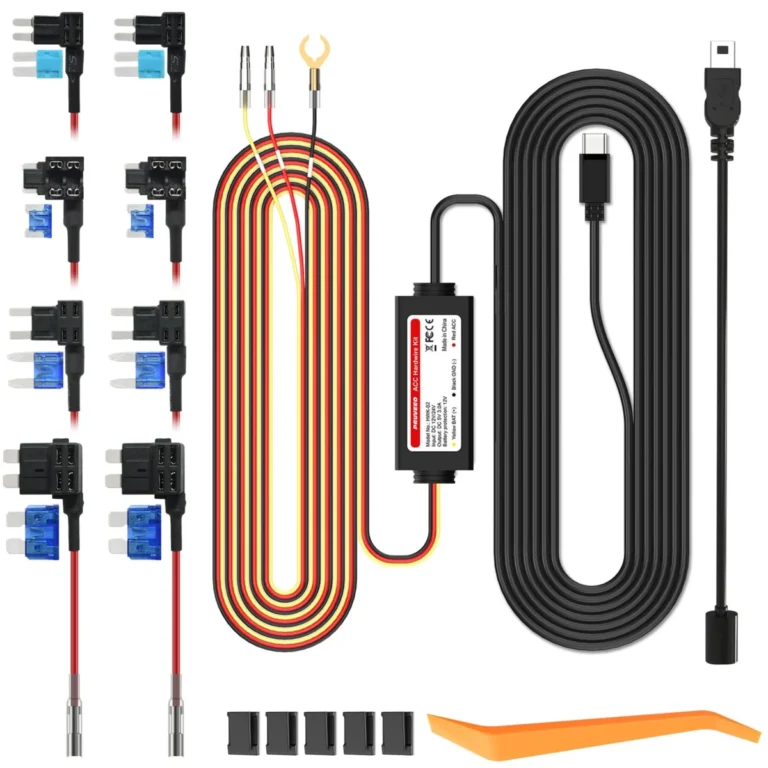
How to Set Up Dash Cam Parking Mode: Wiring, Cutoff and Settings
To set up dash cam parking mode, give the camera a constant power source (a fused fuse-box connection or an OBD cable,…
Does a Dash Cam Lower Car Insurance? What It Really Saves
A dash cam usually does not lower your car insurance premium. Most insurers do not treat a camera as a rating factor,…
Dash Cam Laws in Florida: Mounting, Audio Consent and Heat Rules
Dash cams are legal in Florida, but windshield placement, two-party audio consent and parking mode wiring all have rules.