Does a Dash Cam Lower Car Insurance? What It Really Saves
Published October 21, 2026
Quick answer
A dash cam usually does not lower your car insurance premium. Most insurers do not treat a camera as a rating factor, so the price you pay is still set by your driving record, vehicle, location and claims history. What a dash cam can do is protect money at the claims stage: clear footage can settle a fault dispute, support a hit-and-run report or defend a no-claims discount, which is often worth more than a small discount would be.
Table of contents13 sections · tap to expand
Key takeaways
- A dash cam is not a standard premium rating factor for most insurers, so expect no automatic price cut.
- Some insurers and safe-driver or telematics programs offer a dash cam discount, but availability varies by insurer, state and country.
- Footage earns its keep by protecting your no-claims discount and excess when fault is disputed.
- Usable clips need plate legibility, a correct timestamp and ideally GPS speed, which is why resolution and night video matter.
- Check audio consent and windshield mounting rules for your state before you rely on a camera.
As an Amazon Associate we earn from qualifying purchases. This never changes which products we recommend.
Recommended products
Products that fit this
| Product | Best for | Where to buy |
|---|---|---|
| Nextbase 222x Front and Rear | Everyday collision disputes in a family car | Check price on Amazon |
| IIWEY N5 4-Channel | Rideshare, delivery and fleet incidents | Check price on Amazon |
| ZMOPO 4-Channel 360 View | Street parking and wide coverage | Check price on Amazon |
Does a dash cam lower car insurance?
The short answer is usually no: a dash cam does not lower car insurance by itself. The premium is priced on the driver, the vehicle, where it is kept and the claims history, and a camera is not one of the standard rating factors for most insurers. Any discount is a specific program decision, not a universal rule.
It helps to separate two different benefits. A premium discount reduces what you pay up front. A claims benefit protects what you pay after an incident, by making fault harder to dispute and by supporting a no-claims discount. The second is the one most drivers actually collect.
So when someone asks does a dash cam lower car insurance, the honest answer is that it can lower the cost of a claim, not the sticker price of the policy. Ask your own insurer whether it recognizes dash cams before you buy on the promise of a discount.
Why a dash cam rarely changes your premium
Insurers rate policies on measurable risk factors: your driving record, the car's repair and theft profile, the area it is parked in and your history of claims. A camera does not change any of those inputs, so it does not move the price in a standard rating model.
A dash cam can even work against a careless claim if the footage shows something the insurer would otherwise not have seen. That is not a reason to skip one, but it is a reason to mount it legally and to keep recordings that show your own driving fairly.
The practical conclusion is that you should budget for a camera as a claims-protection tool, not as a premium-reduction tool. If a discount appears, treat it as a bonus rather than the reason for the purchase.
When insurers do offer a dash cam discount
Some insurers do offer a dash cam discount, but it is a program feature rather than an industry standard. Availability varies by insurer, state and country, and the proof required ranges from a photo of the installed camera to a copy of a clip or a serial number.
Telematics and safe-driver programs are a separate route. Those schemes price on measured driving behavior, and some of them accept dash cam footage as supporting evidence in a claim even when they do not advertise a camera discount. A fleet policy is another exception: fleet insurers often require cameras because they reduce disputed claims across many vehicles.
The only reliable way to know is to ask your own insurer two questions: do you recognize a dash cam for a discount, and what documentation do you need? Get the answer in writing before you count on it.
How dash cam footage actually saves you money
Footage saves money at the claims stage, not at renewal. In a disputed rear-end collision, a clip showing the impact and the moments before it can establish who was at fault. In a hit-and-run, a plate and a timestamp give the insurer and police something to act on. In a staged collision, video of the other driver's behavior is hard to argue with.
Parking lot damage is where many drivers first see the value. A camera with a parking mode can record an impact while the car is unattended, which turns an unexplained dent into a claim against a known vehicle. That is the scenario where a camera pays for itself fastest.
The biggest financial prize is usually the no-claims discount. Losing it after a disputed at-fault decision can raise premiums for several renewals, and that cost is typically far larger than any small camera discount. Protecting the discount is the real insurance benefit.
Helpful tool
Nextbase 222x Front and Rear
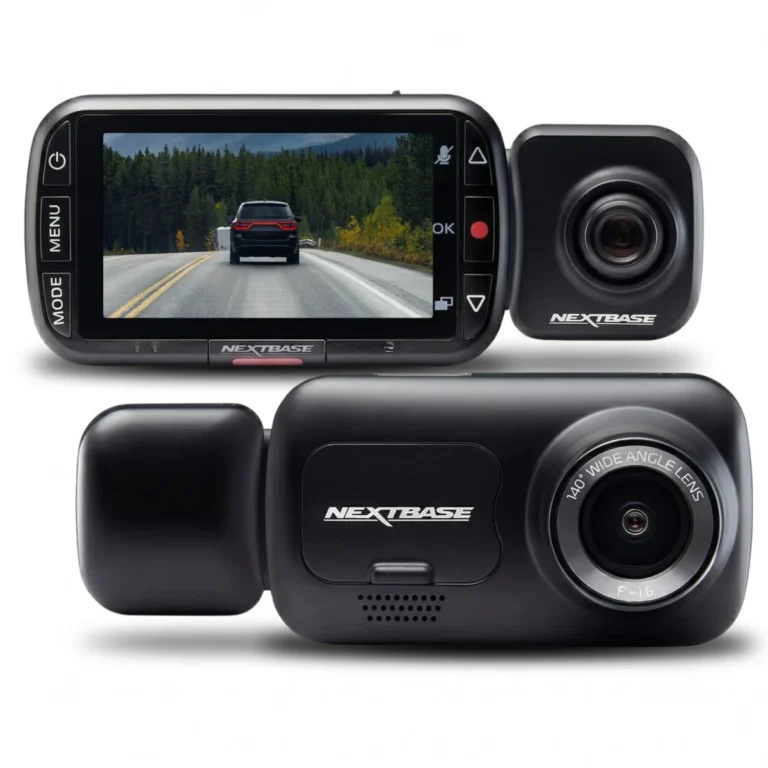
- Helps with: Everyday collision disputes in a family car
- Why it fits: Two channels cover front and rear impacts, and the intelligent parking mode records on a bump.
- Keep in mind: The 1080p front channel gives less plate detail at distance than a 4K model.
What makes dash cam footage usable in a claim
Usable footage shows the plate, the time and the context. Resolution per channel matters most for plate legibility: a 4K front channel gives more pixels on a distant plate than 1080p, but night video depends on the sensor and lens as much as the pixel count. A Sony STARVIS 2 sensor is the current benchmark for low-light plate reading.
A correct timestamp and a GPS speed overlay make a clip far more persuasive because they tie the video to a place and time. Event locking through the G-sensor protects the clip from being overwritten by loop recording, and a high-endurance microSD card keeps the camera recording reliably in heat and cold.
Channel count changes what you can prove. A front-only camera shows what you saw; a front-and-rear setup shows what happened behind you in a rear-end or lane-change dispute; a three- or four-channel setup adds the interior or sides for rideshare and fleet incidents. Parking mode covers the unattended hours, and most cameras need a hardwire kit with low-voltage cutoff to run it without draining the car battery.
Privacy, consent and mounting rules to check first
Audio recording consent and windshield mounting rules differ by state and country, so check your state's official legislature or transport website before you rely on a clip. Some places restrict recording private conversations, and some restrict where a device may be mounted on the glass.
Sharing footage with an insurer or police is usually voluntary, but once shared it can be used in the claim. Keep the original file, note the time and location, and share a copy rather than the only version. Do not assume a clip will be accepted as proof; fault determination remains the insurer's decision.
The safe approach is to mount the camera where it does not obstruct the driver's view, to know your state's audio rules, and to keep recordings that show your own driving accurately. This is general information, not legal advice.
Is a dash cam worth it without a discount?
A dash cam is worth it without a discount if you face disputed-fault risk, park on the street or drive for a living. Weigh the camera, a high-endurance microSD card, the parking-mode wiring and installation against your excess and the cost of losing a no-claims discount. For many drivers the camera costs less than one disputed claim.
Choose a dash cam for insurance reasons if you want a front-and-rear setup for collision disputes, a multi-channel setup for rideshare or fleet work, buffered parking mode for street parking, or a supercapacitor model for a hot climate. Skip it if you only want a premium cut, because the discount is not reliable enough to justify the purchase on its own.
Which dash cam fits your insurance goal
The right camera depends on what you need to prove. For everyday collision disputes, a front-and-rear camera gives both directions of the incident. The Nextbase 222x records 1080p at 30 fps on the front channel and 720p on the rear, with a 140-degree front view and an intelligent parking mode that records on a bump. It is a straightforward two-channel choice for a family car, though the 1080p front channel gives less plate detail at distance than a 4K model.
For rideshare, delivery or fleet driving, interior and side coverage matters more than a wider front angle. The IIWEY N5 records four 1080p channels covering front, rear, left, right or interior, with a 360-degree view, 5 GHz Wi-Fi app control, GPS and a supercapacitor. Its parking mode needs a hardwire kit sold separately, so add that to the budget if the car sits unattended.
If you park on the street and want the widest coverage, the ZMOPO 4-channel camera records four 1080p views with WDR and infrared interior lighting, includes a 128 GB card and uses a supercapacitor. GPS is an optional add-on, and parking mode needs a separate hardwire kit, so budget for both if you want location data and unattended recording.
Helpful tool
IIWEY N5 4-Channel
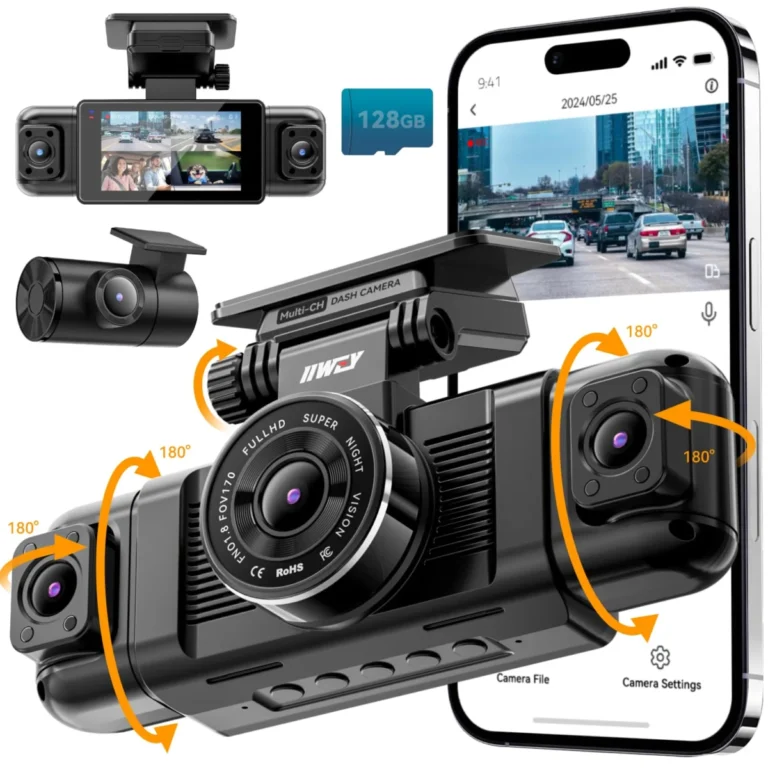
- Helps with: Rideshare, delivery and fleet incidents
- Why it fits: Four 1080p channels cover front, rear, sides and interior, with GPS and a supercapacitor for heat.
- Keep in mind: Parking mode needs a hardwire kit sold separately.
Avoid these
Common mistakes to avoid
- Buying a dash cam expecting an automatic premium cut. Ask your insurer first whether it recognizes a dash cam, and treat any discount as a bonus rather than the reason to buy.
- Assuming any clip will settle a fault dispute. Check that the footage shows the plate, a correct timestamp and, where possible, GPS speed, and that the event file is locked.
- Recording audio or mounting the camera without checking local rules. Confirm audio consent and windshield placement rules on your state's official legislature or transport website.
- Relying on parking mode without the right wiring. Fit a hardwire kit with low-voltage cutoff so the camera can record while parked without draining the car battery.
Useful tools
Tools that help
As an Amazon Associate we earn from qualifying purchases. This never changes which products we recommend.
Helpful tool
ZMOPO 4-Channel 360 View
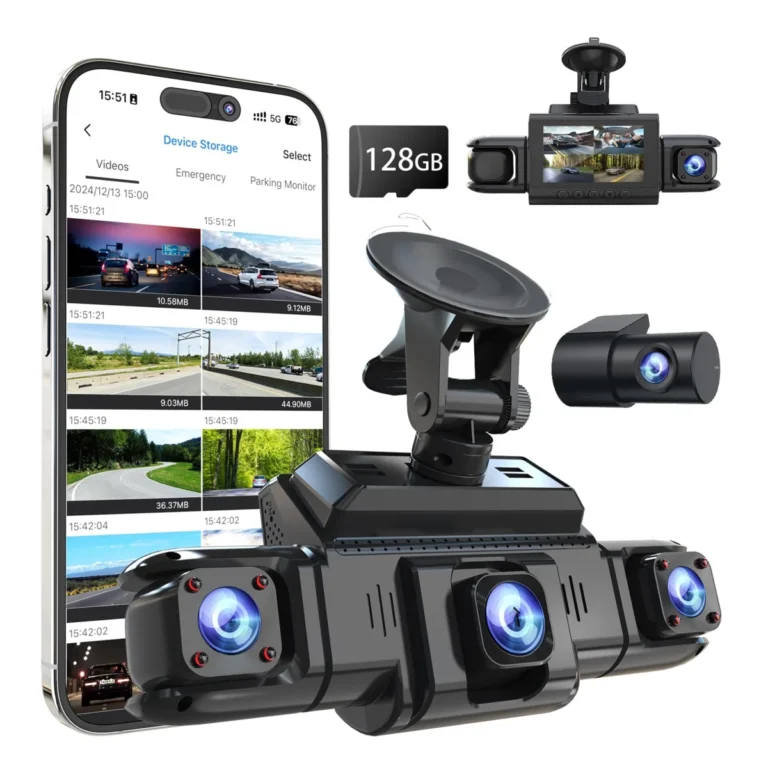
- Helps with: Street parking and wide coverage
- Why it fits: Four 1080p views with WDR and infrared interior lighting, plus a 128 GB card included.
- Keep in mind: GPS is optional and sold separately, and parking mode needs a separate hardwire kit.
See also: 7 Dash Cams Ranked for Commuters, Rideshare Drivers and Street Parkers.
Common questions
Frequently asked questions
Does having a dash cam lower your car insurance?
Usually not. Most insurers do not use a dash cam as a rating factor, so the premium stays the same. A few programs offer a discount, but you have to ask your own insurer whether it applies to your policy.
Will my insurer accept dash cam footage as proof of fault?
Insurers often review dash cam footage, but acceptance is not guaranteed and fault determination remains their decision. Clear plate detail, a correct timestamp and a GPS speed overlay make a clip more useful. Share a copy and keep the original.
Do I have to declare a dash cam to my insurer?
There is generally no duty to declare a dash cam, but you should tell your insurer if you are claiming a discount or if the policy asks about modifications. If you want the discount, ask what proof is required before you buy.
Does a dash cam help if my parked car is hit?
Yes, if the camera has a parking mode that records on impact. A clip with a plate and timestamp can turn an unexplained parking-lot dent into a claim against a known vehicle. Parking mode usually needs a hardwire kit with low-voltage cutoff.
How long does a dash cam keep footage I might need?
Loop recording overwrites the oldest files as the card fills, so retention depends on card size, resolution and how much you drive. Event locking through the G-sensor protects a clip from being overwritten. Download and save any clip you may need promptly.
Is a dash cam worth it if my premium does not change?
It can be, because the value is in the claim rather than the premium. A camera that settles a fault dispute or protects a no-claims discount can save more than it costs. Skip it only if you have no disputed-fault or parking risk to cover.
Next step
Ask your insurer whether it recognizes a dash cam and what proof it needs, then choose a camera for the claims you are most likely to face. For everyday collision disputes, start with a front-and-rear model; for rideshare or street parking, choose a multi-channel or parking-mode setup.
Keep reading
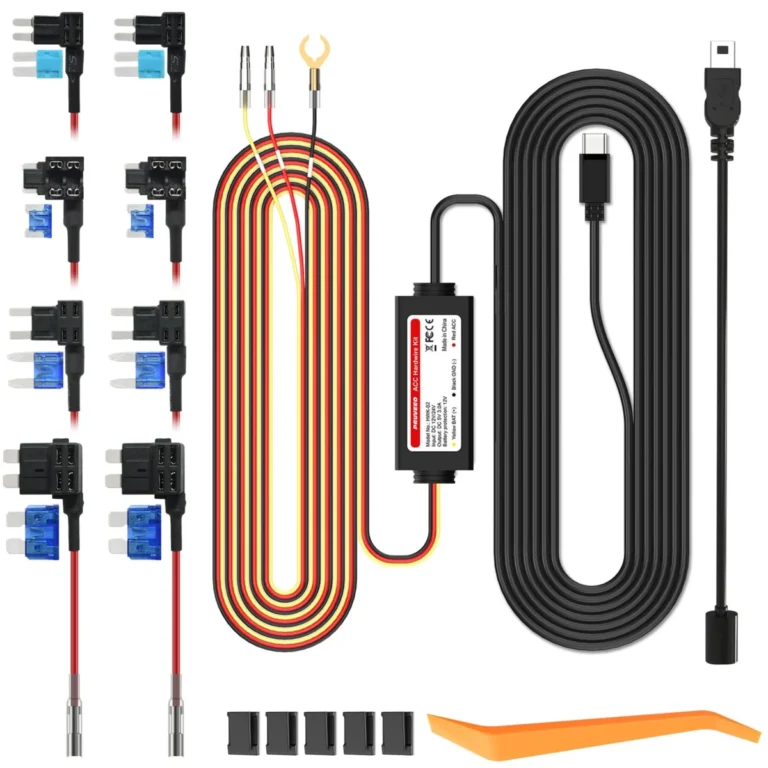
How to Set Up Dash Cam Parking Mode: Wiring, Cutoff and Settings
To set up dash cam parking mode, give the camera a constant power source (a fused fuse-box connection or an OBD cable,…
Dash Cam Laws in Texas: Mounting, Audio and Footage Rules
Dash cams are legal in Texas for private drivers recording from their own vehicle, and dash cam laws in Texas impose no…
Dash Cam Laws in Florida: Mounting, Audio Consent and Heat Rules
Dash cams are legal in Florida, but windshield placement, two-party audio consent and parking mode wiring all have rules.