7 Dash Cams Ranked for Commuters, Rideshare Drivers and Street Parkers
Published October 15, 2026
As an Amazon Associate we earn from qualifying purchases. This never changes which products we recommend.
The VIOFO A119 V3 is the best dash cam for most drivers: a single front camera with a Sony STARVIS IMX335 sensor, 1440p at up to 60 fps, true HDR for night plates and a supercapacitor instead of a battery. It keeps the setup simple and the footage clean.
The tradeoff is channels. Parking mode, storage limits and heat tolerance separate the rest of the field.
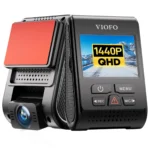 Best OverallVIOFO A119 V3Commuters who want one dependable front camera7.6/10
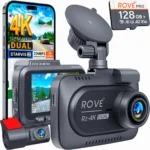 Best Front and Rear ValueROVE R2-4K DualDrivers who want rear coverage without a big spend7.7/10
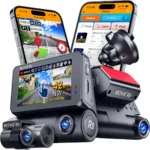 Best for Rideshare DriversROVE R3Rideshare and taxi drivers recording passengers7.3/10
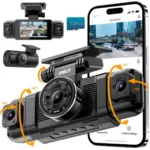 Best All-Round CoverageIIWEY N5Drivers who want four angles on one screen7.3/10
Table of contents9 sections · tap to expand
At a glance
Our top picks compared
| Product | Best for | Video | Key features | Where to buy |
|---|---|---|---|---|
| 1. VIOFO A119 V3 Best Overall 7.6/10 | Commuters who want one dependable front camera | 2K front | Buffered parkingGPSSTARVISSupercapacitor | Budget Check price |
| 2. ROVE R2-4K Dual Best Front and Rear Value 7.7/10 | Drivers who want rear coverage without a big spend | 4K upscaled front + 1080p rear | Parking modeGPSWi-FiSTARVIS 2 | Mid-range Check price |
| 3. ROVE R3 Best for Rideshare Drivers 7.3/10 | Rideshare and taxi drivers recording passengers | 2K front + 1080p rear + 1080p interior | Parking modeGPSWi-FiSupercapacitor | Premium Check price |
| 4. IIWEY N5 Best All-Round Coverage 7.3/10 | Drivers who want four angles on one screen | 1080p front + 1080p rear + 1080p interior | Parking modeGPS5 GHz Wi-FiSupercapacitor | Budget Check price |
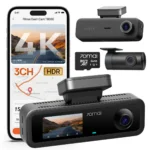 5. 70mai T800E Best for Parking Mode 7.2/10 | Street parkers who want the hardwire kit included | 4K front + 1080p rear + 1080p interior | Parking modeGPSWi-FiSupercapacitor | Budget Check price |
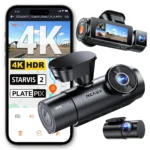 6. Vantrue N4 Pro S Best for Hot Climates 7.1/10 | Drivers in extreme heat who want the sharpest plates | 4K front + 2.5K rear | Buffered parkingGPS5 GHz Wi-FiSTARVIS 2 | Premium Check price |
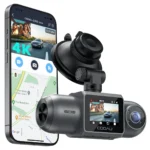 7. COOAU D30S Best Budget Interior Camera 7.1/10 | Budget rideshare drivers who need cabin footage | 2.5K front + 1080p rear + 2.5K interior | Parking modeGPS (optional)Wi-FiSTARVIS 2 | Mid-range Check price |
Score: our 0-10 rating of each product from buyer ratings, review volume, completeness of the product details and availability. A product has the same score in every guide on this site; the order of this list also weighs how well each one fits this use. It is not a lab test.
Buying advice
How to choose a dash cam for your car and driving habits
Decide your channels before anything else
Channels determine what the camera can prove. A front-only unit such as the VIOFO A119 V3 covers collisions ahead, while a 2-channel setup adds the rear view and a 3-channel camera adds a cabin lens that records passengers and cargo. Rideshare drivers usually need that interior channel; solo commuters rarely do, and paying for it adds cabling and cost.
Judge night video by sensor and HDR, not resolution alone
Readable plates at night come from light gathering, not pixel count. A Sony STARVIS or STARVIS 2 sensor with a wide aperture and HDR balances bright headlights against dark backgrounds, which is why the ROVE R2-4K Dual's IMX675 and the Vantrue N4 Pro S's triple STARVIS 2 sensors matter more than a 4K label. Upscaled 4K is not the same as native 4K, and frame rate drops when HDR is switched on.
Match parking mode to where the car sleeps
A driveway or garage needs no parking mode; a shared lot or street space does. Buffered recording saves the seconds before an impact, time-lapse stretches storage over a long night, and impact-only wakes the camera when something hits the car. Every mode except the 70mai T800E's needs a separately sold hardwire kit, so budget for it.
Check heat tolerance and storage limits
A supercapacitor survives summer dashboards better than a lithium battery, and every camera here uses one, though the ROVE R3 listing also mentions a battery cell. Storage caps range from 256 GB on the VIOFO A119 V3 and COOAU D30S to 512 GB on the ROVE R3 and 70mai T800E and 1 TB on the Vantrue N4 Pro S, which matters for long shifts and multi-camera recording.
Our picks
The Best Dash Cams for Commuters, Rideshare Drivers and Hot Climates
Best Overall
VIOFO A119 V3
- Front only
- 2K front
- Sony STARVIS
- Buffered parking
- GPS
- Supercapacitor
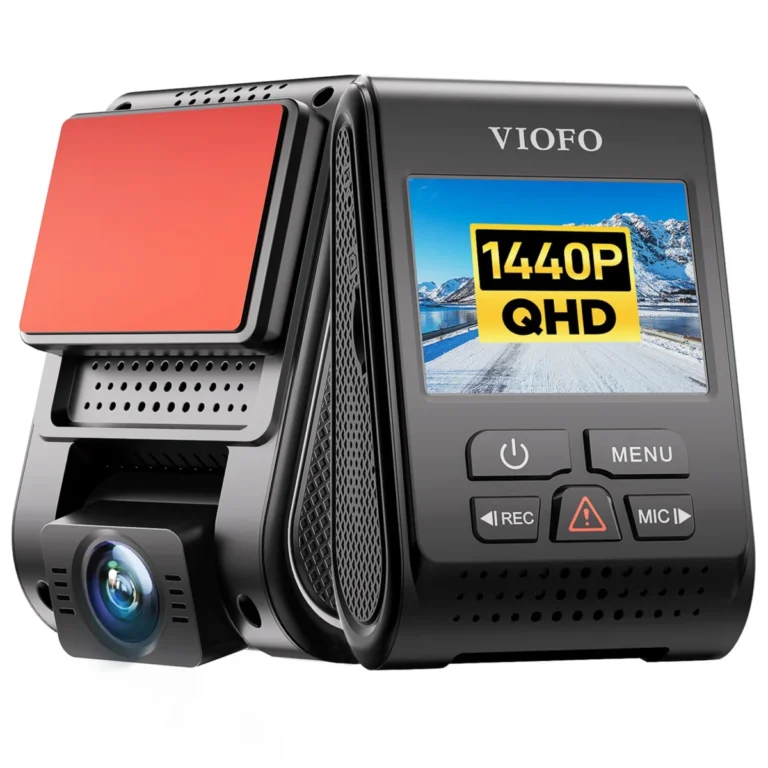
Best for: Commuters who want one dependable front camera
Skip if: You need rear or cabin footage, or want parking mode without buying a hardwire cable.
Price range: Budget
Check price on AmazonPaid link. We may earn a commission.
The A119 V3 earns Best Overall because it pairs a Sony STARVIS IMX335 sensor with 1440p at up to 60 fps, GPS and a supercapacitor for a price that undercuts most two-channel rivals.
What matters in daily use
The A119 V3 records one channel at 2K (1440p), and that single front view is the point: at 60 fps with HDR off, motion blur on passing plates drops noticeably compared with 30 fps cameras. The Sony STARVIS IMX335 sensor and f/1.6 aperture do the low-light work, while the 140-degree lens keeps distortion low. Commuters who mainly need the road ahead get cleaner evidence than a stretched dual-channel setup at the same money.
Its three parking modes are unusually complete for a front-only camera: buffered auto event detection saves 15 seconds before and 30 seconds after an impact, plus time-lapse and low bitrate options. Parking mode needs the VIOFO HK3 hardwire cable, sold separately. Against the ROVE R2-4K Dual, you trade rear coverage for a sharper, faster front channel.
Specifications
| Channels | 1 (front only) |
|---|---|
| Front video | 2K (1440p) |
| Sensor | Sony STARVIS (IMX335) |
| Frame rate | 60 fps (max) |
| Field of view | 140° |
| Parking mode | Yes (buffered, time-lapse, low bitrate) |
| Power | Supercapacitor (heat resistant) |
| Max storage | 256 GB microSD |
| GPS | Yes |
| Night video | HDR |
Pros
- 60 fps front footage reduces motion blur on plates
- Buffered parking mode captures the moments before impact
- Supercapacitor tolerates hot parked cars better than a battery
- GPS stamps speed, time and route on every file
Cons
- No rear or interior camera
- Parking mode requires the HK3 hardwire cable, sold separately
- HDR caps recording at 1440p 30 fps
Best Front and Rear Value
ROVE R2-4K Dual
- 2-channel
- 4K front
- 1080p rear
- Sony STARVIS 2
- Parking mode
- GPS
Best for: Drivers who want rear coverage without a big spend
Skip if: You want native 4K detail or cabin footage for rideshare work.
Price range: Mid-range
Check price on AmazonPaid link. We may earn a commission.
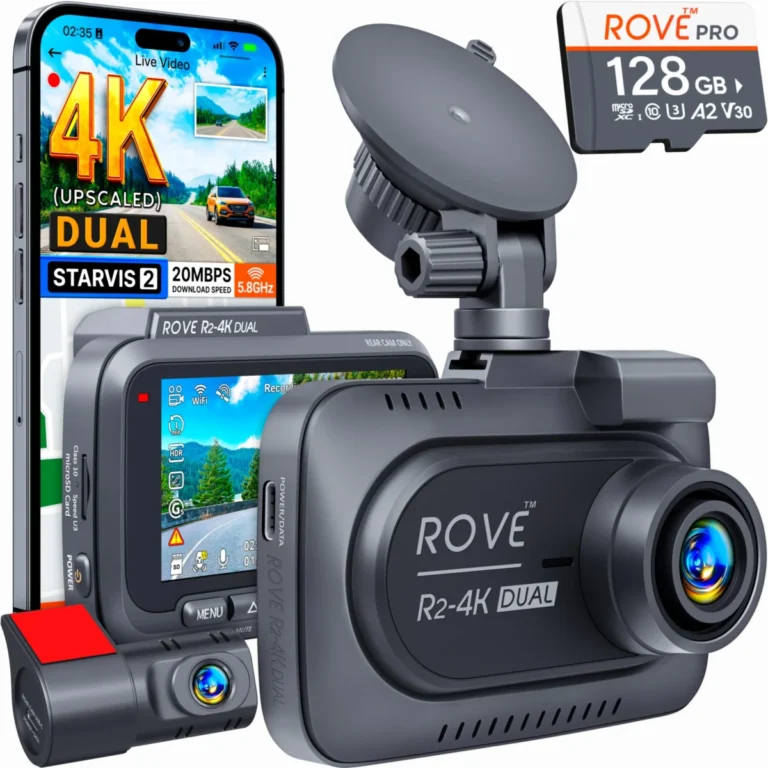
The ROVE R2-4K Dual takes Best Front and Rear Value by adding a 1080p rear camera, STARVIS 2 front sensor, GPS and a 128 GB card for drivers who want both directions covered.
What matters in daily use
Two channels change what the footage proves. The front camera uses a Sony STARVIS 2 IMX675 sensor with an f/1.5 aperture and HDR, and ROVE states the 2.5K capture is upscaled to 4K for playback, so treat the 4K label as processing rather than native detail. The rear camera records 1080p at f/1.8, enough to document a rear-end collision or a tailgater, and the 150-degree lens covers the lane beside you.
Convenience is where this camera separates from the VIOFO A119 V3: dual-band 5.8 GHz and 2.4 GHz Wi-Fi moves clips to the ROVE app at up to 20 MB/s, and a 128 GB card is in the box. Parking mode offers time-lapse, motion and collision detection, though it needs a hardwire kit sold separately. The supercapacitor and built-in thermal protection suit hot dashboards.
Specifications
| Channels | 2 (front + rear) |
|---|---|
| Front video | 4K (upscaled from 2.5K) |
| Rear video | 1080p (Full HD) |
| Sensor | Sony STARVIS 2 (IMX675) |
| Frame rate | 30 fps (max) |
| Field of view | 150° |
| Parking mode | Yes (time-lapse, motion detection, impact detection) |
| Hardwire kit | Sold separately (needed for parking mode) |
| Power | Supercapacitor (heat resistant) |
| GPS | Yes |
Pros
- Rear camera documents collisions from behind
- 128 GB card included, so it records out of the box
- 5.8 GHz Wi-Fi transfers clips quickly to the app
- Supercapacitor plus thermal protection for hot climates
Cons
- Front 4K is upscaled, not native
- Parking mode needs a hardwire kit sold separately
- No interior camera for passenger footage
Best for Rideshare Drivers
ROVE R3
- 3-channel
- 2K front
- 1080p rear
- Parking mode
- GPS
- Wi-Fi app
Best for: Rideshare and taxi drivers recording passengers
Skip if: You only need front coverage, or want buffered parking mode with pre-roll footage.
Price range: Premium
Check price on AmazonPaid link. We may earn a commission.
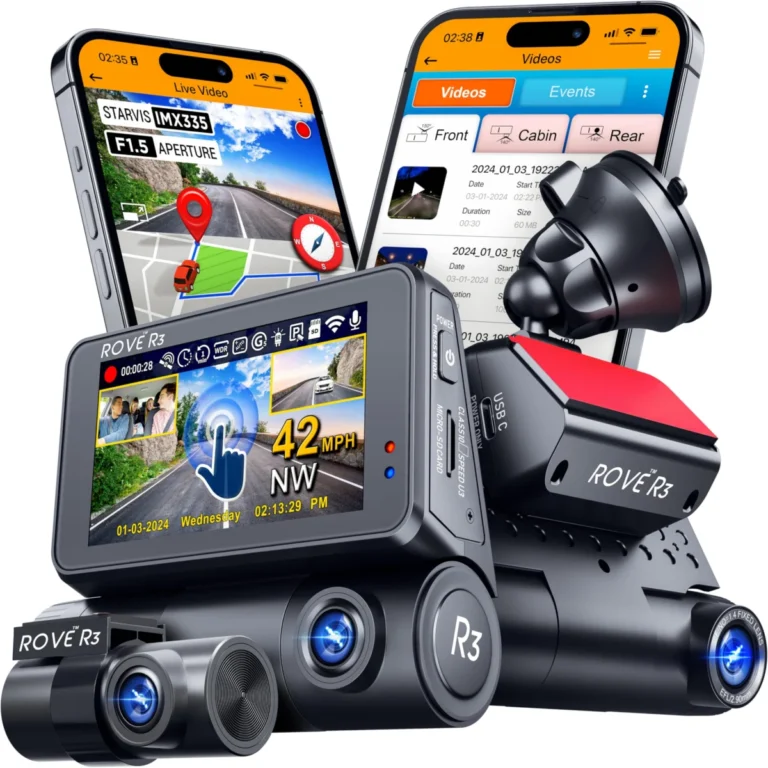
The ROVE R3 wins Best for Rideshare Drivers because it records front, cabin and rear at once, with infrared cabin LEDs and a 3-inch touchscreen that makes in-car checks simple.
What matters in daily use
Three channels at 2K (1440p) front, 1080p rear and 1080p interior cover the angles rideshare disputes actually involve: the road, the passenger cabin and the traffic behind. Four hidden infrared LEDs light the cabin in complete darkness, which matters for late fares, and the 150-degree lens keeps the front view wide. The 3-inch IPS touchscreen with a single power button means settings can be changed without pulling out a phone.
The tradeoff is storage and power discipline. ROVE does not include a memory card, so budget for a Class 10/U3 card up to 512 GB, and parking mode is time-lapse only, without the buffered pre-roll the Vantrue N4 Pro S offers. Dual-band 5.0 GHz Wi-Fi moves footage at up to 30 MB/s, and the supercapacitor avoids the battery swelling that plagues cheap cabin cameras in summer.
Specifications
| Channels | 3 (front, rear, interior) |
|---|---|
| Front video | 2K (1440p) |
| Rear video | 1080p (Full HD) |
| Interior video | 1080p (Full HD) |
| Frame rate | 60 fps (max) |
| Field of view | 150° |
| Parking mode | Yes (time-lapse) |
| Power | Supercapacitor (heat resistant) |
| Max storage | 512 GB microSD |
| GPS | Yes |
Pros
- Cabin camera documents passenger interactions
- Infrared LEDs keep interior footage usable at night
- 5.0 GHz Wi-Fi transfers clips at up to 30 MB/s
- Supercapacitor instead of a battery for heat tolerance
Cons
- Memory card not included
- Parking mode is time-lapse only, no buffered pre-roll
- Three-channel recording fills cards faster
Best All-Round Coverage
IIWEY N5
- 4-channel
- 1080p front
- 1080p rear
- Parking mode
- GPS
- 5 GHz Wi-Fi
Best for: Drivers who want four angles on one screen
Skip if: You want native 4K front footage or a simpler setup with fewer than four channels.
Price range: Budget
Check price on AmazonPaid link. We may earn a commission.
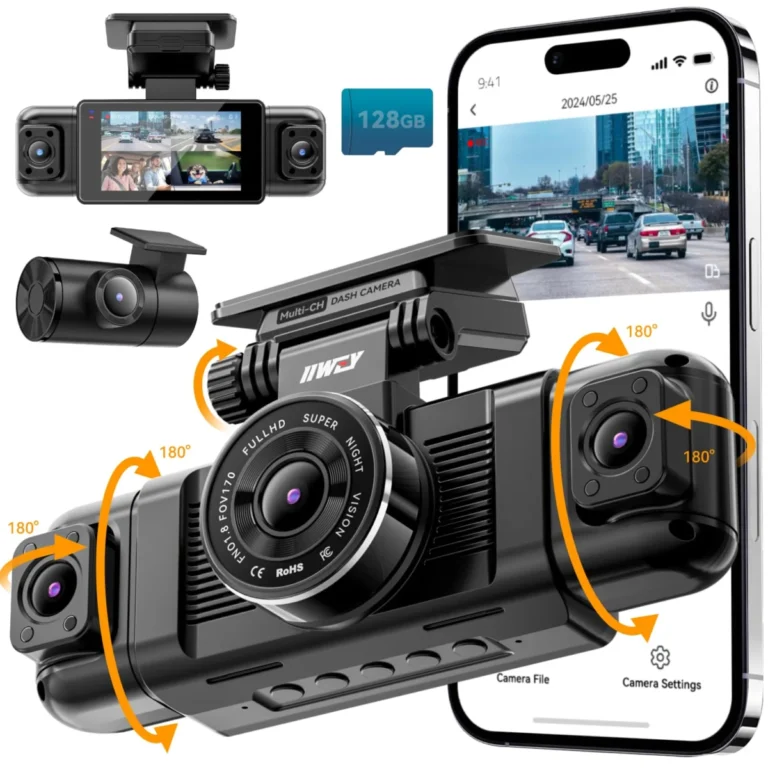
The IIWEY N5 earns Best All-Round Coverage by recording four 1080p views at once, so a single screen shows front, rear, and both sides of the car.
What matters in daily use
Four channels is the N5's defining feature: front, rear, and two side cameras all record at 1080p, with a 2.5K front option when you drop to three channels. Its 170-degree front and rear lenses plus 150-degree side lenses build a 360-degree picture, which suits drivers who want one system covering blind spots rather than adding separate cameras.
Two limits shape daily use. The N5 must run from the included cigarette lighter charger, not a USB or Type-C cable, and parking mode needs the sold-out hardwire kit, so the supercapacitor always relies on external power. Compared with the 70mai T800E, the N5 trades 4K front detail for wider four-angle coverage.
Specifications
| Channels | 4 (front, rear, left, right or interior) |
|---|---|
| Front video | 1080p (Full HD) |
| Rear video | 1080p (Full HD) |
| Interior video | 1080p (Full HD) |
| Field of view | 360° |
| Parking mode | Yes (time-lapse, impact detection) |
| Hardwire kit | Sold separately (needed for parking mode) |
| Power | Supercapacitor (heat resistant) |
| Max storage | 256 GB microSD |
| GPS | Yes |
Pros
- Four simultaneous 1080p views on one screen
- 360-degree coverage reduces blind spots
- 5 GHz Wi-Fi transfers clips faster than 2.4 GHz
- 128 GB card included and already installed
Cons
- Must use the original cigarette lighter charger
Best for Parking Mode
70mai T800E
- 3-channel
- 4K front
- 1080p rear
- Parking mode
- GPS
- Wi-Fi app
Best for: Street parkers who want the hardwire kit included
Skip if: You want buffered parking clips that include the seconds before impact.
Price range: Budget
Check price on AmazonPaid link. We may earn a commission.
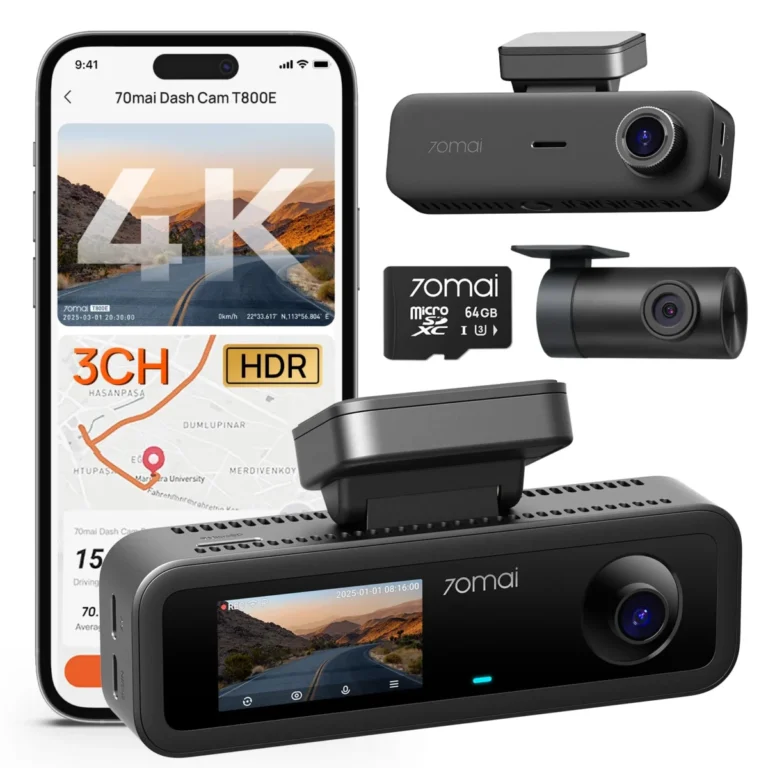
The 70mai T800E takes Best for Parking Mode because the hardwire kit comes in the box, so street parkers can wire 24/7 monitoring without buying extra parts.
What matters in daily use
The T800E records three channels: a native 4K front camera plus 1080p interior and 1080p rear, all at 30 fps with HDR. For rideshare and family drivers, that combination captures the road, passengers, and what happens behind the car. Wi-Fi 6 moves files to the 70mai app faster than older Wi-Fi, and voice control handles photos and recording locks without reaching for the camera.
Parking mode is the reason this pick ranks where it does: impact detection runs through the included hardwire kit, and the supercapacitor tolerates heat from 14 to 140 degrees Fahrenheit. The tradeoff is that parking coverage is impact detection only, not the buffered pre-roll the Vantrue N4 Pro S offers, and the front lens covers 140 degrees, narrower than the 150-degree ROVE R2-4K Dual.
Specifications
| Channels | 3 (front, rear, interior) |
|---|---|
| Front video | 4K (2160p) |
| Rear video | 1080p (Full HD) |
| Interior video | 1080p (Full HD) |
| Frame rate | 30 fps (max) |
| Field of view | 140° |
| Parking mode | Yes (impact detection) |
| Hardwire kit | Included |
| Power | Supercapacitor (heat resistant) |
| Max storage | 512 GB microSD |
Pros
- Hardwire kit included, no extra purchase
- Native 4K front footage with HDR
- Wi-Fi 6 and voice control speed up daily use
- 64 GB card included for immediate setup
Cons
- Parking mode is impact detection only, no buffered pre-roll
- 140-degree front lens is narrower than some rivals
- No 4G connectivity despite cloud-related listing text
Best for Hot Climates
Vantrue N4 Pro S
- 3-channel
- 4K front
- 2.5K rear
- Sony STARVIS 2
- Buffered parking
- GPS
Best for: Drivers in extreme heat who want the sharpest plates
Skip if: You want a lower total cost or a simpler setup than three channels. The 70mai T800E costs less and covers front and rear only.
Price range: Premium
Check price on AmazonPaid link. We may earn a commission.
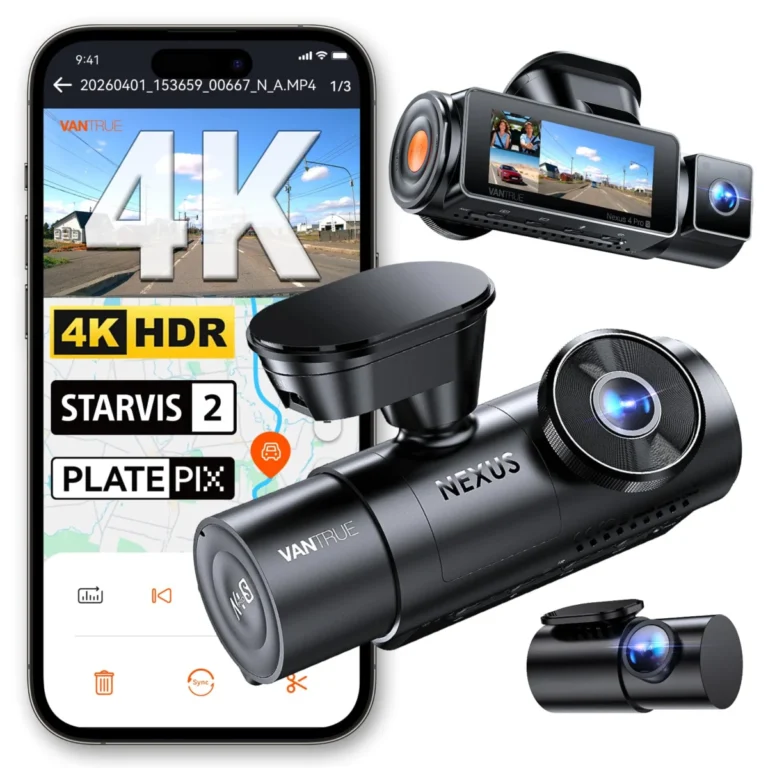
The Vantrue N4 Pro S is Best for Hot Climates because its supercapacitor and triple STARVIS 2 sensors hold up in extreme heat while capturing the sharpest plates here.
What matters in daily use
The N4 Pro S runs three channels at 4K front, 2.5K rear, and 1080p interior, each on a Sony STARVIS 2 sensor with HDR, and its rear camera rotates 360 degrees for trunk or traffic views. The 20-foot rear cable fits most SUVs, minivans, and trucks. For drivers who need readable plates at night, the triple-sensor setup and PlatePix processing target exactly that job.
Heat is where this camera separates itself: the supercapacitor and a front-plus-rear mode that Vantrue says cuts heat by 30% keep it running through summer. Buffered parking mode captures 10 seconds before an impact, but the hardwire kit is sold separately, unlike the 70mai T800E. Storage reaches 1 TB, and the 18-month warranty is the longest stated here.
Specifications
| Channels | 3 (front, rear, interior) |
|---|---|
| Front video | 4K (2160p) |
| Rear video | 2.5K (1600p) |
| Sensor | Sony STARVIS 2 (IMX678) |
| Frame rate | 30 fps (max) |
| Field of view | 360° |
| Parking mode | Yes (buffered, motion detection, impact detection) |
| Hardwire kit | Sold separately (needed for parking mode) |
| Power | Supercapacitor (heat resistant) |
| GPS | Yes |
Pros
- Sharpest plate capture of the picks here
- Buffered parking mode saves pre-impact footage
- Supercapacitor and heat-reducing mode suit hot climates
- 18-month warranty and 1 TB storage support
Cons
- Hardwire kit sold separately for parking mode
- No memory card included in the box
- Higher cost than the 70mai T800E
Best Budget Interior Camera
COOAU D30S
- 3-channel
- 2.5K front
- 1080p rear
- Sony STARVIS 2
- Parking mode
- GPS optional
Best for: Budget rideshare drivers who need cabin footage
Skip if: You need genuine rear-road coverage or the sharpest 4K plate detail.
Price range: Mid-range
Check price on AmazonPaid link. We may earn a commission.
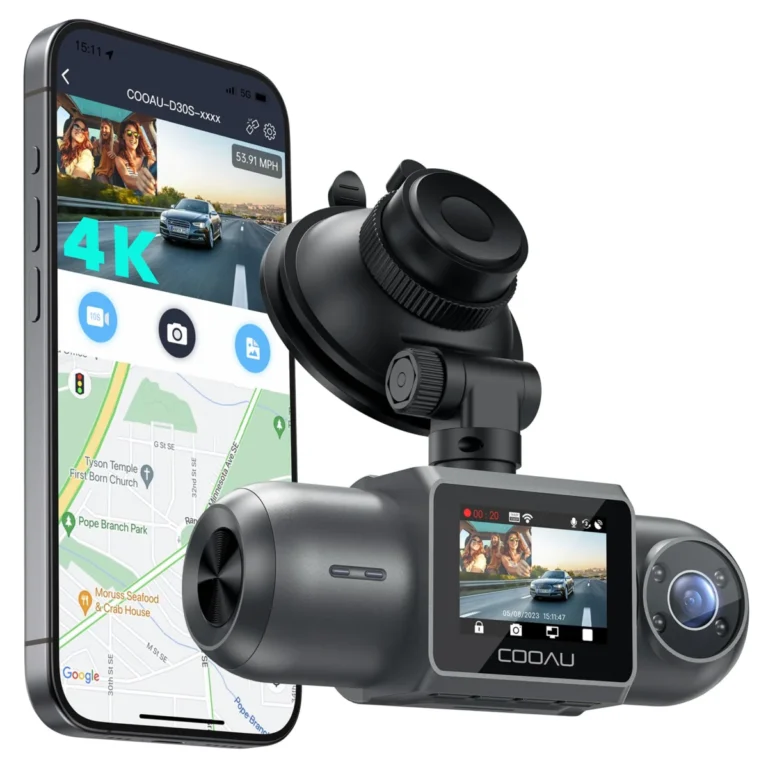
The COOAU D30S is the budget pick for rideshare and taxi drivers because its 2.5K cabin camera and four infrared LEDs capture passenger footage that 1080p interior rivals cannot match, at a lower cost than the ROVE R3.
What matters in daily use
The D30S records front and interior at 2.5K plus 1080p at 30 fps, so the cabin channel carries more detail than the 1080p interior camera on the ROVE R3. Four infrared LEDs let the interior camera keep recording in a dark cabin, which matters for night rideshare shifts, and the 170-degree front view is the widest in this group. The 1.5-inch screen is small, so most settings and clip review happen through the COOAUDash app over Wi-Fi.
Its main tradeoff is that the third channel is a cabin camera rather than a true rear camera, so the D30S does not cover the road behind the car the way the ROVE R2-4K Dual does. Parking mode offers time-lapse, motion and impact detection, but the hardwire kit is sold separately, and the 256 GB card limit is lower than the 512 GB ceiling on the 70mai T800E. The supercapacitor helps it tolerate hot parked cars.
Specifications
| Channels | 3 (front, rear, interior) |
|---|---|
| Front video | 2.5K (1600p) |
| Rear video | 1080p (Full HD) |
| Interior video | 2.5K (1600p) |
| Sensor | Sony STARVIS 2 |
| Frame rate | 30 fps (max) |
| Field of view | 170° |
| Parking mode | Yes (time-lapse, motion detection, impact detection) |
| Hardwire kit | Sold separately (needed for parking mode) |
| Power | Supercapacitor (heat resistant) |
Pros
- 2.5K cabin camera beats 1080p interior rivals
- Four IR LEDs record passengers in darkness
- Widest 170-degree front view in this group
- Supercapacitor tolerates hot parked cars
Cons
- No true rear-road camera, cabin channel only
- Hardwire kit sold separately for parking mode
- GPS listed as optional, not built in
What else do you need to buy with a dash cam?
Two accessories decide whether a dash cam works as advertised. A hardwire kit with low-voltage cutoff is required for parking mode on the VIOFO A119 V3, ROVE R2-4K Dual, ROVE R3, IIWEY N5, Vantrue N4 Pro S and COOAU D30S; only the 70mai T800E includes one. The kit taps a fuse for constant power and shuts the camera off before the car battery drops too far to start the engine.
A high-endurance microSD card matters just as much, because loop recording writes constantly and cards built for photos fail early. VIOFO recommends U3 A2 V30 cards up to 256 GB for the A119 V3, and the ROVE R2-4K Dual ships with a 128 GB card. A CPL filter, which cuts windshield glare and dashboard reflections, is optional and screws onto cameras that offer the thread, such as the ROVE R2-4K Dual.
How much does parking mode drain your car battery?
Parking mode can run overnight without flattening a healthy battery if the hardwire kit cuts power at a set voltage, typically around 11.8 to 12.4 volts. Time-lapse at 1 fps and low-bitrate recording draw far less than continuous recording, which is why the VIOFO A119 V3 and IIWEY N5 offer both modes for long unattended stretches.
Buffered modes, which keep a few seconds of footage before an impact, need the camera awake and use more power. If the car sits for days at a time, an OBD power cable with the same cutoff is easier to fit than a fuse tap, and a dedicated dash cam battery pack removes the load from the car entirely. Check the kit's cutoff range before buying.
Decision guide
How the top picks compare
Front-only versus multi-channel is the first real decision. The VIOFO A119 V3 records 1440p at up to 60 fps on one channel, which keeps files small and plate detail high, and it costs less than the multi-camera options. The ROVE R2-4K Dual and ROVE R3 record more angles but split storage and processing across two or three lenses, so each channel's footage is shorter per gigabyte.
Among the multi-channel picks, the split is interior coverage versus total coverage. The ROVE R3 and 70mai T800E add a cabin camera with infrared for night, which is what rideshare disputes turn on, while the IIWEY N5 spreads four 1080p channels around the car for side impacts and parking scrapes. The Vantrue N4 Pro S and COOAU D30S sit between them, pairing a high-resolution front lens with a cabin view.
Our process
How we chose our dash cam picks
Cameras were shortlisted from current listings with verified specifications and grouped by channel count, sensor, parking mode, power source and storage ceiling. Ranking weighed night video hardware, heat handling, what comes in the box and how much extra gear each camera needs before parking mode works, then factored in buyer feedback across a large volume of ratings. No camera was tested or installed for this guide; the assessment is based on specifications, design and reported owner experience.
Common questions
Frequently asked questions
How do I choose a dash cam for my car?
Start with channels: front-only for solo commuting, front and rear for most drivers, and a cabin camera if you carry passengers. Then check the sensor and HDR for night footage, whether parking mode needs a hardwire kit, and the storage ceiling. Match the power source to your climate.
Do I need a rear camera on a dash cam?
A rear channel helps in rear-end collisions, lane-change disputes and parking lot hits, which a front lens cannot see. It is optional for short commutes but worth it for highway driving and street parking. The ROVE R2-4K Dual and Vantrue N4 Pro S both cover the rear.
Can a dash cam record while parked without draining the battery?
Yes, if it is wired through a hardwire kit or OBD cable with low-voltage cutoff, which powers the camera down before the car battery falls too low to start the engine. Time-lapse and low-bitrate modes draw the least. Without that wiring, parking mode will not run at all.
How long does a dash cam keep footage before it overwrites?
Loop recording overwrites the oldest clips once the card fills, so retention depends on card size, resolution and channel count. A 256 GB card holds far more front-only 1440p footage than three-channel 4K. Clips locked by the G-sensor during an impact are kept separately and are not overwritten.
Do dash cams record audio, and is that legal?
Most dash cams, including the VIOFO A119 V3, have a built-in microphone and record audio by default, and it can usually be muted in settings. Audio recording consent rules differ by state and country, and some places require all parties to agree, so check your local law before relying on sound.
Bottom line
Final verdict
- Most drivers: VIOFO A119 V3. The VIOFO A119 V3 delivers the cleanest front-channel night footage here with the fewest extras to buy, as long as you accept front-only coverage.
- Rideshare and taxi drivers: ROVE R3. The ROVE R3 records front, cabin and rear at once with infrared for the interior, which is the footage passenger disputes actually need.
- Street parkers: 70mai T800E. The 70mai T800E is the only camera here that includes the hardwire kit parking mode requires, plus a 64 GB card to start recording immediately.
- Hot-climate drivers: Vantrue N4 Pro S. The Vantrue N4 Pro S pairs triple STARVIS 2 sensors with a supercapacitor and a 1 TB storage ceiling, suiting long, hot drives where plate detail matters most.
Keep reading
7 Motorcycle Dash Cams Built for Rain, Vibration and a 12V Bike Supply
The SIXTOP Motorcycle Dash Cam is our top pick among 7 motorcycle dash cams, compared on waterproof rating and front and rear…
Wireless Dash Cams: 7 Setups Ranked, and When a Cable Still Wins
The VIOFO A119 V3 leads our wireless dash cam picks, with the ROVE R2-4K Dual for front and rear. What Wi-Fi transfer…
Front and Rear Dash Cams: Which Two-Channel Setup Fits Your Car, Parking and Climate
The ROVE R2-4K Dual leads our seven front and rear dash cams, ranked by channel count, rear footage clarity, parking mode wiring…
Final decision
Compare two finalists
Choose the two picks you narrowed down to see who each one suits and the main reason to skip it.