7 Best Affver Dash Cam (2026), Matched to How You Use Them
Published October 15, 2026
As an Amazon Associate we earn from qualifying purchases. This never changes which products we recommend.
The best Affver dash cam for most drivers is the Affver A4, because it records front 4K and rear 2.5K, includes a 64GB card and a 24-month warranty, and covers a disputed rear-end claim without extra purchases. It leads this guide on channel count, night video and parking needs rather than on resolution alone.
The main tradeoff is channels against simplicity. A front-only camera like the VIOFO A119 V3 is cheaper, easier to install and uses a supercapacitor for hot cars, while 2-channel and 3-channel systems add rear and cabin coverage but need a hardwire kit for parking mode and more cable routing. Pick the coverage your driving actually needs.
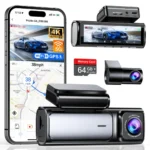 Best OverallAffver A4Drivers who want front and rear coverage out of the box7.2/10
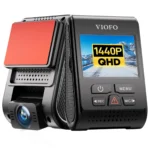 Best Front-Only OptionVIOFO A119 V3Drivers who want a simple, heat-tolerant front camera7.6/10
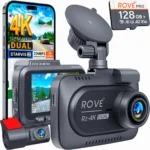 Best for Night VideoROVE R2-4K DualNight commuters who need plate legibility after dark7.7/10
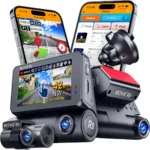 Best for Rideshare and FleetROVE R3Rideshare and fleet drivers who need cabin footage7.3/10
Table of contents9 sections · tap to expand
At a glance
Our top picks compared
| Product | Best for | Video | Key features | Where to buy |
|---|---|---|---|---|
| 1. Affver A4 Best Overall 7.2/10 | Drivers who want front and rear coverage out of the box | 4K front + 2.5K rear | GPS5 GHz Wi-Fi | Budget Check price |
| 2. VIOFO A119 V3 Best Front-Only Option 7.6/10 | Drivers who want a simple, heat-tolerant front camera | 2K front | Buffered parkingGPSSTARVISSupercapacitor | Mid-range Check price |
| 3. ROVE R2-4K Dual Best for Night Video 7.7/10 | Night commuters who need plate legibility after dark | 4K upscaled front + 1080p rear | Parking modeGPSWi-FiSTARVIS 2 | Mid-range Check price |
| 4. ROVE R3 Best for Rideshare and Fleet 7.3/10 | Rideshare and fleet drivers who need cabin footage | 2K front + 1080p rear + 1080p interior | Parking modeGPSWi-FiSupercapacitor | Premium Check price |
 5. IIWEY N5 Best for All-Round Coverage 7.3/10 | Drivers who want side and interior angles covered | 1080p front + 1080p rear + 1080p interior | Parking modeGPS5 GHz Wi-FiSupercapacitor | Budget Check price |
 6. 70mai T800E Best Value 7.2/10 | Buyers who want a hardwire kit and card included | 4K front + 1080p rear + 1080p interior | Parking modeGPSWi-FiSupercapacitor | Budget Check price |
 7. Vantrue N4 Pro S Best for Hot Climates 7.1/10 | Hot-climate drivers who want buffered parking mode | 4K front + 2.5K rear | Buffered parkingGPS5 GHz Wi-FiSTARVIS 2 | Premium Check price |
Score: our 0-10 rating of each product from buyer ratings, review volume, completeness of the product details and availability. A product has the same score in every guide on this site; the order of this list also weighs how well each one fits this use. It is not a lab test.
Buying advice
How to choose a dash cam for your driving situation
Channel count decides what you can prove
Channel count is the first decision because it sets what footage exists after an incident. A front-only camera covers rear-end collisions and road ahead, a 2-channel system adds the car behind you, and a 3-channel system adds the cabin for passengers. The Affver A4 and ROVE R2-4K Dual are 2-channel, the ROVE R3, 70mai T800E and Vantrue N4 Pro S are 3-channel, and the IIWEY N5 records four angles including the sides. Choose the coverage your routes and passengers require, not the highest number.
Night video depends on the sensor, not the resolution
A 4K label does not guarantee a readable plate at night; the image sensor, aperture and HDR processing do most of the work. Sony STARVIS and STARVIS 2 sensors are built for low light, and the ROVE R2-4K Dual uses a STARVIS 2 IMX675 with an F1.5 aperture, while the Vantrue N4 Pro S uses triple STARVIS 2 sensors with HDR.
The VIOFO A119 V3 uses a STARVIS IMX335 with HDR and an F1.6 aperture. If most of your driving is after dark, sensor generation matters more than the number on the box.
Parking mode needs a hardwire kit and a cutoff
Parking mode only works if the camera stays powered after the ignition is off, which means a hardwire kit or OBD cable with a low-voltage cutoff. Buffered parking mode, available on the VIOFO A119 V3 and Vantrue N4 Pro S, saves the seconds before an impact, which matters when a bump triggers recording after the fact.
Heat tolerance and storage shape long-term reliability
Supercapacitors tolerate hot parked cars better than lithium batteries, and every pick here except the Affver A4 uses one, which matters if you park in the sun. Storage also matters: loop recording overwrites the oldest files, and the G-sensor locks event clips so they survive. The VIOFO A119 V3 supports up to 256GB, the ROVE R3 and 70mai T800E up to 512GB, and the Vantrue N4 Pro S up to 1TB. Use a high-endurance card rated for continuous writing.
Our picks
Dash cams ranked by channels, night video and parking needs
Best Overall
Affver A4
- 2-channel
- 4K front
- 2.5K rear
- GPS
- 5 GHz Wi-Fi
Best for: Drivers who want front and rear coverage out of the box
Skip if: You park on the street overnight and need buffered parking mode.
Price range: Budget
Check price on AmazonPaid link. We may earn a commission.
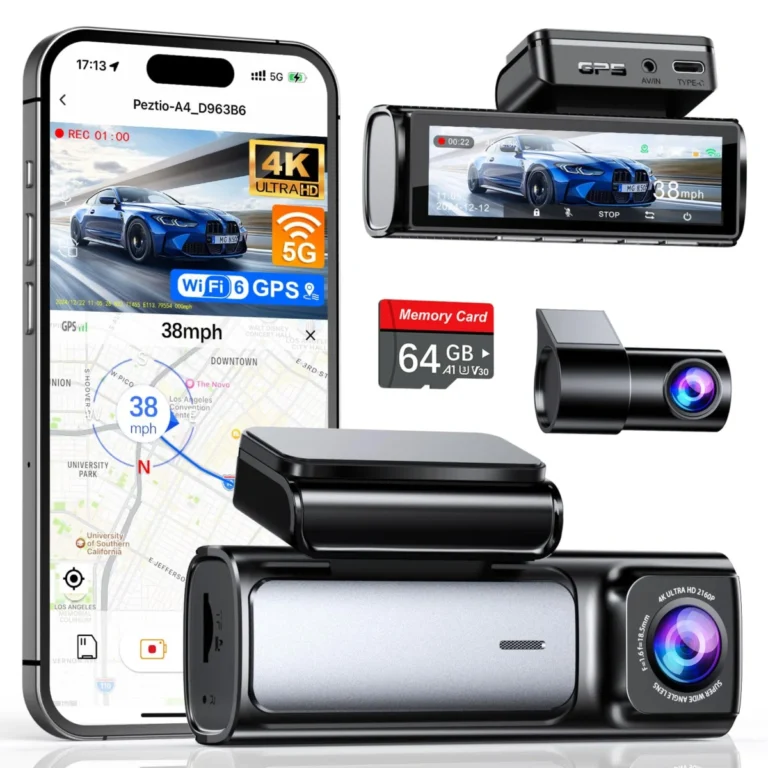
The Affver A4 earns Best Overall because it pairs 4K front and 2.5K rear recording with a 64GB card, GPS and a 24-month warranty at the lowest entry point here.
What matters in daily use
The A4 is the only pick in this guide that ships with both a rear camera and a memory card, so a buyer can mount it and start recording without a second purchase. Front footage runs 4K at 30 fps through a 160-degree lens, and the rear channel captures 2.5K, which is sharper than the 1080p rear cameras on the ROVE R2-4K Dual and the 70mai T800E. For family cars and new drivers, that rear detail matters in a disputed rear-end claim.
The tradeoffs sit in the details. The A4 uses a lithium polymer battery rather than the supercapacitor found in the VIOFO A119 V3 and the ROVE R2-4K Dual, so hot-climate drivers should weigh that against the lower price. Parking mode is not listed, and the 64GB card is modest for dual-channel 4K. Buyers who want buffered parking events should look at the Vantrue N4 Pro S instead.
Specifications
| Channels | 2 (front + rear) |
|---|---|
| Front video | 4K (2160p) |
| Rear video | 2.5K (1600p) |
| Frame rate | 30 fps (max) |
| Field of view | 160° |
| Card included | 64 GB |
| GPS | Yes |
| Wi-Fi | 5 GHz Wi-Fi app |
| Screen | 3.59 in |
| Night video | WDR |
Pros
- Rear camera and 64GB card included
- 2.5K rear beats most 1080p rivals
- Large 3.59-inch screen is easy to read
- 24-month warranty is the longest here
Cons
- No parking mode listed for overnight protection
- 64GB card fills quickly with dual 4K
Best Front-Only Option
VIOFO A119 V3
- Front only
- 2K front
- Sony STARVIS
- Buffered parking
- GPS
- Supercapacitor
Best for: Drivers who want a simple, heat-tolerant front camera
Skip if: You want rear or cabin coverage from a single camera.
Price range: Mid-range
Check price on AmazonPaid link. We may earn a commission.
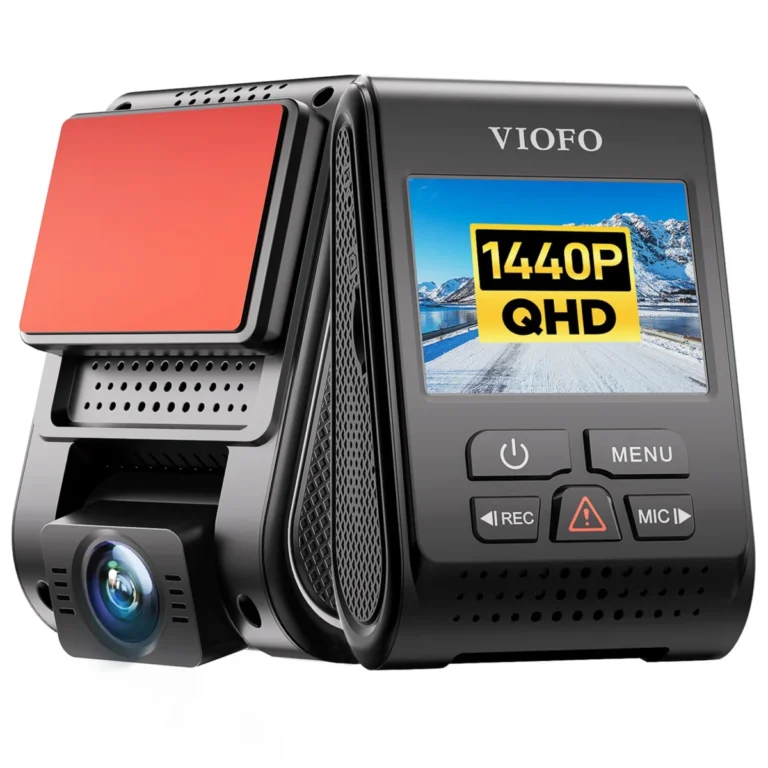
The VIOFO A119 V3 is the Best Front-Only Option: a compact 2K camera with a Sony STARVIS sensor, three parking modes and a supercapacitor that shrugs off summer heat.
What matters in daily use
Front-only design keeps the A119 V3 simple and cheap to run. Its Sony STARVIS IMX335 sensor records 1440p at up to 60 fps, and the 140-degree lens trades a little width for less edge distortion than the 160-degree Affver A4. HDR balances bright headlights against dark plates at night, and the supercapacitor is the reason this camera keeps working through a summer of parked-car heat.
Parking protection is where this camera separates itself. Auto Event Detection buffers 15 seconds before and 30 seconds after an impact, alongside time-lapse and low-bitrate modes, but all of it needs the VIOFO HK3 hardwire cable sold separately. Storage tops out at 256GB, well below the 512GB ceiling on the ROVE R3 and the 70mai T800E, and there is no rear channel at all.
Specifications
| Channels | 1 (front only) |
|---|---|
| Front video | 2K (1440p) |
| Sensor | Sony STARVIS (IMX335) |
| Frame rate | 60 fps (max) |
| Field of view | 140° |
| Parking mode | Yes (buffered, time-lapse, low bitrate) |
| Power | Supercapacitor (heat resistant) |
| Max storage | 256 GB microSD |
| GPS | Yes |
| Night video | HDR |
Pros
- Buffered parking mode captures pre-impact footage
- Supercapacitor tolerates hot parked cars
- 60 fps option smooths fast-moving detail
- Compact body hides behind the mirror
Cons
- Hardwire kit sold separately for parking mode
- No rear camera available
- 256GB storage limit is modest
Best for Night Video
ROVE R2-4K Dual
- 2-channel
- 4K front
- 1080p rear
- Sony STARVIS 2
- Parking mode
- GPS
Best for: Night commuters who need plate legibility after dark
Skip if: You need native 4K front footage rather than upscaled detail.
Price range: Mid-range
Check price on AmazonPaid link. We may earn a commission.
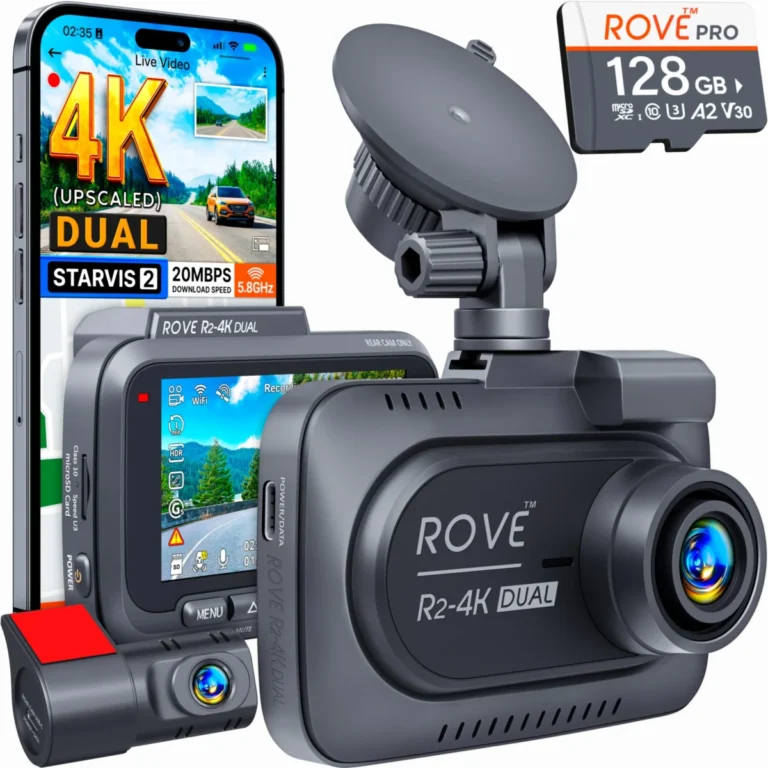
The ROVE R2-4K Dual takes Best for Night Video on the strength of a Sony STARVIS 2 IMX675 sensor, HDR and an F1.5 aperture that keep plates readable after dark.
What matters in daily use
Night legibility is the reason to choose this camera. The STARVIS 2 IMX675 sensor, F1.5 front aperture and HDR work together on dim streets, tunnels and dusk drives, which is a newer sensor generation than the STARVIS IMX335 in the VIOFO A119 V3. The front channel is 2.5K upscaled to 4K, so detail improves over standard 1080p but does not match native 4K capture. The rear camera records 1080p.
Daily use is well covered: a 128GB card is included, the supercapacitor handles heat, and 5.8GHz Wi-Fi moves clips to a phone quickly. Parking mode offers time-lapse, motion and collision detection, but the hardwire kit is not in the box, so overnight protection costs extra. The 70mai T800E includes its hardwire kit, which narrows that gap.
Specifications
| Channels | 2 (front + rear) |
|---|---|
| Front video | 4K (upscaled from 2.5K) |
| Rear video | 1080p (Full HD) |
| Sensor | Sony STARVIS 2 (IMX675) |
| Frame rate | 30 fps (max) |
| Field of view | 150° |
| Parking mode | Yes (time-lapse, motion detection, impact detection) |
| Hardwire kit | Sold separately (needed for parking mode) |
| Power | Supercapacitor (heat resistant) |
| GPS | Yes |
Pros
- STARVIS 2 sensor improves low-light plate reads
- 128GB card included for long recording
- Supercapacitor suits hot climates
- Supports microSD cards up to 1TB
Cons
- Front 4K is upscaled, not native
- Hardwire kit sold separately for parking mode
- Rear channel limited to 1080p
Best for Rideshare and Fleet
ROVE R3
- 3-channel
- 2K front
- 1080p rear
- Parking mode
- GPS
- Wi-Fi app
Best for: Rideshare and fleet drivers who need cabin footage
Skip if: You only need road-facing footage and want maximum front resolution instead of cabin coverage.
Price range: Premium
Check price on AmazonPaid link. We may earn a commission.
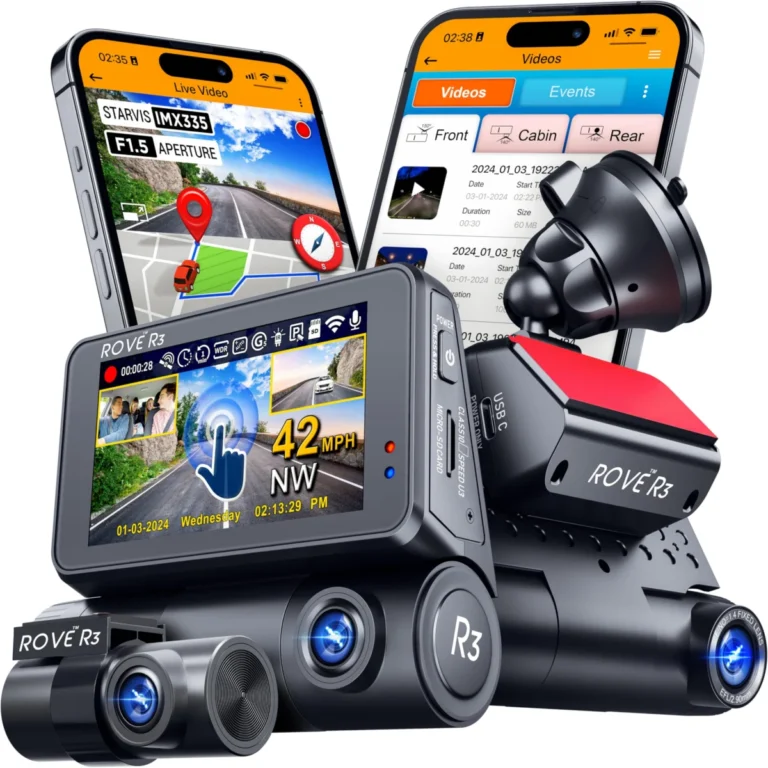
The ROVE R3 earns Best for Rideshare and Fleet because it records front, cabin and rear at once, so passenger and road events land in the same file set.
What matters in daily use
Three channels are the point here: 2K at the front, 1080p for the cabin and 1080p for the rear, all running together. For rideshare work that combination matters more than a sharper front lens, because a dispute about what a passenger did or said is settled by the interior view. Four hidden infrared LEDs let the cabin camera keep recording in a dark car, and the 3-inch IPS touchscreen plus single-button layout keeps menu changes quick between trips.
The ROVE R3 tops out at 512 GB of microSD storage, the highest ceiling among the picks here, which suits drivers recording long shifts every day. Its supercapacitor is the right choice for a car that bakes in a lot, and the 5 GHz Wi-Fi app moves clips to a phone for sharing.
The tradeoff is front detail: the Affver A4 records 4K up front, while the R3 settles for 2K, so distant plate reads suffer slightly. Parking mode is time-lapse only, so it captures frames at intervals rather than the seconds before a bump.
Specifications
| Channels | 3 (front, rear, interior) |
|---|---|
| Front video | 2K (1440p) |
| Rear video | 1080p (Full HD) |
| Interior video | 1080p (Full HD) |
| Frame rate | 60 fps (max) |
| Field of view | 150° |
| Parking mode | Yes (time-lapse) |
| Power | Supercapacitor (heat resistant) |
| Max storage | 512 GB microSD |
| GPS | Yes |
Pros
- Cabin camera with infrared LEDs for night recording
- 512 GB card ceiling suits long daily shifts
- Touchscreen and one-button design simplify settings
- Supercapacitor tolerates hot parked cars
Cons
- Front channel is 2K, not 4K
- Parking mode is time-lapse only
- Memory card not included in the box
Best for All-Round Coverage
IIWEY N5
- 4-channel
- 1080p front
- 1080p rear
- Parking mode
- GPS
- 5 GHz Wi-Fi
Best for: Drivers who want side and interior angles covered
Skip if: You want a simpler two-camera setup, or you would rather not run the side and rear cables that a four-channel install requires.
Price range: Budget
Check price on AmazonPaid link. We may earn a commission.
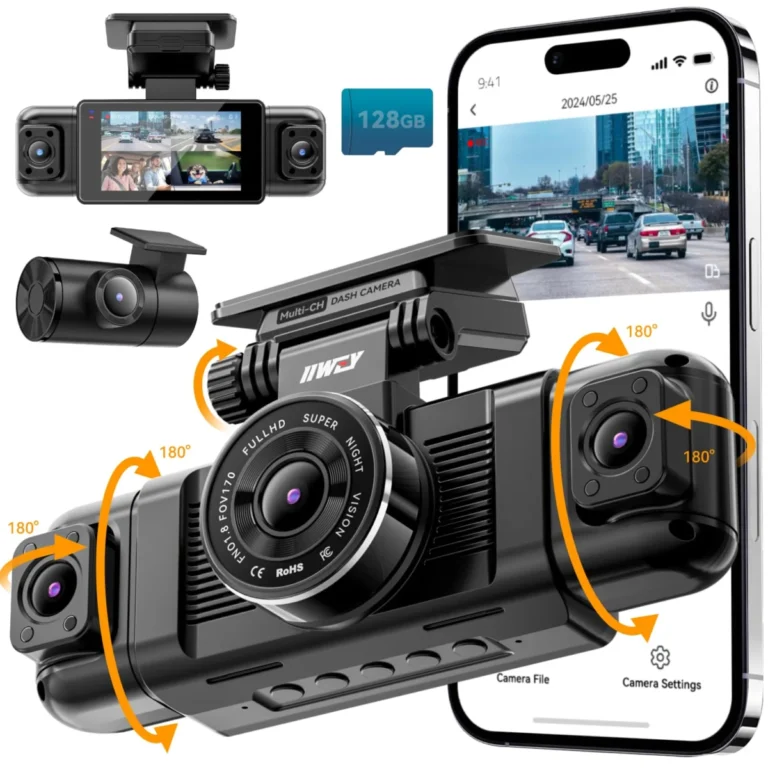
The IIWEY N5 takes Best for All-Round Coverage because four channels and a 360-degree view record the sides of the car, not just the road ahead and behind.
What matters in daily use
Four cameras change what footage can prove. The N5 covers front, rear, both sides and the interior, with 170-degree front and rear lenses and 150-degree side lenses, so a lane-change scrape or a door ding from an adjacent space has a camera pointed at it. The front channel records 1080p, and a 2.5K front mode is available when you would rather trade side detail for a sharper lead camera. A 128 GB card comes pre-installed, and the 3-inch IPS screen handles setup without a phone.
Two limits shape the buying decision. The N5 must run from the supplied cigarette-lighter charger, since USB or Type-C power will not work, and the rear camera is wired to the front unit. Parking mode offers time-lapse and impact detection but needs a separately sold hardwire kit.
Specifications
| Channels | 4 (front, rear, left, right or interior) |
|---|---|
| Front video | 1080p (Full HD) |
| Rear video | 1080p (Full HD) |
| Interior video | 1080p (Full HD) |
| Field of view | 360° |
| Parking mode | Yes (time-lapse, impact detection) |
| Hardwire kit | Sold separately (needed for parking mode) |
| Power | Supercapacitor (heat resistant) |
| Max storage | 256 GB microSD |
| GPS | Yes |
Pros
- Side cameras capture angles most dash cams miss
- 128 GB card included and already installed
- Supercapacitor rated for extreme temperatures
- 5 GHz Wi-Fi app for previews and downloads
Cons
- Requires the original cigarette-lighter charger
- Rear camera must be wired to the front unit
Best Value
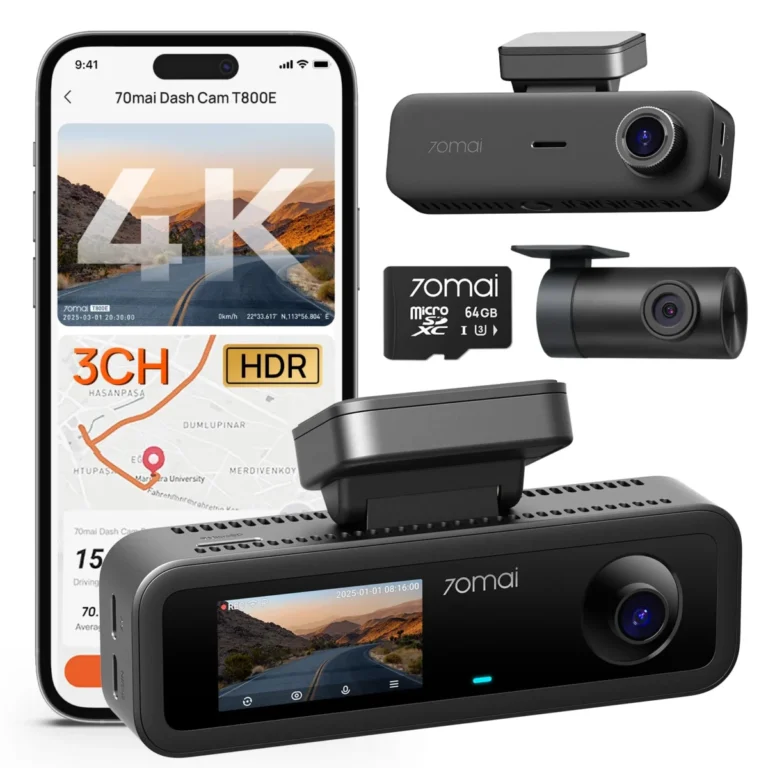
70mai T800E
- 3-channel
- 4K front
- 1080p rear
- Parking mode
- GPS
- Wi-Fi app
Best for: Buyers who want a hardwire kit and card included
Skip if: You want buffered parking footage of the moments before an impact, or the widest possible front view.
Price range: Budget
Check price on AmazonPaid link. We may earn a commission.
The 70mai T800E is Best Value because it pairs a 4K front channel with a cabin camera, a 64 GB card and the hardwire kit in one purchase.
What matters in daily use
Value here is about what arrives in the box. The T800E records 4K at the front, 1080p inside and 1080p behind, includes a 64 GB card, and includes the hardwire kit that the ROVE R3, IIWEY N5 and Vantrue N4 Pro S all sell separately. For a rideshare or family driver, that means parking monitoring can be wired up without a second order. Wi-Fi 6 transfers clips at up to 10 MB/s, and voice control handles photo and recording commands without reaching for the screen.
The front lens covers 140 degrees, narrower than the 150-degree ROVE R3 and the 160-degree Affver A4, so it sees slightly less of the adjacent lanes. Parking mode is impact detection rather than buffered, meaning it locks the collision clip but does not keep the seconds before it. Storage reaches 512 GB, and the supercapacitor suits hot dashboards. The 18-month hardware coverage is shorter than the Affver A4's 24-month term.
Specifications
| Channels | 3 (front, rear, interior) |
|---|---|
| Front video | 4K (2160p) |
| Rear video | 1080p (Full HD) |
| Interior video | 1080p (Full HD) |
| Frame rate | 30 fps (max) |
| Field of view | 140° |
| Parking mode | Yes (impact detection) |
| Hardwire kit | Included |
| Power | Supercapacitor (heat resistant) |
| Max storage | 512 GB microSD |
Pros
- Hardwire kit included, unlike most rivals
- 4K front channel at this price point
- Voice control for hands-free commands
- Wi-Fi 6 for faster phone downloads
Cons
- Parking mode is impact detection, not buffered
- 140-degree front lens is narrower than rivals
- 18-month hardware coverage is shorter than some
Best for Hot Climates
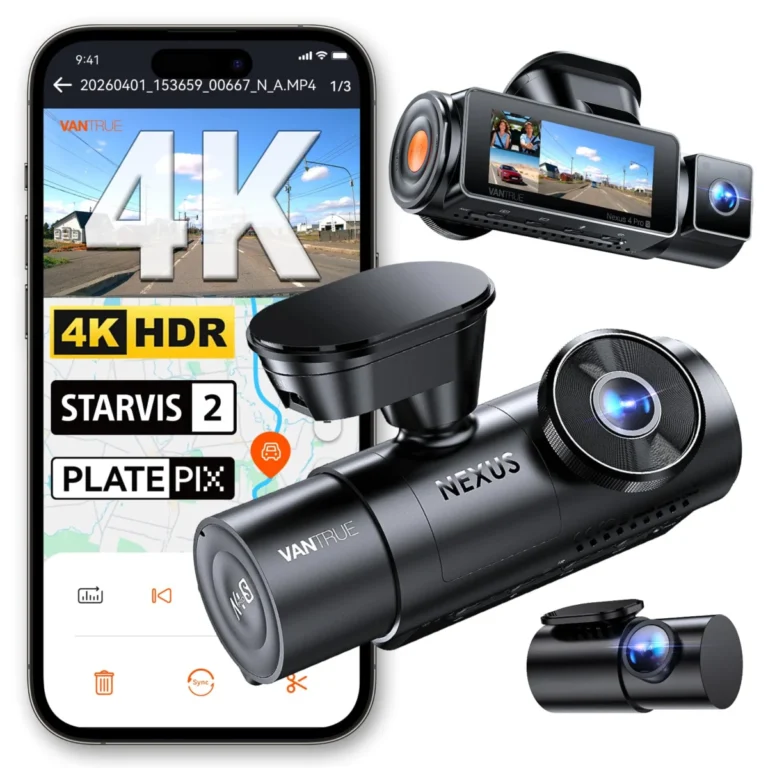
Vantrue N4 Pro S
- 3-channel
- 4K front
- 2.5K rear
- Sony STARVIS 2
- Buffered parking
- GPS
Best for: Hot-climate drivers who want buffered parking mode
Skip if: You want the hardwire kit and memory card bundled in one purchase.
Price range: Premium
Check price on AmazonPaid link. We may earn a commission.
The Vantrue N4 Pro S earns Best for Hot Climates because its supercapacitor, triple STARVIS 2 sensors and buffered parking mode hold up where heat and overnight parking are the hard part.
What matters in daily use
The N4 Pro S records three channels: 4K front, 2.5K rear and 1080p interior, all at 30 fps, with a 360-degree field of view. For a hot-climate driver, the supercapacitor matters more than the resolution, because it avoids the swelling and shutdown risk of a lithium battery in a sun-baked cabin. Triple STARVIS 2 sensors and HDR support the night footage, and the interior camera adds infrared LEDs for dark-cabin recording.
Buffered parking mode is the other reason this camera suits hot regions: it saves the 10 seconds before an impact, so a parking-lot hit is captured rather than missed. The tradeoff is that the hardwire kit is sold separately, and no memory card is included, so budget for both. Against the 70mai T800E, which includes its hardwire kit and a 64 GB card, the Vantrue asks more upfront but offers a 2.5K rear channel and 1 TB card support.
Specifications
| Channels | 3 (front, rear, interior) |
|---|---|
| Front video | 4K (2160p) |
| Rear video | 2.5K (1600p) |
| Sensor | Sony STARVIS 2 (IMX678) |
| Frame rate | 30 fps (max) |
| Field of view | 360° |
| Parking mode | Yes (buffered, motion detection, impact detection) |
| Hardwire kit | Sold separately (needed for parking mode) |
| Power | Supercapacitor (heat resistant) |
| GPS | Yes |
Pros
- Buffered parking mode saves the seconds before impact
- Supercapacitor suits hot-climate parking and summer heat
- 2.5K rear channel beats the 1080p rear on most rivals
- Supports up to 1 TB for long recording cycles
Cons
- Hardwire kit sold separately for parking mode
- No memory card in the box
- Rear cable and three-channel recording add install work
Do you need a rear camera on a dash cam?
A rear camera matters when someone hits you from behind, when a parking-lot scrape happens at the back of the car, or when you drive for a living and need to show what happened behind you. Front-only cameras still cover the most common disputed claim, the rear-end collision you did not cause, because the front lens records the impact and the road ahead. If your budget is tight, a strong front-only camera with good night video beats a weak two-channel kit.
Choose a 2-channel setup if you park on streets or in shared lots and want rear coverage, and a 3-channel setup if passengers are in the car, because the interior camera records the cabin. The Affver A4 records front 4K and rear 2.5K, the ROVE R2-4K Dual records front 4K upscaled from 2.5K plus rear 1080p, and the ROVE R3 adds a cabin channel at 1080p.
How does parking mode work without draining the battery?
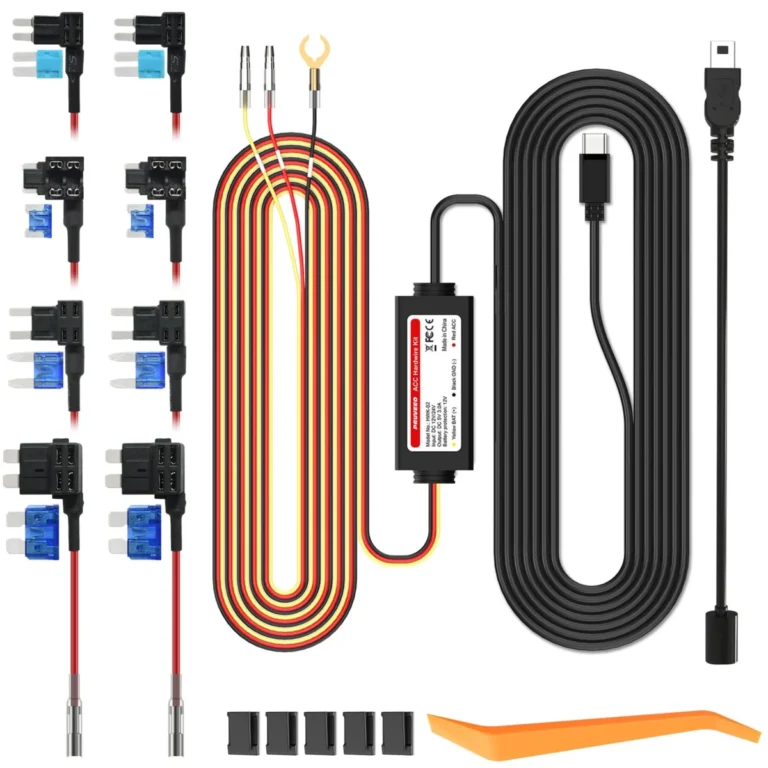
Parking mode keeps the camera watching while the ignition is off, and it needs a hardwire kit or OBD power cable because the 12V socket usually loses power when the car is off. The hardwire kit connects to the fuse box and includes a low-voltage cutoff that shuts the camera down before the car battery drops too far to start the engine. Without that cutoff, a camera can flatten a battery overnight.
Parking modes differ in what they save. Buffered parking mode keeps the seconds before an impact, so a bump that starts recording after the fact still has footage of what led up to it. Time-lapse records at about 1 fps to stretch storage, and impact detection locks a short clip when the G-sensor triggers. The VIOFO A119 V3, ROVE R2-4K Dual, ROVE R3, IIWEY N5 and Vantrue N4 Pro S all need a hardwire kit sold separately, while the 70mai T800E includes one.
Decision guide
Which dash cam fits your driving situation?
The Affver A4 and ROVE R2-4K Dual are both 2-channel systems, but they differ in what you get in the box and how they handle heat. The Affver A4 records front 4K and rear 2.5K, includes a 64GB card and carries a 24-month warranty, while the ROVE R2-4K Dual uses a STARVIS 2 IMX675 sensor for night video, supports up to 1TB of storage and uses a supercapacitor.
Pick the Affver A4 if you want rear 2.5K detail and a card included; pick the ROVE R2-4K Dual if night plate legibility and heat tolerance matter more.
For drivers who carry passengers, the ROVE R3 and 70mai T800E both record three channels, but the tradeoffs differ. The ROVE R3 records front 2K, rear 1080p and interior 1080p with infrared LEDs for a dark cabin, supports up to 512GB and uses a supercapacitor.
Our process
How we chose our affver dash cam picks
This guide shortlists dash cams by what they record, how they handle night video and heat, and what they require to work as intended. Ranking weighs channel count, image sensor, parking mode type, power source, storage support, installation method, GPS and app features, plus buyer feedback and what comes in the box. Specifications, materials and design come from the makers; buyer sentiment is summarized in words. No product was tested, installed or driven with, and no camera is ranked on price.
See also: 7 Dash Cams Ranked for Commuters, Rideshare Drivers and Street Parkers.
Common questions
Frequently asked questions
How long does a dash cam keep footage?
Footage is kept until the card fills, then loop recording overwrites the oldest files. A 64GB card holds several hours of 4K recording, while 256GB or 512GB cards stretch that to days. Event clips locked by the G-sensor are not overwritten, so they stay until you delete them.
Do dash cams record audio?
Most dash cams include a built-in microphone and record audio by default, and it can usually be muted in the settings. Audio consent rules differ by state and country, so check local law before recording conversations, especially with passengers in the car. Video evidence does not require audio.
Will a dash cam survive extreme heat?
A supercapacitor camera handles heat better than one with a lithium battery, because it stores power without the swelling and failure risk batteries carry. The VIOFO A119 V3, ROVE R2-4K Dual, ROVE R3, IIWEY N5, 70mai T800E and Vantrue N4 Pro S use supercapacitors. Park in shade where possible and avoid leaving a camera in direct sun.
What size microSD card does a dash cam need?
A 64GB card covers a few hours of recording, 128GB to 256GB suits daily drivers, and 512GB or 1TB suits rideshare and fleet use. Buy a high-endurance card rated U3 or V30 for continuous writing, because ordinary cards wear out faster under loop recording. The Affver A4 and 70mai T800E include a 64GB card.
Are dash cams legal where I live?
Dash cams are widely permitted, but windshield placement rules, audio recording consent and footage use differ by state and country. Some regions restrict mounting positions in the driver's field of view. Check your local rules before installing, and do not assume footage will be accepted by an insurer or a court.
Bottom line
Final verdict
- Most drivers who want front and rear coverage without extra purchases: Affver A4. The Affver A4 records front 4K and rear 2.5K, includes a 64GB card and a 24-month warranty, so it covers a disputed rear-end claim out of the box.
- Rideshare and fleet drivers who need cabin footage: ROVE R3. The ROVE R3 earns Best for Rideshare and Fleet because it records front, cabin and rear at once, so passenger and road events land in the same file set.
- Night commuters who want the strongest low-light sensor: ROVE R2-4K Dual. The ROVE R2-4K Dual uses a Sony STARVIS 2 IMX675 sensor with an F1.5 aperture and HDR, and its supercapacitor suits hot cars.
- Hot-climate drivers who want buffered parking mode: Vantrue N4 Pro S. The Vantrue N4 Pro S records three channels with triple STARVIS 2 sensors, supports up to 1TB and buffers the seconds before a parking impact, though the hardwire kit is sold separately.
Keep reading
Best Pelsee Dash Cam: Which Model Fits Your Car, Channels and Parking Setup
The VIOFO A119 V3 is our top pick among 7 pelsee dash cams, compared on channel coverage, night video and parking mode,…
Viofo A119 V3 Review: Is a Front-Only 2K Dash Cam Still Worth It in 2026?
Viofo A119 V3 review: night video quality, parking mode and heat tolerance, honest pros and cons, and a clear verdict on who…
How to Set Up Dash Cam Parking Mode: Wiring, Cutoff and Settings
To set up dash cam parking mode, give the camera a constant power source (a fused fuse-box connection or an OBD cable,…
Final decision
Compare two finalists
Choose the two picks you narrowed down to see who each one suits and the main reason to skip it.