Viofo vs Vantrue: Which Dash Cam Brand Fits How You Drive
Published October 15, 2026
As an Amazon Associate we earn from qualifying purchases. This never changes which products we recommend.
Viofo suits drivers who want the sharpest possible front footage and a simple, reliable single or dual-channel setup, while Vantrue suits drivers who need a front, rear and interior camera in one system, especially rideshare and fleet users. The deciding tradeoff is channel depth versus per-channel video quality: Vantrue's flagship records three channels with an interior infrared camera, but Viofo's dual-channel models push higher resolution on the front and rear channels for the same money.
The viofo vs vantrue question comes down to what you need to record. Viofo's lineup in this comparison runs from the front-only A119 V3 to the dual-channel A229 Pro, both built around Sony STARVIS sensors and buffered parking modes. Vantrue's lineup runs from the front-and-interior N2X to the three-channel N4 Pro S, also with STARVIS 2 sensors, but with a stronger emphasis on cabin coverage and larger storage ceilings.
Quick verdict
Viofo leans toward higher per-channel resolution and a focused front-or-dual setup, while Vantrue leans toward more cameras in one system, including an interior infrared channel for rideshare work.
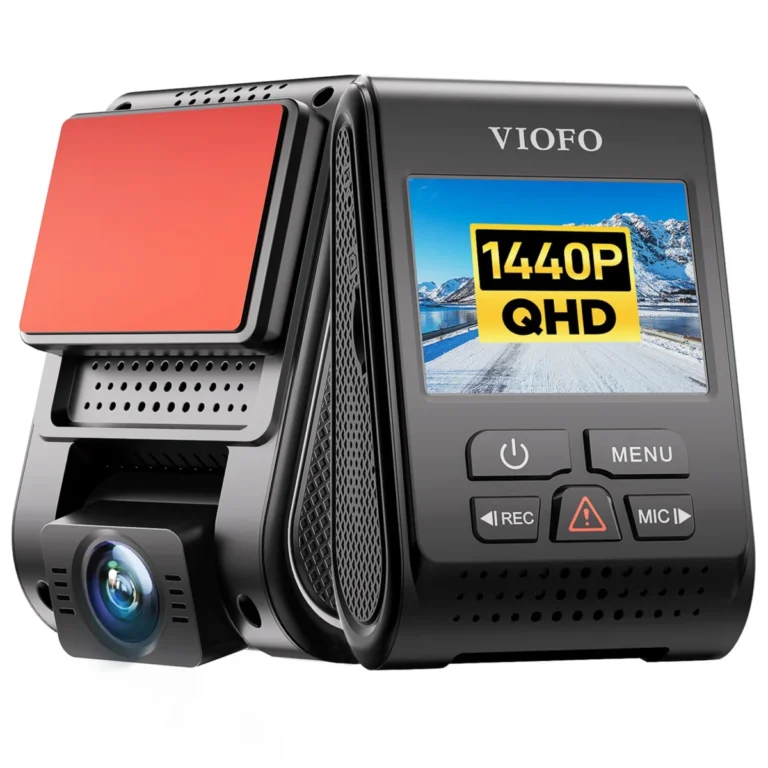
Viofo
Sharp front, focused coverage
Choose Viofo if your priority is the clearest possible front and rear footage for commuting and insurance disputes, and you do not need an interior camera.
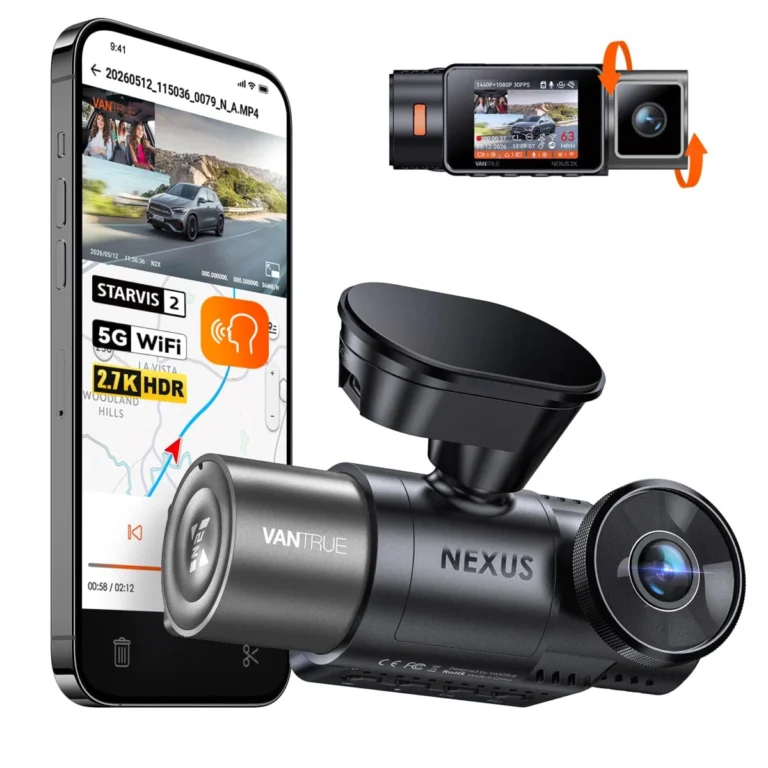
Vantrue
More cameras, cabin included
Choose Vantrue if you drive passengers for a living or want a single unit that covers front, rear and cabin, and you value a larger storage ceiling and a longer warranty.
Key takeaways
- Viofo's A229 Pro records 4K front and 2K rear on dual STARVIS 2 sensors, while Vantrue's N4 Pro S records 4K front, 2.5K rear and 1080p interior on triple STARVIS 2 sensors.
- Both brands require a separately sold hardwire kit for parking mode, and both offer buffered recording that saves the seconds before an impact.
- Vantrue's N2X and N4 Pro S include an interior infrared camera for rideshare and fleet use, which Viofo's models in this comparison do not.
- Viofo's A119 V3 and A229 Pro cap at 256 GB microSD, while Vantrue's N2X supports 512 GB and the N4 Pro S supports up to 1 TB.
Table of contents9 sections · tap to expand
What is Viofo?
Viofo is a dash cam brand known for high-resolution front and dual-channel models built on Sony STARVIS sensors, with buffered parking modes that require a separate hardwire kit.
What is Vantrue?
Vantrue is a dash cam brand known for multi-channel systems that add an interior infrared camera to front and rear coverage, with large microSD support and app-based control.
At a glance
Viofo vs Vantrue at a glance
| Criterion | Viofo | Vantrue |
|---|---|---|
| Night video clarity | HDR on STARVIS and STARVIS 2 sensors; A229 Pro uses IMX678 front and IMX675 rear | HDR and PlatePix on STARVIS 2 sensors; N2X adds interior infrared LEDs |
| Channel options | 1-channel A119 V3; 2-channel A229 Pro (front + rear) | 2-channel N2X (front + interior); 3-channel N4 Pro S (front + rear + interior) |
| Parking mode | Buffered, time-lapse and low-bitrate; hardwire kit sold separately | Buffered, motion, impact, low frame rate and bitrate; hardwire kit sold separately |
| App experience | VIOFO app with 5 GHz Wi-Fi on the A229 Pro; voice control on the A229 Pro | Vantrue app with 5 GHz Wi-Fi on both models; voice control on both |
| Heat tolerance | Supercapacitor in both models; no lithium battery | Supercapacitor in both models; N2X rated from -4°F to 158°F |
| Installation ease | A119 V3 is front-only; A229 Pro includes a 6M rear cable and CPL filter | N2X has no rear cable to run; N4 Pro S includes a 20ft rear cable |
| Storage and loop recording | Up to 256 GB microSD; loop recording with G-sensor event locking | Up to 512 GB on N2X and 1 TB on N4 Pro S; loop recording with G-sensor locking |
| Value for money | Higher per-channel resolution for the money on front and rear | More cameras per unit, including interior coverage, at a similar tier |
| Warranty | Not stated for the models compared here | 18-month warranty on the N4 Pro S |
Key differences
7 key differences between Viofo and Vantrue
1. Night video: resolution versus cabin infrared
Viofo and Vantrue both rely on Sony STARVIS sensors and HDR to handle low light, but they aim that hardware at different channels. The Viofo A229 Pro pairs an IMX678 front sensor with an IMX675 rear sensor for 4K and 2K HDR footage, which is the setup that matters when you need to read a plate ahead of or behind you.
The Vantrue N4 Pro S uses triple STARVIS 2 sensors with PlatePix and claims readable plates at speeds up to 31 mph on lit streets at night.
The practical consequence is that Viofo's night advantage is concentrated on the road, front and rear, while Vantrue's is spread across the road and the cabin. If your evidence needs are about what happened outside the car, Viofo's dual-sensor approach gives you more resolution per channel. If you need to identify a passenger or a fare dispute after dark, the Vantrue N2X's four interior infrared LEDs record the cabin in total darkness, which no front or rear lens can do.
2. Channel options: two cameras or three
Viofo's models here cover one or two channels, while Vantrue's cover two or three, and that difference decides most of this comparison. The Viofo A119 V3 is front-only at 2K, and the A229 Pro adds a 2K rear camera. The Vantrue N2X pairs a front camera with an interior camera, and the N4 Pro S records front, rear and interior at once.
For a commuter, a two-channel Viofo setup covers the two angles that matter in a rear-end or lane-change dispute. For a rideshare or taxi driver, the interior channel is the one that answers passenger complaints, which is why the Vantrue N2X and N4 Pro S exist. A fleet owner should weigh whether one three-channel unit per vehicle is simpler to manage than a two-channel unit that leaves the cabin unrecorded.
3. Parking mode and the hardwire kit both brands require
Neither brand includes the hardwire kit needed for parking mode in the models compared here, so budget for one either way. Viofo's A119 V3 and A229 Pro offer buffered recording that saves 15 seconds before and 30 seconds after an event, plus time-lapse and low-bitrate modes. Vantrue's N2X and N4 Pro S offer buffered motion and impact detection, with the N4 Pro S keeping all three cameras active in parking mode and the N2X adding customizable motion detection zones.
The hardwire kit connects to the fuse box with a low-voltage cutoff so the camera stops drawing power before the car battery is drained. Vantrue's N4 Pro S saves 10 seconds before an event rather than 15, and both brands' parking modes are optional extras rather than out-of-the-box features. If you park on the street overnight, choose the model whose buffered window and channel coverage match what you need to capture, and buy the matching hardwire kit at the same time.
4. App, Wi-Fi transfer and firmware updates
Both brands run their own app over 5 GHz Wi-Fi on their higher-end models, and both support voice control, so the difference is in what each app is built to manage. Viofo's app handles configuration, preview and sharing for the A229 Pro, with 12 voice commands and voice notifications for settings and memory card issues. Vantrue's app covers preview, editing and downloading for the N2X and N4 Pro S, and the N4 Pro S supports OTA firmware updates.
Transfer speed matters most when you are standing in a parking lot trying to pull a clip before you drive away. A 5 GHz connection moves a 4K file faster than 2.4 GHz, which is why both brands use it on these models. If you manage several vehicles, Vantrue's OTA update path on the N4 Pro S reduces the need to handle each camera manually, while Viofo's voice notifications make card problems obvious without opening the app.
5. Heat tolerance and why the power source matters
Both Viofo and Vantrue use supercapacitors in the models compared here, which is the design choice that matters in a hot climate. A supercapacitor stores and releases charge without the chemical reactions that make lithium batteries swell, leak or fail after repeated summer dashboard heat, so a camera parked in direct sun is more likely to keep working. Vantrue rates the N2X from -4°F to 158°F, and the N4 Pro S uses the same supercapacitor approach.
Heat also affects how many channels a camera can run at once. Vantrue states that switching the N4 Pro S from three-channel to front-and-rear mode reduces heat by 30% and saves power, which is a useful option in a hot climate if you do not need the interior camera on every trip. Viofo's dual-channel A229 Pro runs two channels rather than three, which is a lighter thermal load by design.
6. Installation, cables and rear camera routing
Viofo's front-only A119 V3 is the simplest install here because there is no rear cable to route, while Vantrue's N2X avoids rear wiring by putting its second camera in the cabin. Once you add a rear camera, cable length becomes the deciding detail: the Viofo A229 Pro includes a 6M rear cable with longer 8M and 10M options from Viofo, and the Vantrue N4 Pro S includes a 20ft rear cable that Vantrue says fits cars, SUVs, minivans, trucks and buses.
Both brands use windshield mounts and route power from the 12V socket for normal driving, with the hardwire kit taking over for parking mode. Vantrue notes that the N2X is not compatible with Power Delivery fast chargers and should use the included car charger or a Vantrue cable. For a long SUV or truck, check the included rear cable length against your vehicle before buying, because a short cable means either a custom order or a different model.
7. Storage, loop recording and event locking
Vantrue supports larger cards in this comparison, which matters once you record three channels. The Viofo A119 V3 and A229 Pro accept up to 256 GB microSD, with Viofo recommending U3 A2 V30 cards. The Vantrue N2X supports up to 512 GB, and the N4 Pro S supports up to 1 TB, which Vantrue says allows 37 or more hours of continuous three-channel 4K recording.
Both brands use loop recording to overwrite the oldest files and a G-sensor to lock footage during a collision so it is not overwritten. A high-endurance microSD card is the right choice for either brand because dash cams write continuously and ordinary cards wear out faster. If you record three channels, the larger Vantrue ceiling gives you more days of footage before the oldest files are recycled.
Viofo: strengths and limitations
Viofo builds focused dash cams that prioritize resolution on the front and rear channels, with STARVIS sensors and buffered parking modes. The lineup in this comparison runs from the front-only A119 V3 to the dual-channel A229 Pro.
Strengths
- The A229 Pro records 4K front and 2K rear on dual STARVIS 2 sensors for high per-channel detail
- The A119 V3 is a simple front-only 2K camera with GPS and buffered parking mode
- Both models use supercapacitors, which handle hot cars better than lithium batteries
- The A229 Pro includes a CPL filter to cut windshield glare and a 6M rear cable
Limitations
- No interior camera in either model, so cabin coverage requires a different brand
- Storage caps at 256 GB microSD, lower than the Vantrue models compared here
Viofo A119 V3
A front-only 2K dash cam with GPS and buffered parking mode, suited to commuters who want a simple windshield setup with no rear cable. It uses a Sony STARVIS IMX335 sensor and a supercapacitor, and it accepts up to 256 GB microSD.
Viofo A229 Pro
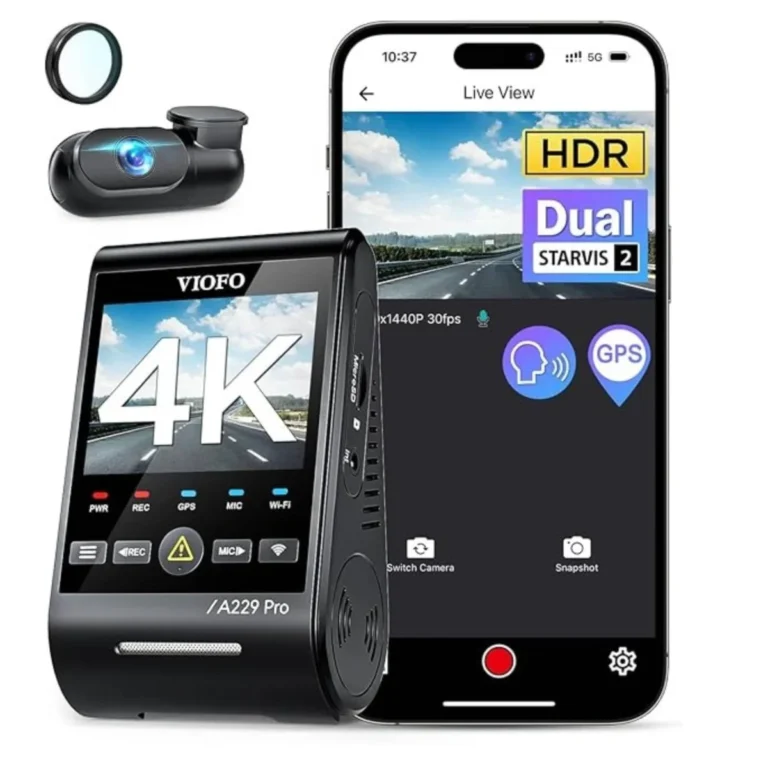
A dual-channel 4K front and 2K rear dash cam built on STARVIS 2 sensors, with 5 GHz Wi-Fi, voice control and an included CPL filter. It is the Viofo pick for drivers who want maximum road detail front and rear.
Vantrue: strengths and limitations
Vantrue builds multi-channel dash cams that add an interior infrared camera to front and rear coverage, aimed at rideshare, taxi and fleet drivers. The lineup here runs from the two-channel N2X to the three-channel N4 Pro S.
Strengths
- The N2X records the cabin with four infrared LEDs for total-darkness interior footage
- Storage reaches 512 GB on the N2X and 1 TB on the N4 Pro S
- The N4 Pro S carries an 18-month warranty and supports OTA firmware updates
Limitations
- Parking mode needs a separately sold hardwire kit on both models
- The N2X is not compatible with Power Delivery fast chargers
- The N4 Pro S saves 10 seconds before an event, less than the 15 seconds on Viofo's buffered modes
Vantrue N2X
A front and interior dash cam with a STARVIS 2 sensor, four infrared LEDs for the cabin and support for up to 512 GB microSD. It fits rideshare and taxi drivers who need passenger-facing footage without running a rear cable.
Vantrue N4 Pro S
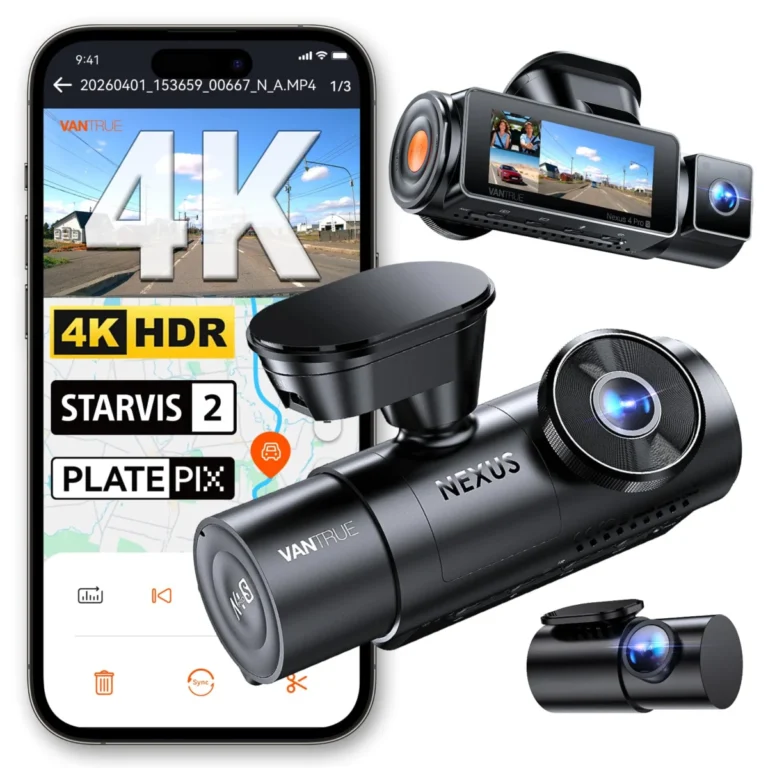
A three-channel 4K front, 2.5K rear and 1080p interior dash cam with triple STARVIS 2 sensors, buffered parking mode and up to 1 TB microSD support. It carries an 18-month warranty and suits fleet and rideshare use where one unit must cover the whole car.
Decision guide
Which should you choose?
| If you… | Choose | Why |
|---|---|---|
| A commuter who wants one camera on the windshield for daily driving and occasional parking lot incidents | Viofo | The Viofo A119 V3 is a front-only 2K unit with GPS and buffered parking mode, so there is no rear cable to route. |
| A rideshare or taxi driver who needs to record passengers as well as the road | Vantrue | The Vantrue N2X records front and interior with infrared LEDs for the cabin, and the interior camera can be turned off for privacy. |
| A driver who wants front, rear and interior coverage in one three-channel system | Vantrue | The Vantrue N4 Pro S records 4K front, 2.5K rear and 1080p interior simultaneously with triple STARVIS 2 sensors. |
| A driver in a hot climate who parks in the sun and worries about battery swelling | Either | Both brands use supercapacitors rather than lithium batteries in the models compared here, which tolerate heat better. |
| A new car owner who wants clean installation with GPS speed and location stamps | Viofo | The Viofo A229 Pro includes a CPL filter and a 6M rear cable, and its GPS module logs speed, location and timestamp data. |
| A fleet owner standardizing on one brand across several vehicles | Vantrue | Vantrue's three-channel N4 Pro S covers more of each vehicle with one unit and carries an 18-month warranty. |
Choose Viofo if
- You want the highest front and rear resolution for the money and do not need to record the cabin
- You drive solo and your evidence needs are road incidents, not passenger disputes
- You want a front-only camera with GPS and buffered parking mode and no rear cable to route
- You want a CPL filter included to reduce windshield glare on the front lens
Choose Vantrue if
- You drive for a rideshare, taxi or delivery service and need an interior camera
- You want front, rear and interior coverage from a single three-channel unit
- You record long hours and want a 512 GB or 1 TB storage ceiling
- You manage several vehicles and want OTA firmware updates and an 18-month warranty
See also: 7 Dash Cams Ranked for Commuters, Rideshare Drivers and Street Parkers.
Common questions
Frequently asked questions
Is Viofo or Vantrue better for night video?
Viofo concentrates its night performance on the road, with the A229 Pro using IMX678 and IMX675 STARVIS 2 sensors for 4K front and 2K rear HDR footage. Vantrue spreads night coverage across more channels, and the N2X adds infrared LEDs that record the cabin in total darkness. Choose based on whether your night evidence is outside or inside the car.
Do Viofo and Vantrue dash cams need a hardwire kit for parking mode?
Yes, the models compared here need a separately sold hardwire kit for parking mode. Viofo's A119 V3 and A229 Pro use the Viofo hardwire cable, and Vantrue's N2X and N4 Pro S also require a hardwire kit connected to the fuse box. The kit provides the low-voltage cutoff that protects the car battery.
Which brand has the better app, Viofo or Vantrue?
Both apps use 5 GHz Wi-Fi on the higher-end models and support voice control, so the difference is in management features. Vantrue's N4 Pro S supports OTA firmware updates, which suits multi-vehicle owners, while Viofo's app adds voice notifications for settings and memory card issues. Neither app requires a subscription for the features described here.
Which is better for rideshare drivers, Viofo or Vantrue?
Vantrue is the more direct fit for rideshare because the N2X and N4 Pro S include an interior camera, and the N2X records the cabin with infrared LEDs and lets you turn the interior camera off for privacy. Viofo's models here cover front and rear only, so a rideshare driver would lose the passenger-facing angle.
How do Viofo and Vantrue handle extreme heat?
Both brands use supercapacitors in the models compared here instead of lithium batteries, which is the key difference for hot climates because supercapacitors tolerate repeated dashboard heat without swelling. Vantrue rates the N2X from -4°F to 158°F, and the N4 Pro S can drop to front-and-rear recording to reduce heat by 30%.
Is Vantrue a good dash cam brand?
Vantrue is a well-established dash cam brand whose models here use Sony STARVIS 2 sensors, supercapacitors and buffered parking modes, with the N4 Pro S carrying an 18-month warranty. Its strength is multi-channel coverage, including an interior infrared camera that Viofo's models in this comparison do not offer. Whether it is right for you depends on whether you need that cabin channel.
Bottom line
The verdict
There is no universal winner between Viofo and Vantrue because they solve different problems. Choose Viofo when your evidence needs are on the road and you want the highest front and rear resolution for the money, as in the A229 Pro's 4K and 2K dual STARVIS 2 setup. Choose Vantrue when you need to record the cabin as well, as in the N2X's infrared interior camera or the N4 Pro S's three-channel 4K, 2.5K and 1080p system.
Whichever brand you pick, plan for the hardwire kit if you want parking mode, use a high-endurance microSD card, and check your local rules on windshield placement and audio recording before you rely on footage. For a commuter, the Viofo A119 V3 or A229 Pro covers the road cleanly. For a rideshare or fleet driver, the Vantrue N2X or N4 Pro S covers the road and the people in the car.
Keep reading
Viofo A229 Pro vs 70mai A810: Which 4K Dash Cam Fits Your Car
Viofo A229 Pro or 70mai A810? Compare night video and rear camera quality side by side, with clear rules for which to…
Garmin vs Nextbase Dash Cam: Which Brand Fits Your Parking, Climate and Coverage Needs
Garmin vs Nextbase comes down to coverage and parking protection. Compare models by price tier to find the right fit for rideshare,…
Viofo A119 V3 Review: Is a Front-Only 2K Dash Cam Still Worth It in 2026?
Viofo A119 V3 review: night video quality, parking mode and heat tolerance, honest pros and cons, and a clear verdict on who…