Wireless Dash Cams: 7 Setups Ranked, and When a Cable Still Wins
Published October 21, 2026
As an Amazon Associate we earn from qualifying purchases. This never changes which products we recommend.
The VIOFO A119 V3 is the best wireless dash cam for most drivers because it pairs 2K front video, GPS and buffered parking mode with app-free reliability and a supercapacitor that tolerates heat. It is front-only, so drivers who need rear or interior coverage should look at the ROVE R2-4K Dual or ROVE R3 instead.
The tradeoff running through this guide is that "wireless" covers three different things: Wi-Fi transfer to your phone, battery or supercapacitor power, and a rear camera that skips the long signal cable. No camera here is free of wiring entirely, and the ones that add channels or app control usually give up something in resolution, storage or price.
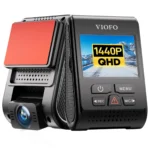 Best OverallVIOFO A119 V3Drivers who want a compact, heat-tolerant front camera with GPS7.6/10
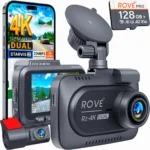 Best Front-and-Rear KitROVE R2-4K DualDaily drivers who want front and rear coverage with app transfer7.7/10
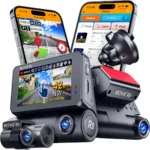 Best for RideshareROVE R3Rideshare and taxi drivers needing interior coverage7.3/10
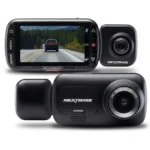 Best Simple Two-ChannelNextbase 222xBuyers who want a click-in rear camera and a known brand7.1/10
Table of contents9 sections · tap to expand
At a glance
Our top picks compared
| Product | Best for | Video | Key features | Where to buy |
|---|---|---|---|---|
| 1. VIOFO A119 V3 Best Overall 7.6/10 | Drivers who want a compact, heat-tolerant front camera with GPS | 2K front | Buffered parkingGPSSTARVISSupercapacitor | Mid-range Check price |
| 2. ROVE R2-4K Dual Best Front-and-Rear Kit 7.7/10 | Daily drivers who want front and rear coverage with app transfer | 4K upscaled front + 1080p rear | Parking modeGPSWi-FiSTARVIS 2 | Premium Check price |
| 3. ROVE R3 Best for Rideshare 7.3/10 | Rideshare and taxi drivers needing interior coverage | 2K front + 1080p rear + 1080p interior | Parking modeGPSWi-FiSupercapacitor | Premium Check price |
| 4. Nextbase 222x Best Simple Two-Channel 7.1/10 | Buyers who want a click-in rear camera and a known brand | 1080p front | Parking mode | Mid-range Check price |
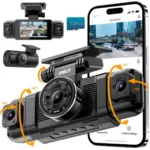 5. IIWEY N5 Best 360-Degree Coverage 7.3/10 | Drivers wanting front, rear and side views in one system | 1080p front + 1080p rear + 1080p interior | Parking modeGPS5 GHz Wi-FiSupercapacitor | Budget Check price |
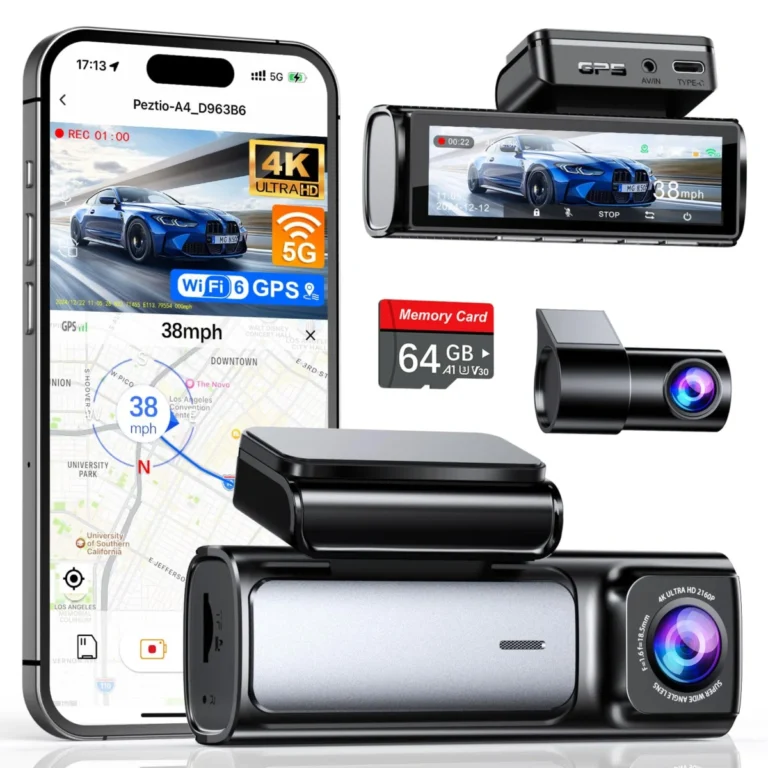
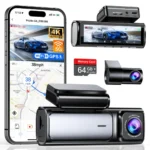 6. Affver A4 Best Value 4K Dual 7.2/10 | Buyers who want 4K front and 2.5K rear on a budget | 4K front + 2.5K rear | GPS5 GHz Wi-Fi | Budget Check price |
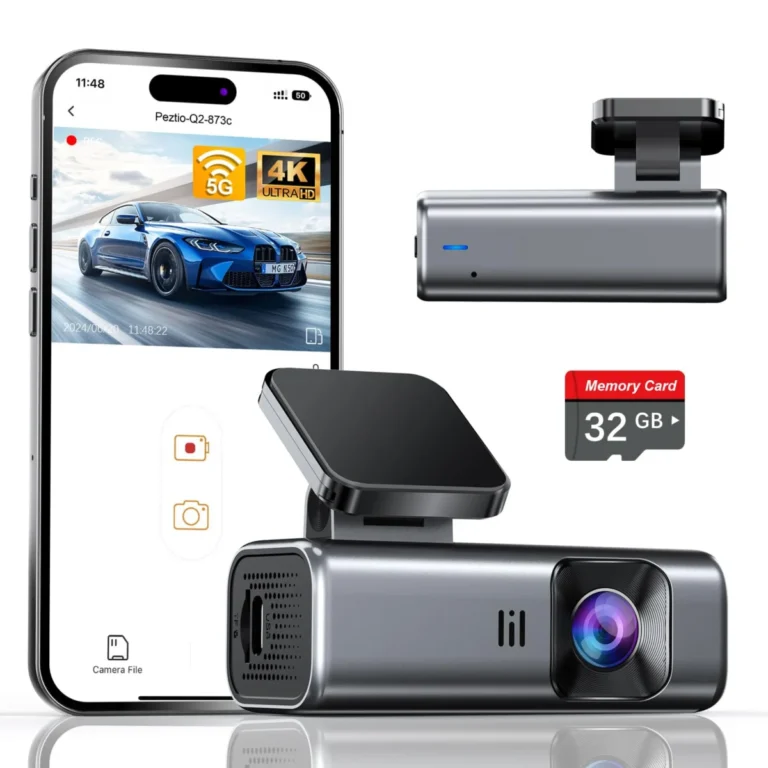
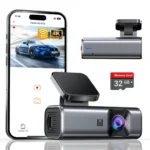 7. galphi 4K Best Hidden Install 7.2/10 | Drivers who want a screenless camera tucked out of sight | 4K front | Parking mode5 GHz Wi-Fi | Budget Check price |
Score: our 0-10 rating of each product from buyer ratings, review volume, completeness of the product details and availability. A product has the same score in every guide on this site; the order of this list also weighs how well each one fits this use. It is not a lab test.
Buying advice
How to choose a wireless dash cam for your car
Decide which kind of wireless you need
Wi-Fi transfer, battery power and a cable-free rear camera solve different problems, and most buyers only need one. If your goal is a tidy windshield with no cable to the 12V socket, Wi-Fi app transfer plus careful cable routing gets you there. If your goal is parking coverage without touching the fuse box, no camera here avoids a hardwire kit, so plan for one or accept that parking mode is not available.
Match the channel count to how you drive
A front-only camera such as the VIOFO A119 V3 is enough for a commuter who mostly needs to prove what happened ahead. Rideshare and taxi drivers need the interior channel the ROVE R3 provides, because passenger disputes and cabin incidents are the events that matter. Front-and-rear kits like the ROVE R2-4K Dual and Nextbase 222x cover rear-end collisions and tailgating, which a front camera alone cannot document.
Check the power source against your climate
Supercapacitors tolerate a hot parked car better than lithium batteries, which is why most cameras here use one. The Nextbase 222x and Affver A4 list lithium cells, so if your car sits in direct summer sun for hours, a supercapacitor model is the safer long-term choice. Heat also shortens parking-mode runtime on any camera, so pair parking mode with a hardwire kit that has low-voltage cutoff.
Weigh app transfer speed and storage
5 GHz Wi-Fi moves clips to your phone far faster than 2.4 GHz, which matters when you need footage at the roadside. The ROVE R3 lists up to 30MB/s and the ROVE R2-4K Dual up to 20MB/s, while the galphi lists 8MB/s. Pair any of them with a high-endurance microSD card, since loop recording and G-sensor event locking write constantly and a cheap card fails early.
Our picks
The best wireless dash cams for a clean, cable-light install
Best Overall
VIOFO A119 V3
- Front only
- 2K front
- Sony STARVIS
- Buffered parking
- GPS
- Supercapacitor
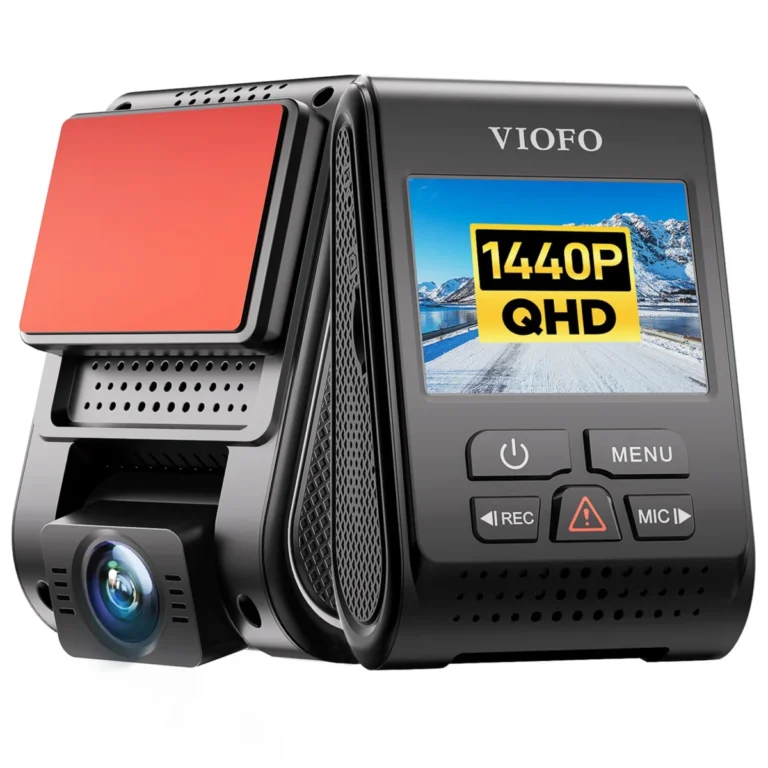
Best for: Drivers who want a compact, heat-tolerant front camera with GPS
Skip if: You need rear or interior coverage, or want phone-based video transfer.
Price range: Mid-range
Check price on AmazonPaid link. We may earn a commission.
The VIOFO A119 V3 earns Best Overall because it pairs a Sony STARVIS IMX335 sensor and 2K 60 fps front video with buffered parking mode, all in a compact front-only body.
What matters in daily use
The A119 V3 records one channel at 2K (1440p), reaching 60 fps with HDR off and dropping to 30 fps when HDR is on. For a front-only camera, that frame rate matters: at 60 fps a passing plate is captured in more frames, which raises the odds of one legible image. The 140-degree lens keeps distortion low, and the Sony STARVIS IMX335 sensor with HDR is built for the low-light cases where plates usually blur.
Parking protection is where this camera separates itself. It offers buffered, time-lapse and low-bitrate parking modes, and the buffered mode saves the 15 seconds before and 30 seconds after an event, so the moment of impact is kept rather than just the aftermath. A VIOFO HK3 ACC hardwire cable is required and sold separately. MicroSD support runs to 256 GB.
Against the ROVE R2-4K Dual, the A119 V3 gives up the rear camera and app transfer but keeps a higher front frame rate and buffered parking. Buyers who need rear coverage should look there instead.
Specifications
| Channels | 1 (front only) |
|---|---|
| Front video | 2K (1440p) |
| Sensor | Sony STARVIS (IMX335) |
| Frame rate | 60 fps (max) |
| Field of view | 140° |
| Parking mode | Yes (buffered, time-lapse, low bitrate) |
| Power | Supercapacitor (heat resistant) |
| Max storage | 256 GB microSD |
| GPS | Yes |
| Night video | HDR |
Pros
- Buffered parking mode keeps the seconds before an impact
- 60 fps front recording with HDR off aids plate capture
- Supercapacitor tolerates hot parked cars better than a battery
- GPS overlays speed and location for dispute evidence
Cons
- Front-only, with no rear or cabin camera
- Hardwire cable for parking mode is sold separately
- HDR caps recording at 30 fps
Best Front-and-Rear Kit
ROVE R2-4K Dual
- 2-channel
- 4K front
- 1080p rear
- Sony STARVIS 2
- Parking mode
- GPS
Best for: Daily drivers who want front and rear coverage with app transfer
Skip if: You want native 4K front video or need cabin coverage for passengers.
Price range: Premium
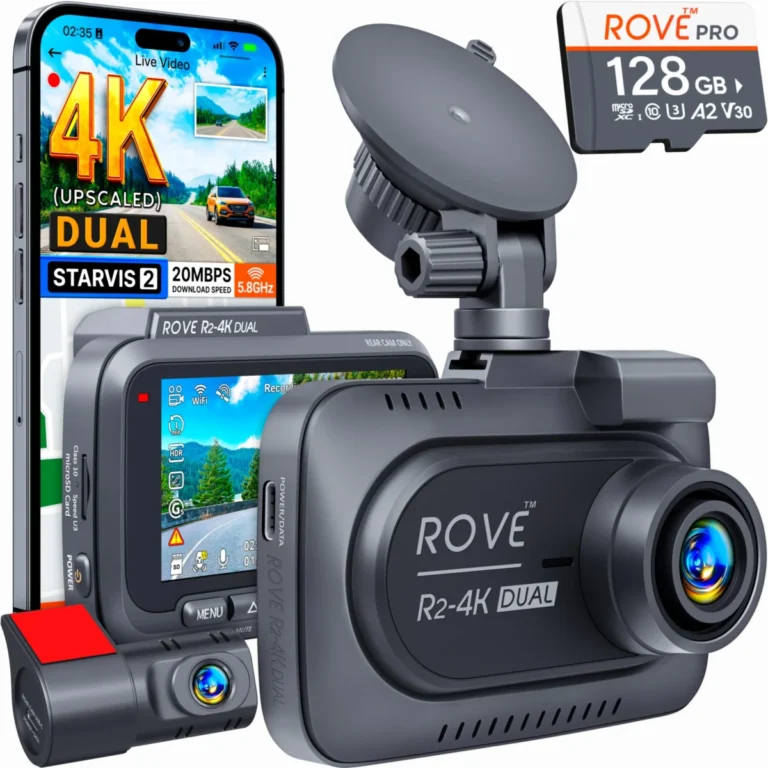
Check price on AmazonThe ROVE R2-4K Dual takes Best Front-and-Rear Kit because it covers both ends of the car, adds 5.8 GHz app transfer and GPS, and includes a 128 GB card in the box.
What matters in daily use
This is a two-channel system: the front records 4K upscaled from 2.5K, and the rear records 1080p (Full HD). The front uses a Sony STARVIS 2 IMX675 sensor with an F1.5 aperture and HDR, which is the newer generation of the low-light sensor family and the part that matters after dark. The 150-degree lens is wider than the VIOFO A119 V3's 140 degrees, trading a little edge distortion for more roadside coverage.
The convenience layer is the real draw. Dual-band 5.8 GHz and 2.4 GHz Wi-Fi feed the ROVE app at up to 20 MB/s, so a clip can reach a phone at the roadside instead of waiting for a card reader. GPS stamps speed and route, a CPL filter can be threaded on to cut windshield glare, and the included 128 GB card means no separate purchase. Parking mode needs a hardwire kit sold separately.
Choose the ROVE R2-4K Dual over the VIOFO A119 V3 when rear footage matters more than a 60 fps front rate.
Specifications
| Channels | 2 (front + rear) |
|---|---|
| Front video | 4K (upscaled from 2.5K) |
| Rear video | 1080p (Full HD) |
| Sensor | Sony STARVIS 2 (IMX675) |
| Frame rate | 30 fps (max) |
| Field of view | 150° |
| Parking mode | Yes (time-lapse, motion detection, impact detection) |
| Hardwire kit | Sold separately (needed for parking mode) |
| Power | Supercapacitor (heat resistant) |
| GPS | Yes |
Pros
- Front and rear coverage from one kit
- Fast 5.8 GHz Wi-Fi transfer to a phone
- 128 GB card included, so it works out of the box
- CPL filter thread cuts windshield reflections
Cons
- Front 4K is upscaled from 2.5K, not native
- Parking mode requires a separately sold hardwire kit
- Rear camera is limited to 1080p
Best for Rideshare
ROVE R3
- 3-channel
- 2K front
- 1080p rear
- Parking mode
- GPS
- Wi-Fi app
Best for: Rideshare and taxi drivers needing interior coverage
Skip if: You drive alone and only need the road ahead and behind.
Price range: Premium
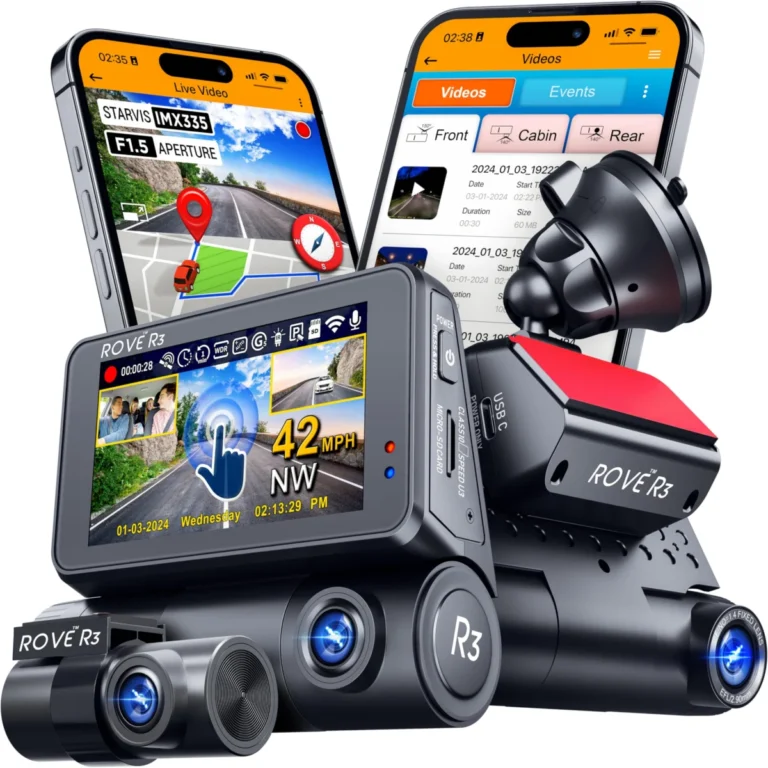
Check price on AmazonThe ROVE R3 wins Best for Rideshare because it records front, rear and cabin at once, with infrared LEDs lighting the interior in darkness and a 3-inch touch screen for quick checks.
What matters in daily use
Three channels set the R3 apart: 2K (1440p) front, 1080p rear and 1080p interior, all recording together. For rideshare and taxi work the cabin view is the point, since it documents passengers and fare disputes that a windshield-facing lens never sees. Four hidden infrared LEDs let the interior camera keep recording in complete darkness, which is when most passenger incidents happen. The 150-degree lens and F1.5 aperture match the wider end of this group.
Everyday handling is built around the 3-inch IPS touch screen and a single power button, so settings can be changed without a phone. Dual-band 5.0 GHz and 2.4 GHz Wi-Fi feed the ROVE app at up to 30 MB/s, the fastest transfer figure among these picks, and quad-mode GPS adds speed, compass and location stamps. Storage runs to 512 GB, and the supercapacitor avoids battery heat risk. Parking mode is time-lapse only, so it lacks the buffered pre-event clip of the VIOFO A119 V3.
Pick the R3 over the ROVE R2-4K Dual when the cabin matters as much as the road behind.
Specifications
| Channels | 3 (front, rear, interior) |
|---|---|
| Front video | 2K (1440p) |
| Rear video | 1080p (Full HD) |
| Interior video | 1080p (Full HD) |
| Frame rate | 60 fps (max) |
| Field of view | 150° |
| Parking mode | Yes (time-lapse) |
| Power | Supercapacitor (heat resistant) |
| Max storage | 512 GB microSD |
| GPS | Yes |
Pros
- Cabin camera documents passengers and fare disputes
- Infrared LEDs keep interior footage usable at night
- Fast 30 MB/s app transfer and touch-screen control
- 512 GB card support suits long shifts
Cons
- Memory card is not included in the box
- Parking mode is time-lapse only, without buffered pre-event clips
- Three channels add cabling work at install
Best Simple Two-Channel
Nextbase 222x
- 2-channel
- 1080p front
- Parking mode
Best for: Buyers who want a click-in rear camera and a known brand
Skip if: You want the sharpest plate detail and would rather have 2K or 4K front video.
Price range: Mid-range
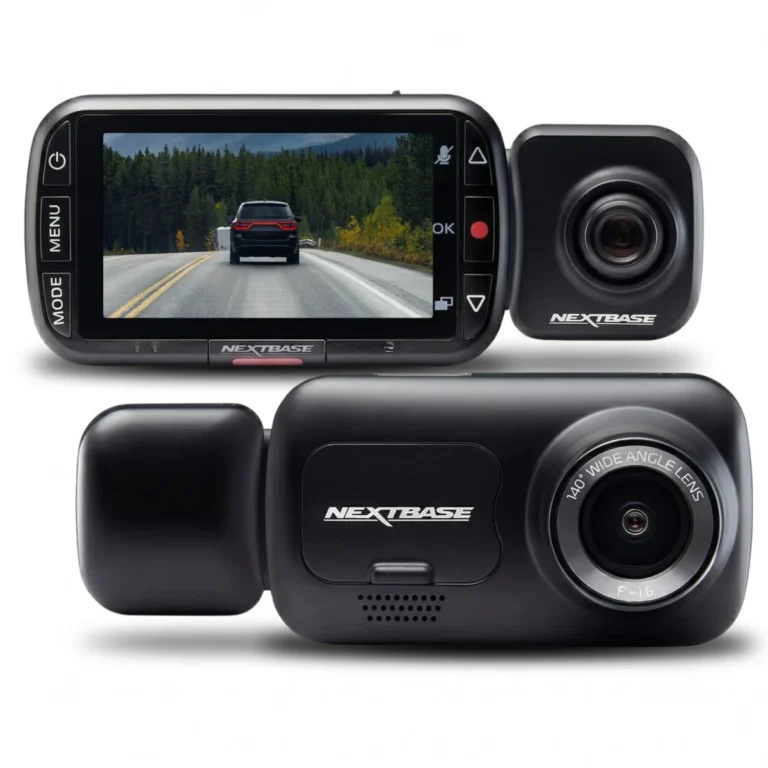
Check price on AmazonThe Nextbase 222x earns Best Simple Two-Channel because its rear camera clicks into the front unit, giving front and rear coverage without a second box to mount or wire separately.
What matters in daily use
A rear camera that clicks straight into the front unit is what sets the Nextbase 222x apart. The 222x records 1080p at 30 fps on the front channel with a 140-degree lens, and the rear-view camera plugs into the front dash cam to record the road directly behind.
For a driver who wants a known brand and a tidy two-camera setup, that click-in design is the whole appeal: no separate rear housing, no second power feed. The 2.5-inch IPS screen lets you check framing and playback at the car rather than through a phone.
The tradeoff is resolution. Front video is 1080p, below the 2K front of the VIOFO A119 V3 and the 4K front of the ROVE R2-4K Dual, so plate detail at distance and at night is the weaker part of the package. Parking mode is listed, but the 222x has no stated hardwire kit, so confirm what the parking feature needs before relying on it overnight. Choose it for simplicity, not for the sharpest footage.
Specifications
| Channels | 2 (front + rear) |
|---|---|
| Front video | 1080p (Full HD) |
| Frame rate | 30 fps (max) |
| Field of view | 140° |
| Parking mode | Yes |
Pros
- Rear camera clicks in with no separate housing
- Magnetic mount makes removal quick
- Screen allows playback without a phone
- Recognizable brand with simple setup
Cons
- Front video limited to 1080p
- Parking mode power requirements not stated
- No Wi-Fi app transfer mentioned
Best 360-Degree Coverage
IIWEY N5
- 4-channel
- 1080p front
- 1080p rear
- Parking mode
- GPS
- 5 GHz Wi-Fi
Best for: Drivers wanting front, rear and side views in one system
Skip if: You want a simple two-camera setup and do not need side or interior views.
Price range: Budget
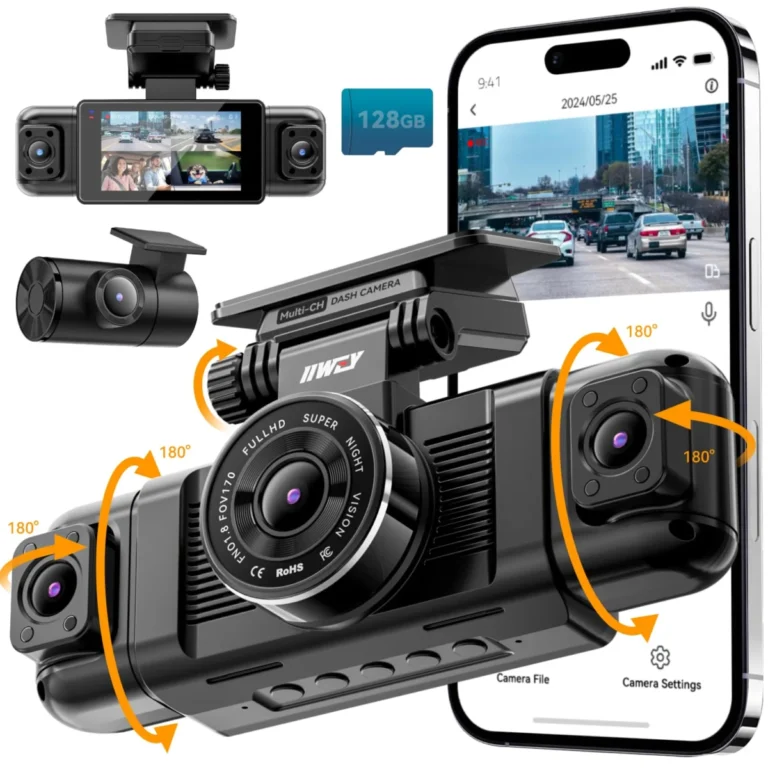
Check price on AmazonThe IIWEY N5 takes Best 360-Degree Coverage because it records four channels at once, covering front, rear, sides and interior in a single system.
What matters in daily use
The N5 records four channels: front, rear, left and right or interior, each at 1080p Full HD, with a 2.5K front option in the four-channel mode. That spread of cameras is the point: side impacts and car-park scrapes land in frame, which a front-and-rear pair like the ROVE R2-4K Dual cannot capture. A 128GB card ships installed, and 5 GHz Wi-Fi with the free app handles preview and download.
Four channels means four times the storage pressure and more cable to route, and the rear camera must be wired to the front unit. Parking mode covers time-lapse and impact detection but needs the sold-separately hardwire kit. The N5 runs on a supercapacitor rather than a lithium battery, which suits hot climates, but it must stay connected to power while in use, so treat it as a wired installation rather than a set-and-forget gadget.
Specifications
| Channels | 4 (front, rear, left, right or interior) |
|---|---|
| Front video | 1080p (Full HD) |
| Rear video | 1080p (Full HD) |
| Interior video | 1080p (Full HD) |
| Field of view | 360° |
| Parking mode | Yes (time-lapse, impact detection) |
| Hardwire kit | Sold separately (needed for parking mode) |
| Power | Supercapacitor (heat resistant) |
| Max storage | 256 GB microSD |
| GPS | Yes |
Pros
- Side and interior views in one system
- 128GB card included out of the box
- 5 GHz Wi-Fi for faster phone transfers
- Supercapacitor suits hot climates
Cons
- Four channels fill storage quickly
- Rear camera must be wired to the front
- Hardwire kit sold separately for parking mode
Best Value 4K Dual
Affver A4
- 2-channel
- 4K front
- 2.5K rear
- GPS
- 5 GHz Wi-Fi
Best for: Buyers who want 4K front and 2.5K rear on a budget
Skip if: You park in extreme heat or need buffered parking mode with a hardwire kit.
Price range: Budget
Check price on AmazonThe Affver A4 earns Best Value 4K Dual by pairing a 4K front channel with a 2.5K rear at a price tier where most rivals still record 1080p behind.
What matters in daily use
A 2.5K rear channel is what sets the A4 apart: it records 4K (2160p) at the front and 2.5K (1600p) at the rear, both at up to 30 fps, with a 160-degree front lens. The ROVE R2-4K Dual records its rear channel at 1080p, so the A4 gives the car behind you more plate detail. A 64GB card is included, GPS stamps speed and route, and the 3.59-inch IPS screen makes menu work easy without the phone.
The main tradeoff is support and mounting. The A4 uses a windshield mount and a lithium polymer battery rather than the supercapacitor found in the VIOFO A119 V3 and ROVE models, which matters if the car sits in summer heat. Parking mode is not listed among its features, so overnight protection is not part of the deal. The 24-month warranty is the reassurance here.
Specifications
| Channels | 2 (front + rear) |
|---|---|
| Front video | 4K (2160p) |
| Rear video | 2.5K (1600p) |
| Frame rate | 30 fps (max) |
| Field of view | 160° |
| Card included | 64 GB |
| GPS | Yes |
| Wi-Fi | 5 GHz Wi-Fi app |
| Screen | 3.59 in |
| Night video | WDR |
Pros
- 4K front and 2.5K rear in one kit
- 64GB card included for plug-and-play use
- Large 3.59-inch screen eases setup
- 24-month warranty backs the purchase
Cons
- Lithium polymer battery rather than a supercapacitor
- No parking mode listed
- Rear cable routing still required
Best Hidden Install
galphi 4K
- 4K front
- Parking mode
- 5 GHz Wi-Fi
Best for: Drivers who want a screenless camera tucked out of sight
Skip if: You want a screen for on-camera playback or buffered impact clips.
Price range: Budget
Check price on AmazonThe galphi 4K earns Best Hidden Install because its screenless body records 4K at 160 degrees and stays out of the driver's line of sight, with app control replacing a display.
What matters in daily use
With no screen, the galphi 4K records 4K (2160p) at 30 fps through a 160-degree lens and sends everything to the phone app over 5 GHz Wi-Fi. That is the widest front angle in this guide, and the screen-free body mounts small against the glass, so it suits drivers who dislike a display in their eyeline. The tradeoff is that every setting and clip review happens on the phone.
Night footage relies on WDR and an F/1.6 aperture rather than a named STARVIS sensor, so the ROVE R2-4K Dual and its Sony STARVIS 2 IMX675 sensor have the stronger low-light claim on paper. Parking mode is time-lapse only and needs a separately sold Type C hardwire kit. A 32 GB card is included, and the camera accepts up to 256 GB.
Specifications
| Front video | 4K (2160p) |
|---|---|
| Frame rate | 30 fps (max) |
| Field of view | 160° |
| Parking mode | Yes (time-lapse) |
| Hardwire kit | Sold separately (needed for parking mode) |
| Max storage | 256 GB microSD |
| Card included | 32 GB |
| Wi-Fi | 5 GHz Wi-Fi app |
| Screen | None (view in app) |
| Night video | WDR |
Pros
- Screenless body stays out of the driver's sightline
- 4K front video with a 160-degree lens
- 5 GHz Wi-Fi speeds app downloads
- 32 GB card included for immediate use
Cons
- No screen, so all control runs through the phone
- Time-lapse parking mode only, no buffered pre-impact clips
- Hardwire kit for parking mode sold separately
What does "wireless dash cam" actually mean?
A wireless dash cam usually means one of three separate things, and sellers rarely say which. Wi-Fi transfer means clips move to your phone over a 5 GHz or 2.4 GHz app connection instead of a cable. Battery or supercapacitor power means the camera runs on its own stored energy rather than the car's 12V socket. A cable-free rear camera means the rear unit sends footage without a long signal cable to the front unit.
Only the third removes real installation work, and even then the rear camera still needs its own power feed. Every camera in this guide records to a microSD card and needs power from somewhere, so a dash cam without cables to the 12V socket is realistic, while a dash cam with no wiring at all is not. Decide which of the three you actually want before comparing models.
Can a battery-powered dash cam run parking mode?
Not for long. Parking mode needs the camera awake for hours, and a small internal battery or supercapacitor cannot supply that. The cameras here that offer parking mode, including the VIOFO A119 V3 and ROVE R2-4K Dual, need a hardwire kit with low-voltage cutoff or an OBD power cable so the car battery feeds the camera while parked and is protected from being flattened.
Heat is the other limit. A lithium battery ages faster in a hot parked car, which is why most of these models use a supercapacitor instead. If you want genuine overnight parking coverage, budget for the hardwire kit and treat the wireless part as app transfer, not battery runtime. If you park on the street only occasionally, time-lapse parking mode on a hardwired camera is the honest answer.
Decision guide
Which wireless dash cam should you pick for your car?
The VIOFO A119 V3 and ROVE R2-4K Dual split on channels and app convenience. The VIOFO records 2K at 60 fps on a single front channel with buffered parking mode, which suits a driver who wants the sharpest front plate reads and does not need a rear view. The ROVE adds a 1080p rear camera, Wi-Fi app transfer and a STARVIS 2 sensor, so pick it when rear-end evidence matters more than maximum front frame rate.
The ROVE R3 and IIWEY N5 both go beyond two channels, but for different drivers. The ROVE R3 records front, rear and interior at 2K plus two 1080p streams, with infrared LEDs for the cabin, which is the rideshare choice. The IIWEY N5 spreads four 1080p channels across front, rear and sides for 360-degree coverage, but it is a heavier install and its own listing warns it must run from the included cigarette-lighter charger.
Our process
How we chose our wireless dash cam picks
Products were shortlisted from current dash cam listings and manufacturer documentation, then ranked on channel coverage, per-channel resolution and sensor, power source and heat tolerance, parking mode type, Wi-Fi transfer, storage limits and installation effort. Buyer ratings were read for reliability and usability signals, and value was weighed against what each camera gives up. No camera was installed or driven with for this guide.
See also: 7 Dash Cams Ranked for Commuters, Rideshare Drivers and Street Parkers.
Common questions
Frequently asked questions
Is there such a thing as a truly wireless dash cam?
No. Every dash cam needs power and a place to store footage, so a truly cable-free camera does not exist. What you can get is Wi-Fi transfer to your phone and, on some models, a rear camera that skips the long signal cable. Power still comes from the 12V socket, a hardwire kit or an OBD cable.
Do wireless dash cams drain the car battery?
Only parking mode draws power while the engine is off, and only when the camera is wired to a constant supply. A hardwire kit with low-voltage cutoff or an OBD power cable stops the draw before the battery is flattened. Cameras plugged into the 12V socket that switches off with the ignition do not drain the battery.
How do you get footage off a dash cam without a cable?
Connect your phone to the camera's Wi-Fi network and use the brand app to preview and download clips. 5 GHz models such as the ROVE R3 and ROVE R2-4K Dual move files noticeably faster than 2.4 GHz. You can also pull the microSD card and read it on a computer, which is quicker for long clips.
Are wireless dash cams legal to mount on the windshield?
Rules vary by state and country, and many places restrict objects mounted in the driver's swept wiper area or at eye level. Check your state legislature or transport authority website for windshield obstruction rules before mounting. Audio recording consent laws also differ, so confirm whether your state requires all-party consent.
How long does a battery-powered dash cam last when parked?
A small internal battery or supercapacitor cannot power hours of parking surveillance, so expect minutes rather than overnight coverage. Real parking mode runs from the car battery through a hardwire kit with low-voltage cutoff. If overnight coverage matters, budget for that kit rather than relying on the camera's own power.
Bottom line
Final verdict
- Most drivers: VIOFO A119 V3. The VIOFO A119 V3 leads on 2K front video, GPS and buffered parking mode with a heat-tolerant supercapacitor, as long as you do not need a rear channel.
- Drivers who need front and rear coverage: ROVE R2-4K Dual. The ROVE R2-4K Dual adds a 1080p rear camera, STARVIS 2 sensor and Wi-Fi app transfer, at the cost of an upscaled rather than native 4K front image.
- Rideshare and taxi drivers: ROVE R3. The ROVE R3 records front, rear and interior with infrared cabin LEDs and 512 GB card support, which is the coverage a passenger dispute needs.
- Buyers who want the simplest two-channel setup: Nextbase 222x. The Nextbase 222x uses a click-in rear camera and magnetic mount for easy fitting, though its 1080p front and 720p rear are the lowest resolution here.
Keep reading
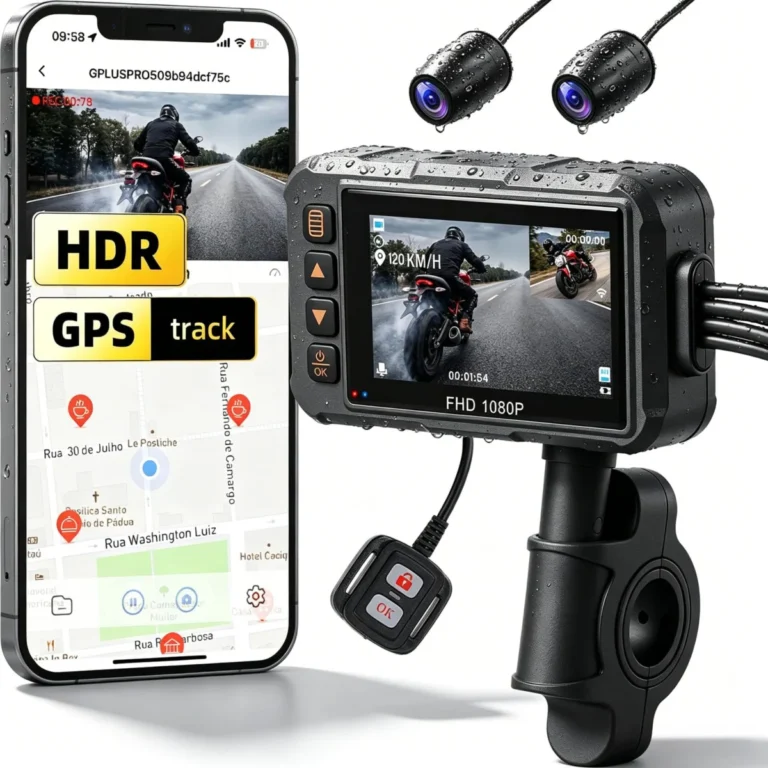
7 Motorcycle Dash Cams Built for Rain, Vibration and a 12V Bike Supply
The SIXTOP Motorcycle Dash Cam is our top pick among 7 motorcycle dash cams, compared on waterproof rating and front and rear…
Front and Rear Dash Cams: Which Two-Channel Setup Fits Your Car, Parking and Climate
The ROVE R2-4K Dual leads our seven front and rear dash cams, ranked by channel count, rear footage clarity, parking mode wiring…
7 Dash Cams Ranked for Commuters, Rideshare Drivers and Street Parkers
The VIOFO A119 V3 is our top pick among 7 dash cams, compared on channel coverage, night video quality and image sensor,…
Final decision
Compare two finalists
Choose the two picks you narrowed down to see who each one suits and the main reason to skip it.