Front and Rear Dash Cams: Which Two-Channel Setup Fits Your Car, Parking and Climate
Published October 15, 2026
As an Amazon Associate we earn from qualifying purchases. This never changes which products we recommend.
The best dash cam front and rear for most drivers is the ROVE R2-4K Dual, because it pairs a Sony STARVIS 2 IMX675 front sensor with a 1080p rear camera, adds GPS and a supercapacitor, and includes a 128GB card in the box. It covers both directions without extra parts.
The real split between these cameras is not resolution. It is how many channels you need, whether parking mode is wired for you or sold separately, and whether the power source survives a hot car. Those three answers decide the pick faster than any spec sheet.
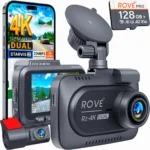 Best OverallROVE R2-4K DualMost drivers who want both directions covered7.7/10
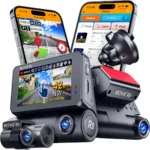 Best for RideshareROVE R3Rideshare and taxi drivers needing cabin coverage7.3/10
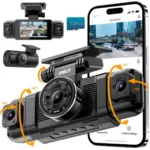 Best 360 CoverageIIWEY N5Drivers who want all four sides recorded7.3/10
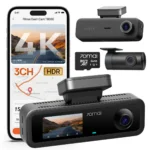 Best for Easy Setup70mai T800EFirst-time buyers who want parking mode included7.2/10
Table of contents9 sections · tap to expand
At a glance
Our top picks compared
| Product | Best for | Video | Key features | Where to buy |
|---|---|---|---|---|
| 1. ROVE R2-4K Dual Best Overall 7.7/10 | Most drivers who want both directions covered | 4K upscaled front + 1080p rear | Parking modeGPSWi-FiSTARVIS 2 | Mid-range Check price |
| 2. ROVE R3 Best for Rideshare 7.3/10 | Rideshare and taxi drivers needing cabin coverage | 2K front + 1080p rear + 1080p interior | Parking modeGPSWi-FiSupercapacitor | Premium Check price |
| 3. IIWEY N5 Best 360 Coverage 7.3/10 | Drivers who want all four sides recorded | 1080p front + 1080p rear + 1080p interior | Parking modeGPS5 GHz Wi-FiSupercapacitor | Budget Check price |
| 4. 70mai T800E Best for Easy Setup 7.2/10 | First-time buyers who want parking mode included | 4K front + 1080p rear + 1080p interior | Parking modeGPSWi-FiSupercapacitor | Budget Check price |
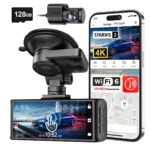 5. REDTIGER F7N Touch Best Value 7.3/10 | Buyers wanting 4K front and a free 128GB card | 4K front + 1080p rear | Parking modeGPS5 GHz Wi-FiSTARVIS 2 | Premium Check price |
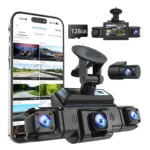 6. ZMOPO 4 Channel Best for Hot Climates 6.9/10 | Drivers parking in direct sun | 1080p front | Parking modeGPS (optional)5 GHz Wi-FiSupercapacitor | Budget Check price |
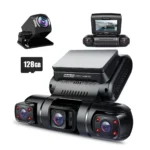 7. PRUVEEO 4 Channel Best for Long Vehicles 6.8/10 | SUV, van and truck owners routing cable to the rear | 1080p front | Parking modeGPSWi-FiSupercapacitor | Mid-range Check price |
Score: our 0-10 rating of each product from buyer ratings, review volume, completeness of the product details and availability. A product has the same score in every guide on this site; the order of this list also weighs how well each one fits this use. It is not a lab test.
Buying advice
How to choose a front and rear dash cam
Match the channel count to your passengers
Two channels cover the road ahead and behind, which is enough for a private car. A third interior channel matters when strangers sit in the back: the ROVE R3 and 70mai T800E both record the cabin at 1080p, and the ROVE R3 adds infrared LEDs for darkness. Four-channel cameras such as the IIWEY N5, ZMOPO and PRUVEEO add side views, which helps in tight lots but multiplies the footage you have to review after an incident.
Treat parking mode as a wiring purchase
Decide where the camera gets power before you compare features. A 12V socket stops supplying power when the ignition is off, so any parking mode needs a hardwire kit or OBD cable with low-voltage cutoff. The 70mai T800E includes its hardwire kit; the ROVE, REDTIGER, IIWEY, ZMOPO and PRUVEEO models sell it separately. If you never park on the street, skip the kit and the installation time entirely.
Check the power source if the car sits in the sun
A supercapacitor stores charge without the lithium chemistry that degrades in heat, so it is the safer choice for a car that bakes in a parking lot. Every camera here uses one, which removes the old reliability worry about swollen batteries. Heat still shortens any camera's life, so mount it out of direct sun where the windshield allows and keep the card high-endurance.
Plan the rear cable run before you buy
The rear camera cable is the most common installation failure in long vehicles. Routing along the headliner to the back window of an SUV, van or truck can exceed a short supplied cable, and splicing is not an option. Check the stated cable length against your vehicle before ordering, and note that rear window tint or a defroster grid can soften the image the rear camera captures.
Our picks
The Best Front and Rear Dash Cams for 2026
Best Overall
ROVE R2-4K Dual
- 2-channel
- 4K front
- 1080p rear
- Sony STARVIS 2
- Parking mode
- GPS
Best for: Most drivers who want both directions covered
Skip if: You need cabin footage for rideshare work; the ROVE R3 adds an interior channel.
Price range: Mid-range
Check price on AmazonPaid link. We may earn a commission.
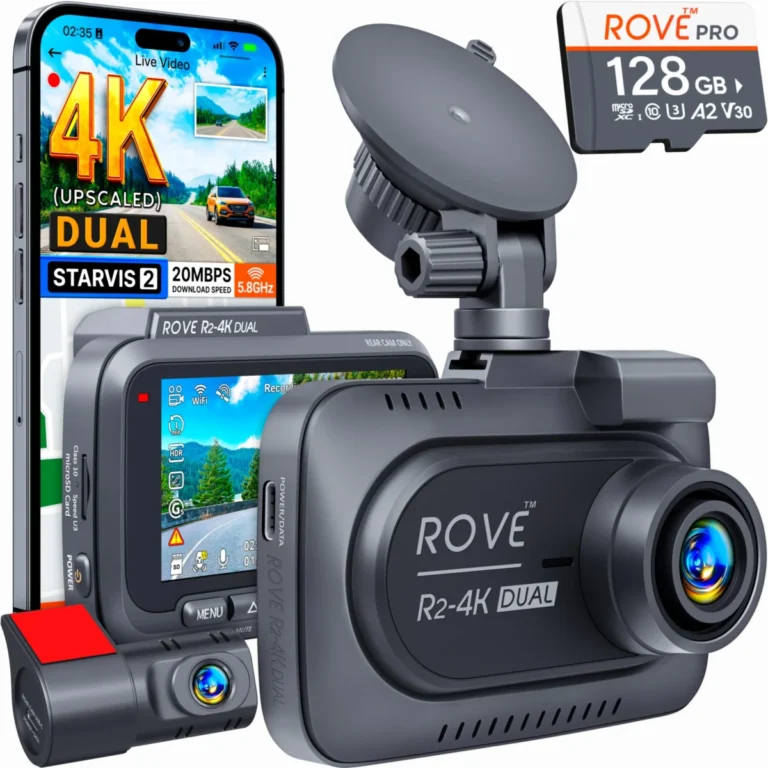
The ROVE R2-4K Dual earns Best Overall because it covers both directions with a Sony STARVIS 2 front sensor, GPS and a bundled 128GB card at a mainstream price.
What matters in daily use
For most drivers, the front channel is where evidence matters most, and the R2-4K Dual pairs a Sony STARVIS 2 IMX675 sensor with an F1.5 aperture and HDR. That combination is aimed at plate legibility after dark rather than headline resolution: the front records 4K upscaled from 2.5K, so expect sharper everyday detail than a plain 1080p camera, not true native 4K. The rear camera adds 1080p coverage of what happens behind you, which is the footage that settles disputed rear-end collisions.
Parking protection here is time-lapse, motion detection and impact detection, and all three need the separately sold hardwire kit. When an event triggers, the camera locks a full one-minute clip and plays a voice alert at your next start, so you know something happened while parked. Compared with the REDTIGER F7N Touch, the ROVE trades native 4K front recording for a lower price and an included 128GB card.
Specifications
| Channels | 2 (front + rear) |
|---|---|
| Front video | 4K (upscaled from 2.5K) |
| Rear video | 1080p (Full HD) |
| Sensor | Sony STARVIS 2 (IMX675) |
| Frame rate | 30 fps (max) |
| Field of view | 150° |
| Parking mode | Yes (time-lapse, motion detection, impact detection) |
| Hardwire kit | Sold separately (needed for parking mode) |
| Power | Supercapacitor (heat resistant) |
| GPS | Yes |
Pros
- STARVIS 2 front sensor with HDR for night footage
- Rear 1080p channel covers rear-end disputes
- 128GB card and full mounting kit included
- Supercapacitor tolerates hot parked cars
Cons
- Front 4K is upscaled, not native
- Hardwire kit sold separately for parking mode
Best for Rideshare
ROVE R3
- 3-channel
- 2K front
- 1080p rear
- Parking mode
- GPS
- Wi-Fi app
Best for: Rideshare and taxi drivers needing cabin coverage
Skip if: You drive alone and only need front and rear coverage; the R2-4K Dual costs less.
Price range: Premium
Check price on AmazonPaid link. We may earn a commission.
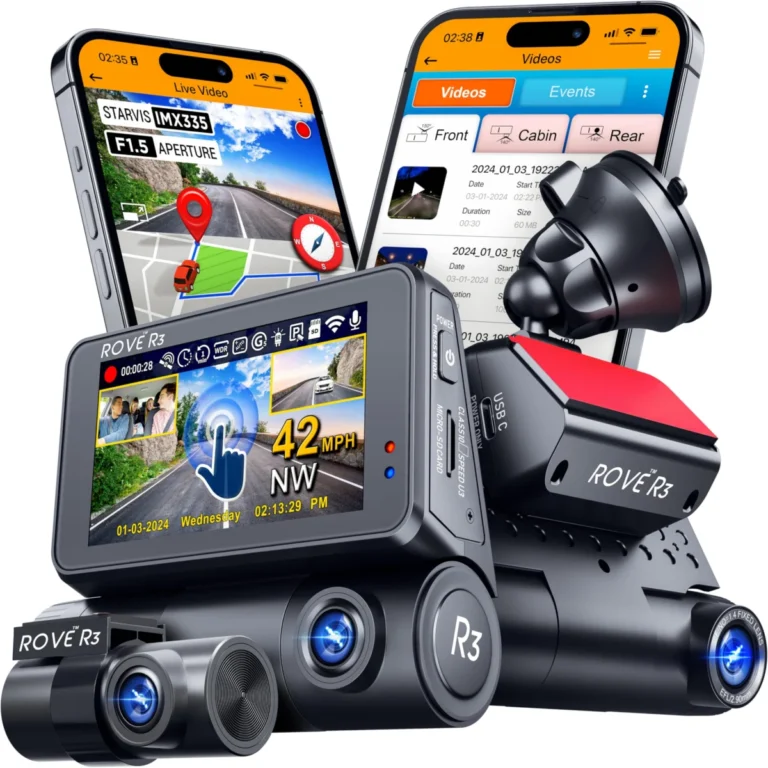
The ROVE R3 takes Best for Rideshare because it records front, cabin and rear at once, with infrared LEDs lighting the interior after dark.
What matters in daily use
Rideshare and taxi drivers need the cabin in frame, and the R3 is the only pick here built around that: it records front at 2K, plus 1080p interior and 1080p rear simultaneously. Four hidden infrared LEDs illuminate the cabin in complete darkness, which matters for late fares when a dome light would change the mood of the footage. The 3-inch IPS touchscreen and single-button design keep menu changes simple between trips, and the 150-degree lens covers a wide slice of road ahead.
The tradeoff is resolution. The R3 tops out at 2K on the front channel, so it captures less fine detail than the 4K front cameras in this guide, including the 70mai T800E and the REDTIGER F7N Touch. Its parking mode is time-lapse only, and it needs a hardwire kit that is not in the box. Storage is capped at 512GB, and the card is not included, so budget for a high-endurance microSD before the first shift.
Specifications
| Channels | 3 (front, rear, interior) |
|---|---|
| Front video | 2K (1440p) |
| Rear video | 1080p (Full HD) |
| Interior video | 1080p (Full HD) |
| Frame rate | 60 fps (max) |
| Field of view | 150° |
| Parking mode | Yes (time-lapse) |
| Power | Supercapacitor (heat resistant) |
| Max storage | 512 GB microSD |
| GPS | Yes |
Pros
- Cabin channel with infrared for night fares
- Three channels record simultaneously
- Touchscreen and voice guidance simplify daily use
- Supercapacitor suits hot climates
Cons
- Front resolution capped at 2K, below 4K rivals
- Memory card not included
- Parking mode limited to time-lapse
Best 360 Coverage
IIWEY N5
- 4-channel
- 1080p front
- 1080p rear
- Parking mode
- GPS
- 5 GHz Wi-Fi
Best for: Drivers who want all four sides recorded
Skip if: You want a camera that runs from any USB power source.
Price range: Budget
Check price on AmazonPaid link. We may earn a commission.
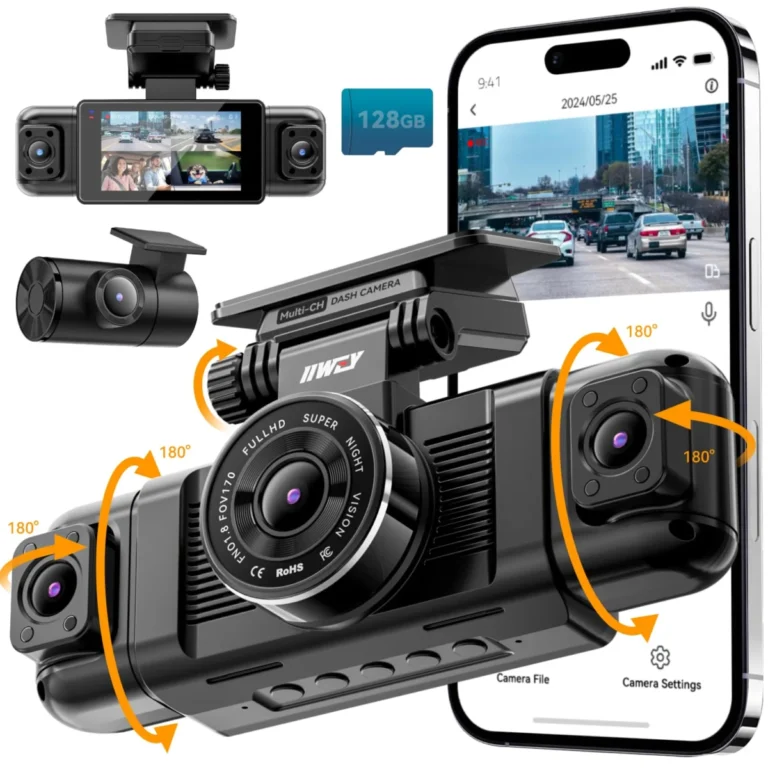
The IIWEY N5 wins Best 360 Coverage by recording front, rear and both sides at 1080p, giving four-corner evidence that single-channel and front-and-rear cameras cannot match.
What matters in daily use
Four 1080p channels cover front, rear and both sides, so a lane-change scrape or a car clipping your quarter panel lands in frame rather than in a blind spot. The front and rear lenses span 170 degrees and the side cameras 150 degrees, and the adjustable front units can be angled to include interior footage instead. A 128GB card is already installed, and the 3-inch screen lets you check framing at the mount without opening the app.
Two limits shape ownership. The N5 must run from its original cigarette lighter charger, so a generic USB or Type-C cable will not power it, and parking mode needs the separately sold hardwire kit. GPS is built in, so footage carries speed and location stamps like the ROVE R2-4K Dual. If you want four sides recorded and can accept the charger restriction, the coverage is the widest in this guide.
Specifications
| Channels | 4 (front, rear, left, right or interior) |
|---|---|
| Front video | 1080p (Full HD) |
| Rear video | 1080p (Full HD) |
| Interior video | 1080p (Full HD) |
| Field of view | 360° |
| Parking mode | Yes (time-lapse, impact detection) |
| Hardwire kit | Sold separately (needed for parking mode) |
| Power | Supercapacitor (heat resistant) |
| Max storage | 256 GB microSD |
| GPS | Yes |
Pros
- 128GB card already installed
- Adjustable front cameras can capture interior
- Supercapacitor handles extreme heat
Cons
- Requires the original cigarette lighter charger
- Hardwire kit sold separately for parking mode
Best for Easy Setup
70mai T800E
- 3-channel
- 4K front
- 1080p rear
- Parking mode
- GPS
- Wi-Fi app
Best for: First-time buyers who want parking mode included
Skip if: You want a wider front lens or a bigger screen for on-camera playback.
Price range: Budget
Check price on AmazonPaid link. We may earn a commission.
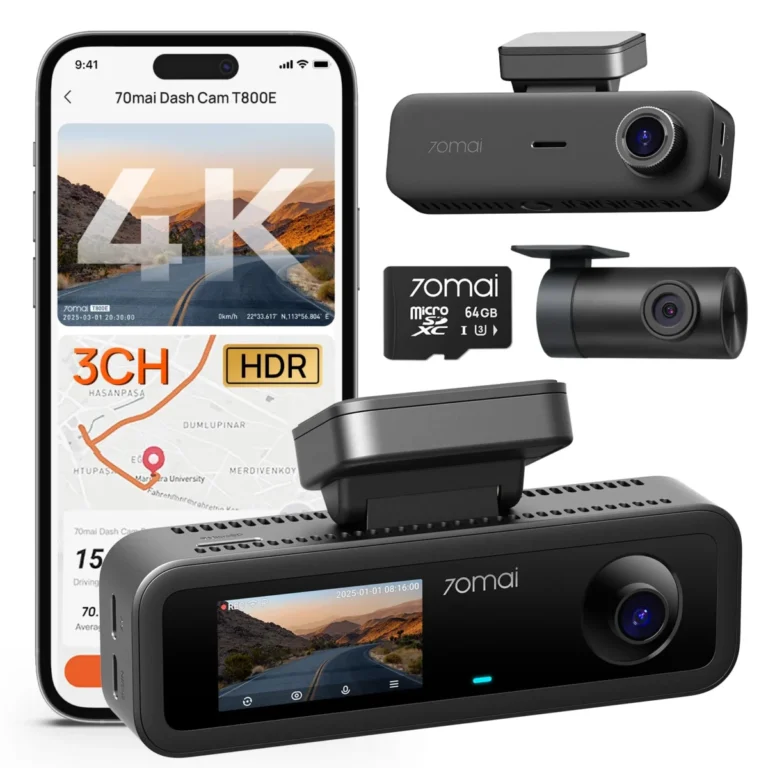
The 70mai T800E earns Best for Easy Setup because it is the only pick here that ships with the hardwire kit, so parking mode works without a second purchase.
What matters in daily use
The T800E records three channels: 4K at 30 fps on the front, plus 1080p interior and 1080p rear. That front resolution is native, not upscaled, so plate detail holds up better than the ROVE R2-4K Dual's upscaled 4K. The 140-degree lens is the narrowest front angle among these picks, a reasonable trade for sharper pixels across the frame.
Parking mode is impact detection only, but the hardwire kit is included, which no other pick in this guide matches. Wi-Fi 6 transfer, voice control and a 64GB card round out a genuinely plug-and-play package. The 1.9-inch screen is small for menu work, and the listed LTE and cloud connectivity depends on a plan, so treat app features as the main interface.
Specifications
| Channels | 3 (front, rear, interior) |
|---|---|
| Front video | 4K (2160p) |
| Rear video | 1080p (Full HD) |
| Interior video | 1080p (Full HD) |
| Frame rate | 30 fps (max) |
| Field of view | 140° |
| Parking mode | Yes (impact detection) |
| Hardwire kit | Included |
| Power | Supercapacitor (heat resistant) |
| Max storage | 512 GB microSD |
Pros
- Hardwire kit included, parking mode ready out of the box
- Native 4K front footage at 30 fps
- Wi-Fi 6 transfers files faster than older Wi-Fi
- Voice control and 64GB card included
Cons
- 140-degree front lens is narrower than rivals
- 1.9-inch screen is small for settings
- Cloud features may need a paid plan
Best Value
REDTIGER F7N Touch
- 2-channel
- 4K front
- 1080p rear
- Sony STARVIS 2
- Parking mode
- GPS
Best for: Buyers wanting 4K front and a free 128GB card
Skip if: You need buffered or impact-triggered parking recording rather than time-lapse clips.
Price range: Premium
Check price on AmazonPaid link. We may earn a commission.
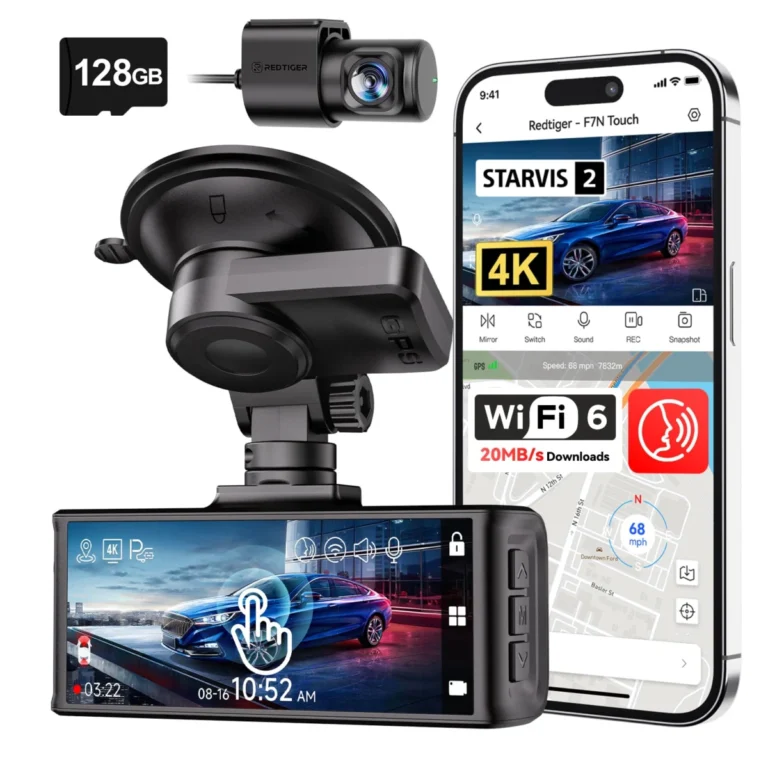
The REDTIGER F7N Touch is the Best Value pick: a Sony STARVIS 2 sensor, 4K front recording and a free 128GB card at a price that undercuts most 4K dual setups.
What matters in daily use
The F7N Touch pairs a Sony STARVIS 2 sensor with a 170-degree front lens, the widest front view in this guide, and adds HDR and WDR processing for night footage. The rear camera records 1080p at up to 60 fps, which smooths motion blur on fast-moving traffic behind you. A 128GB card is included, so the card cost is already covered.
Control is the differentiator: a 3.18-inch touchscreen plus voice commands, so you can lock a clip without leaving the wheel. Parking mode is time-lapse only, and the hardwire kit needed to run it comes in the box, so the 70mai T800E remains the simpler choice if you want buffered parking protection. The 170-degree lens also stretches edge detail slightly, a normal wide-angle tradeoff.
Specifications
| Channels | 2 (front + rear) |
|---|---|
| Front video | 4K (2160p) |
| Rear video | 1080p (Full HD) |
| Sensor | Sony STARVIS 2 |
| Frame rate | 60 fps (max) |
| Field of view | 170° |
| Parking mode | Yes (time-lapse) |
| Hardwire kit | Sold separately (needed for parking mode) |
| Card included | 128 GB |
| GPS | Yes |
Pros
- Sony STARVIS 2 sensor at a value price
- Widest 170-degree front lens here
- 128GB card included in the box
- Touchscreen plus voice control
Cons
- Time-lapse parking only, no buffered mode
- Wide lens softens detail at frame edges
Best for Hot Climates
ZMOPO 4 Channel
- 4-channel
- 1080p front
- Parking mode
- GPS optional
- 5 GHz Wi-Fi
- Supercapacitor
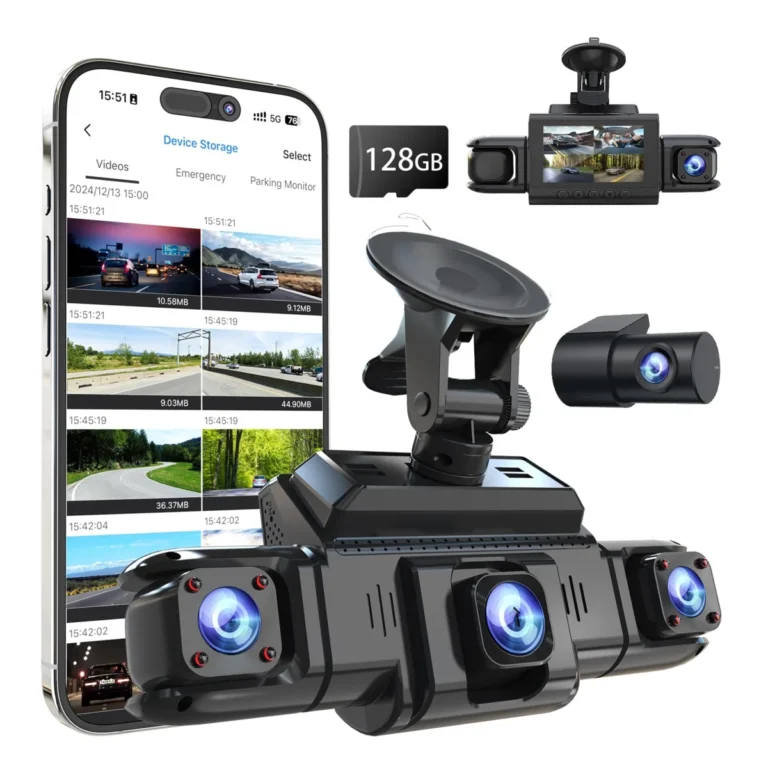
Best for: Drivers parking in direct sun
Skip if: You want built-in GPS or front footage sharper than 1080p.
Price range: Budget
Check price on AmazonPaid link. We may earn a commission.
The ZMOPO 4 Channel earns Best for Hot Climates because its supercapacitor and four-camera coverage suit cars that sit in direct sun, though GPS costs extra.
What matters in daily use
Four 1080p cameras cover front, rear, left and right at 30 fps, with WDR balancing exposure and eight infrared LEDs for dark-cabin footage. A 128GB card is included, so the camera records out of the box without a separate purchase. The supercapacitor replaces a lithium battery, which matters if the car bakes in a sunny lot, since capacitors tolerate heat better than batteries over years of use.
The tradeoffs are real. GPS is optional and sold separately, so speed and location stamps are not there unless you buy the logger. Parking mode is time-lapse and needs an ACC hardwire kit sold separately. Against the IIWEY N5, which also runs four channels, the ZMOPO's advantage is the included 128GB card and heat-tolerant power design rather than resolution.
Specifications
| Channels | 4 (front, rear, left, right or interior) |
|---|---|
| Front video | 1080p (Full HD) |
| Frame rate | 30 fps (max) |
| Field of view | 360° |
| Parking mode | Yes (time-lapse) |
| Hardwire kit | Sold separately (needed for parking mode) |
| Power | Supercapacitor (heat resistant) |
| Card included | 128 GB |
| GPS | Optional (sold separately) |
| Wi-Fi | 5 GHz Wi-Fi app |
Pros
- Four-camera coverage with no blind sides
- Supercapacitor handles hot parked cars
- 128GB card included
- Infrared LEDs aid dark-cabin recording
Cons
- GPS module sold separately
- Parking mode requires a separate hardwire kit
- Front video tops out at 1080p
Best for Long Vehicles
PRUVEEO 4 Channel
- 4-channel
- 1080p front
- Parking mode
- GPS
- Wi-Fi app
- Supercapacitor
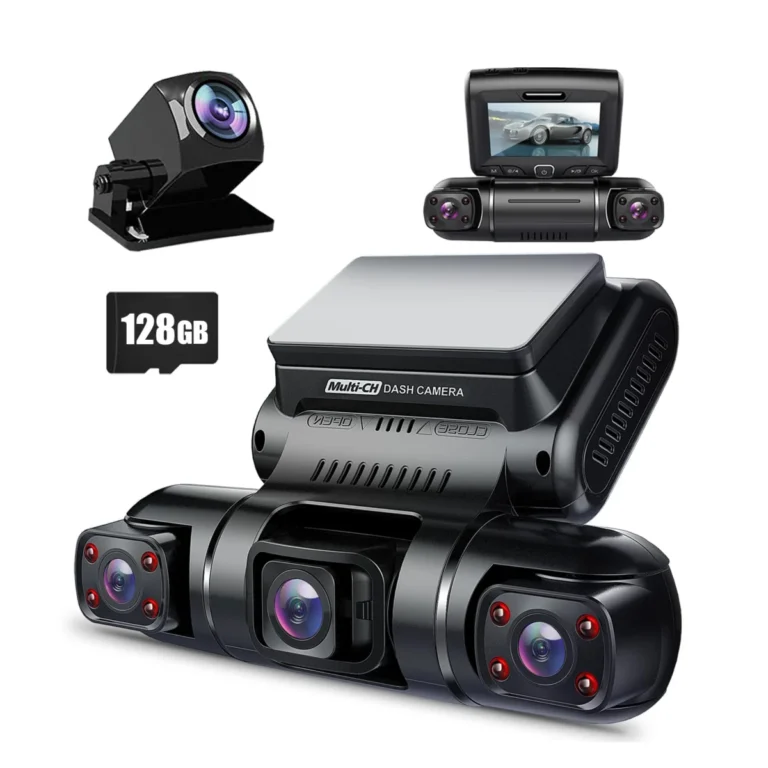
Best for: SUV, van and truck owners routing cable to the rear
Price range: Mid-range
Check price on AmazonPaid link. We may earn a commission.
The PRUVEEO 4 Channel earns Best for Long Vehicles because its four 1080p cameras cover front, rear and both sides, and its adjustable lenses let SUV, van and truck owners aim coverage where they need it.
What matters in daily use
Four 1080p cameras record the front, rear, left and right sides at once, so a long vehicle gets side coverage that a two-channel setup like the ROVE R2-4K Dual cannot provide. The front three lenses adjust, which matters on a van or truck where a fixed lens would frame mostly sky or hood. GPS is built in, so speed, location and route are stamped without buying an add-on.
Parking mode is time-lapse only and needs a separately sold ACC hardwire kit, so overnight protection costs more than the camera alone. The 256 GB card ceiling is lower than the 512 GB the 70mai T800E accepts, and every channel records 1080p, so front detail trails the 4K front of the REDTIGER F7N Touch.
Specifications
| Channels | 4 (front, rear, left, right or interior) |
|---|---|
| Front video | 1080p (Full HD) |
| Field of view | 360° |
| Parking mode | Yes (time-lapse) |
| Hardwire kit | Sold separately (needed for parking mode) |
| Power | Supercapacitor (heat resistant) |
| Max storage | 256 GB microSD |
| GPS | Yes |
| Wi-Fi | Wi-Fi app |
| Night video | infrared LEDs (interior) |
Pros
- Four 1080p channels cover all sides at once
- Adjustable front lenses suit long vehicles
- Built-in GPS at no extra cost
- Supercapacitor tolerates hot interiors
Cons
- Parking mode needs a separately sold hardwire kit
- 256 GB card ceiling limits retention
Do you need a rear camera on a dash cam?
A rear channel answers the one question a front camera cannot: what happened behind you. In a disputed rear-end collision, a lane-change sideswipe or a parking-lot hit-and-run, footage of the car behind shows following distance, brake timing and impact direction, which is why a two-channel setup is the default for commuters and rideshare drivers. Front-only still makes sense if you rarely park on the street and mainly want a record of what you hit, not what hit you.
The catch is that rear video is almost always lower resolution than the front. A camera advertised as 4K front and rear usually means 4K ahead and 1080p behind, and that is normal, not a defect. Judge the rear channel on its own terms: 1080p at 30 fps with HDR is enough to read a plate at close range in daylight, while night legibility depends more on the sensor and aperture than on the number on the box.
How does parking mode work without draining the battery?
Parking mode is a wiring decision before it is a feature. Buffered or time-lapse recording needs continuous power, which comes from a hardwire kit or an OBD power cable, not the 12V socket that switches off with the ignition. Those kits include a low-voltage cutoff that stops recording before the car battery drops too far to start the engine, so the camera protects the car without stranding you.
Recording styles differ in what they capture. Impact-only mode wakes on a bump and saves the clip after it; time-lapse compresses long parking periods into short files; buffered mode keeps the seconds before the trigger, which is the difference between seeing a plate and seeing a blur. Check whether the kit is included: the 70mai T800E ships with one, while the ROVE and REDTIGER models need it bought separately.
Decision guide
Which front and rear dash cam should you actually buy?
The ROVE R2-4K Dual and REDTIGER F7N Touch are the closest pair here: both are two-channel, both use Sony STARVIS 2 sensors, and both include a 128GB card. The ROVE leads on its IMX675 front sensor and 150-degree lens, while the REDTIGER counters with a wider 170-degree front view, voice control and a touchscreen.
If cabin coverage matters, the ROVE R3 and 70mai T800E both record three channels, but they solve parking differently. The 70mai T800E includes its hardwire kit and records 4K at the front, so it is the easier box to install and the sharper front camera. The ROVE R3 runs 2K at the front but adds a touchscreen and infrared LEDs for the interior camera, which is the more useful feature when passengers ride at night.
Our process
How we chose our dash cam front and rear picks
Cameras were shortlisted by whether they record at least a front and rear channel, then ranked on rear-channel resolution, sensor and night performance, parking mode type and whether the required wiring is included, power source, storage limits, app and GPS features, and installation demands.
See also: 7 Dash Cams Ranked for Commuters, Rideshare Drivers and Street Parkers.
Common questions
Frequently asked questions
Can a dash cam record while parked without hardwiring?
Not for continuous parking coverage. A few cameras, including the 70mai T800E, include that kit; most others sell it separately, and without it the camera simply stops when you switch off.
How long does a dash cam keep footage before overwriting it?
Loop recording overwrites the oldest unlocked clips once the card fills, so retention depends on card size, channel count and resolution. A 128GB card in a two-channel 4K and 1080p setup typically holds several hours of driving. Clips triggered by the G-sensor are locked in an event folder and survive the loop until you delete them.
What size microSD card does a front and rear dash cam need?
A 128GB high-endurance card is the practical minimum for two channels, and 256GB or 512GB suits three and four-channel recording. Use a card rated for continuous write cycles rather than a standard Class 10, because dash cams write constantly. The ROVE R2-4K Dual includes a 128GB card, and the 70mai T800E includes 64GB.
Do dash cams record audio inside the car?
Most dash cams capture cabin audio through a built-in microphone, and it can usually be muted in the settings. Audio recording consent rules differ by state and country, and some jurisdictions require all parties to agree. Check your local law before leaving the microphone on, particularly if you drive passengers for hire.
Will a dash cam survive summer heat in a parked car?
A supercapacitor camera is far more likely to, because it avoids the lithium battery that swells and fails in high heat. Every camera in this guide uses a supercapacitor, and the 70mai T800E is rated for operation from 14 to 140 degrees Fahrenheit. Parking in shade and using a sunshade still extends any camera's service life.
Bottom line
Final verdict
- Most drivers: ROVE R2-4K Dual. It records front and rear with a Sony STARVIS 2 IMX675 sensor, adds GPS and a supercapacitor, and includes a 128GB card, so nothing else is needed except a hardwire kit if you want parking mode.
- Rideshare and taxi drivers: ROVE R3. The third interior channel with infrared LEDs documents the cabin at night, which a two-channel camera cannot do, at the cost of a lower 2K front resolution.
- First-time buyers who want parking mode working on day one: 70mai T800E. It is the only pick here that includes the hardwire kit, and its 4K front channel is the sharpest in the group, though the interior and rear channels stay at 1080p.
- Drivers in hot climates who park outside: ZMOPO 4 Channel. Its supercapacitor power source and 128GB included card suit a car that sits in direct sun, but GPS is an optional extra rather than built in.
Keep reading
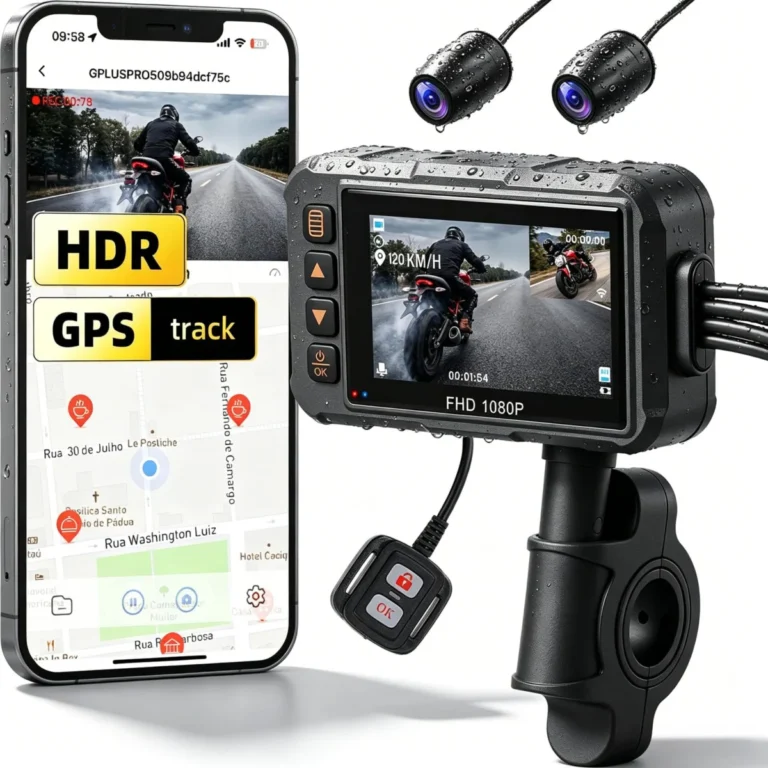
7 Motorcycle Dash Cams Built for Rain, Vibration and a 12V Bike Supply
The SIXTOP Motorcycle Dash Cam is our top pick among 7 motorcycle dash cams, compared on waterproof rating and front and rear…
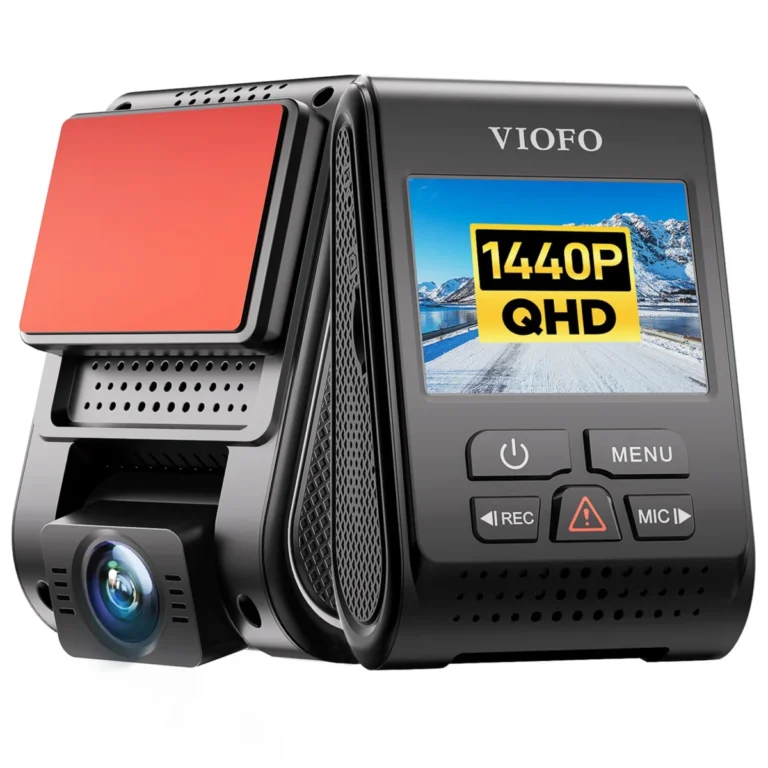
Wireless Dash Cams: 7 Setups Ranked, and When a Cable Still Wins
The VIOFO A119 V3 leads our wireless dash cam picks, with the ROVE R2-4K Dual for front and rear. What Wi-Fi transfer…
7 Dash Cams Ranked for Commuters, Rideshare Drivers and Street Parkers
The VIOFO A119 V3 is our top pick among 7 dash cams, compared on channel coverage, night video quality and image sensor,…
Final decision
Compare two finalists
Choose the two picks you narrowed down to see who each one suits and the main reason to skip it.